Why Is the Garter Removed With the Teeth? The Real Story Behind the Wedding Tradition
 Mar, 16 2026
Garter Removal Comfort Calculator
Assess your comfort level for wedding garter removal based on key factors from historical traditions and modern safety guidelines.
Comfort Assessment
Ever watched a wedding and wondered why the groom uses his teeth to take off the bride’s garter? It’s one of those moments that makes people laugh, blush, or roll their eyes-but most don’t know where it actually came from. The answer isn’t just about fun or shock value. It’s tied to centuries of superstition, social shifts, and the messy way traditions stick around long after their meaning fades.
It’s Not About the Garter-It’s About the Stocking
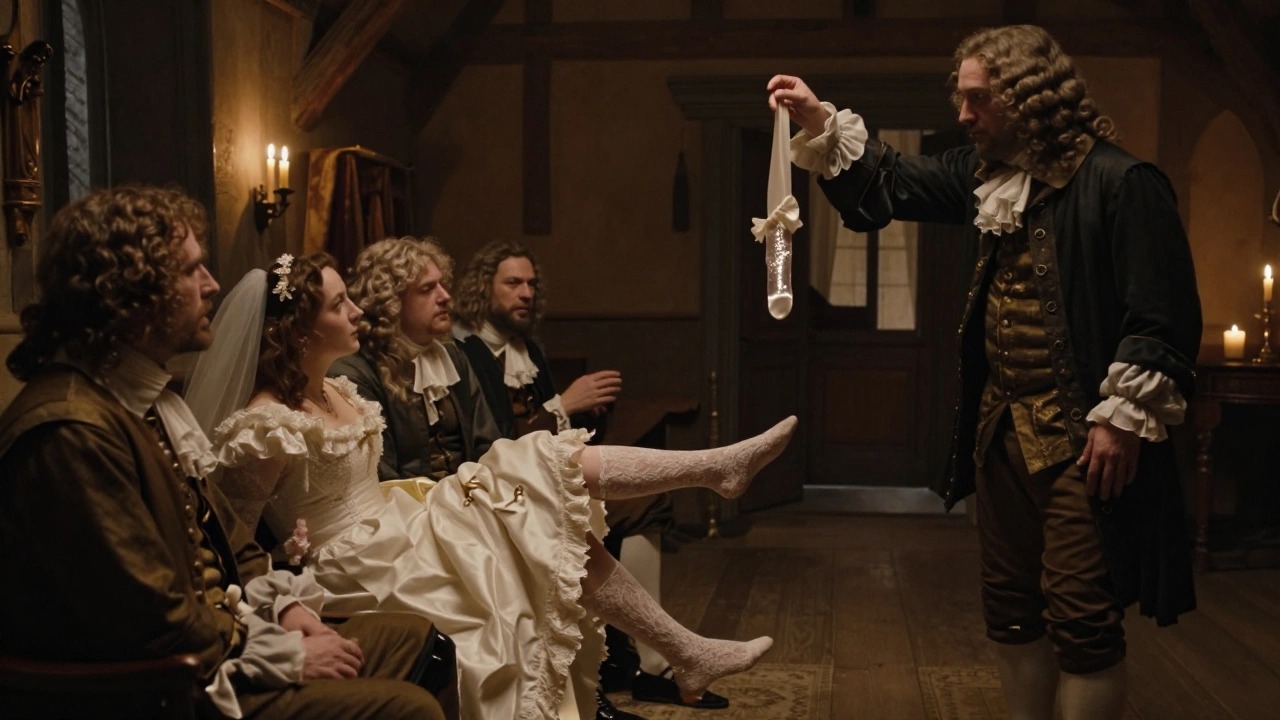
Before we talk about teeth, we need to rewind. The modern garter toss is a cousin of an older tradition: the stocking removal. In medieval Europe, guests would follow the bride and groom to their bedroom after the ceremony. Their goal? To get a piece of the bride’s clothing as a lucky charm. The more intimate the item, the better the luck. That’s why people would try to tear off her stockings-or even her garter. It wasn’t romantic. It was chaotic. And sometimes violent.
By the 17th century, this got so out of hand that brides started wearing a separate garter just for the ritual. It was a peace offering: take this, leave the dress. The groom’s job? Remove it. But why use his mouth?
The Teeth Trick: A Flirtatious Performance
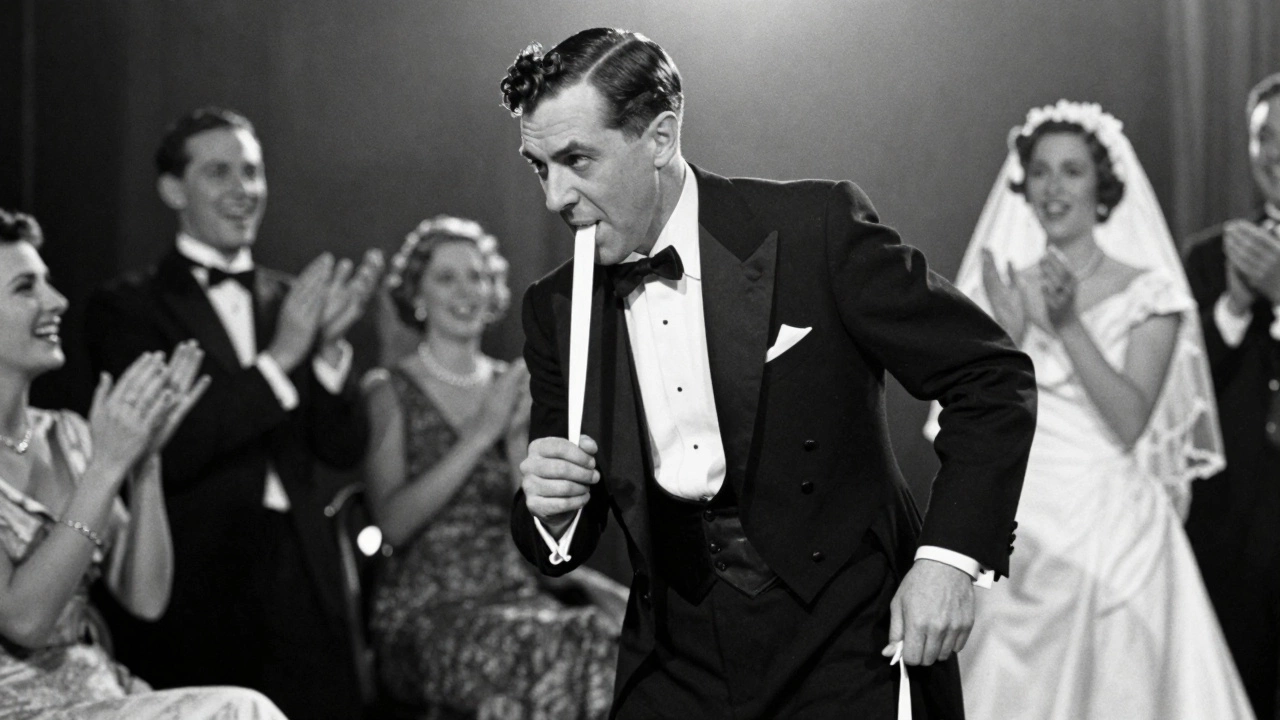
Using teeth to remove the garter didn’t start as a joke. It started as a performance. In the 1800s, upper-class weddings began turning the garter removal into a theatrical moment. The groom would slowly, dramatically, pull the garter off with his teeth to show off his charm, confidence, and control. It was a silent way to say, "I’ve got this," without saying a word.
It also had a subtle power move. In those days, men were expected to be dominant in marriage. The act of removing the garter with teeth-something intimate, slightly risky, and visually bold-became a symbolic display of masculinity. It wasn’t about arousal. It was about status.
By the 1920s, this ritual made its way into popular culture. Movies and vaudeville shows turned it into a comedy bit. Suddenly, it wasn’t just a groom doing it-it was a guy in a tuxedo, grinning, pretending to struggle with a silk ribbon, while the crowd cheered. The teeth? Now it was part of the act.
Why Teeth? Not Hands?
Why not just use your hands? Simple: hands are practical. Teeth are theatrical.
Using your hands to remove the garter is efficient. Using your teeth? It’s slow. It’s risky. It’s a little dangerous. And that’s the point. It creates tension. It makes people lean in. It turns a simple act into a moment. You can’t do it quickly. You have to pause. You have to look at her. You have to smile. It forces connection.
There’s also a tactile reason. Silk and lace garters are slippery. Teeth give you more grip. A groom’s mouth can hold the fabric better than fingers, especially if the garter is tight or made of satin. So even if it’s not intentional, there’s a practical advantage.
Modern Versions: Still the Same, Just Less Weird
Today, most garter removals are choreographed. The groom lifts the bride’s skirt slightly (if at all), uses his hands to slide the garter off, then dramatically drops it-or sometimes, just hands it to her. But the classic version? The one with teeth? Still happens. Why?
Because tradition clings to the absurd. People don’t remember why they do things. They remember how they feel when they do them. That moment-when the groom grins, the music drops, the guests gasp-it’s memorable. It’s shareable. It’s the kind of thing people talk about for years.
And let’s be honest: it’s still the most reliable way to get a reaction. No amount of Pinterest tutorials will replace the thrill of seeing someone use their teeth to pull off a piece of lace.
Is It Outdated? Should We Stop?
Some couples skip the garter toss entirely. Others keep it, but change the rules. One couple in Melbourne had the bride remove the garter from the groom’s suit pocket with her teeth-flipping the script. Another had their dog fetch the garter. A third just handed it over with a kiss and a wink.
There’s no rule that says you have to do it the "old way." But if you choose to, understand why. It’s not about sex. It’s not about humiliation. It’s about legacy. It’s about turning a centuries-old superstition into a shared laugh.

What the Garter Really Means Today
Back in the 1500s, the garter was a token of fertility. If you got it, you’d be next to marry. That’s why guests fought over it. Today? The garter is just a keepsake. Most brides buy a second one just for the toss. The one the groom removes? Often goes straight into a memory box.
The real magic isn’t in the garter itself. It’s in the ritual. The pause. The look between two people who’ve spent months planning every detail of their day-and now, in this moment, they’re just being themselves.
So yes, the teeth are odd. But they’re part of a story that’s older than most wedding dresses. And if you’re wearing a suit that fits just right, and you’re about to do this moment? You’re not just removing a piece of lace. You’re stepping into a tradition that’s lasted longer than most marriages.
What to Wear When You Do It
If you’re planning to do the garter removal-with teeth or without-you need a suit that lets you move. No stiff, tight-fitting jackets. No restrictive waistbands. A well-tailored single-breasted suit with a slight stretch in the fabric gives you room to lift, bend, and grin without worrying about buttons popping.
Also, ditch the cummerbund. It adds bulk and makes it harder to shift your weight. A slim-fit vest or nothing at all? Better. And shoes? Go for something with a little grip. You don’t want to slip while you’re pretending to struggle with silk.
The suit isn’t just about looking good. It’s about being ready for the moment. Because whether you use your teeth or your hands, this isn’t just a trick. It’s a moment that’ll be in photos, videos, and stories for decades.