Who Pays for Wedding Invitations? A Modern Guide to Costs
 Nov, 5 2026
Wedding Invitation Budget Estimator
Estimate the total cost for your wedding invitation suite. Adjust the sliders to match your planned guest list and desired quality level.
Estimated Total Cost (AUD)
Here is a fact that trips up almost every couple starting their planning journey: there is no single rulebook for wedding invitations. The old etiquette books said the bride’s family paid for everything. Today? That script has been torn up and rewritten by modern budgets, shared living arrangements, and the sheer variety of ways we choose to celebrate.
If you are staring at a quote from a stationer or agonizing over the price of fancy paper stock, you are not alone. The question isn’t just "how much," but "who actually writes the check?" Let’s break down who typically pays, why it varies, and how to navigate this without awkward money talks with your parents or partner.
The Traditional Rule vs. Reality
Historically, traditional wedding etiquette dictated that the bride’s family covered the majority of wedding expenses, including invitations, postage, and announcements. This stemmed from an era where women rarely had independent finances, and the wedding was viewed as the father’s gift to his daughter.
But here in Australia, and across most Western countries, things have shifted dramatically. With couples often marrying later in life and frequently funding their own weddings, the "bride’s family pays" rule is more of a suggestion than a law. In fact, recent industry surveys suggest that nearly half of all couples now pay for a significant portion of their wedding themselves. So, if you think you’re stuck with outdated expectations, breathe easy. You have options.
Common Payment Scenarios
There is no one-size-fits-all answer, but three common scenarios tend to emerge when couples discuss who covers the invitation bill. Understanding these can help you prepare for conversations with your family or partner.
- The Couple Pays: This is increasingly common, especially among older couples or those with established careers. If you are paying for the venue and catering, adding invitations to your budget is standard practice. It gives you full creative control over the design and quantity without needing approval.
- Parents Contribute Specifically: Some families prefer to cover specific line items rather than a lump sum. Maybe your parents offer to handle the floral arrangements, while your in-laws volunteer to take care of the stationery suite. This is a great way to involve them in decisions they care about while keeping other aspects under your control.
- Shared Budget Pool: Many families now contribute to a central pot. The couple manages the spending, deciding how to allocate funds between photography, food, and yes, invitations. This requires clear communication but removes the pressure of assigning specific vendors to specific people.
Breaking Down the Actual Costs
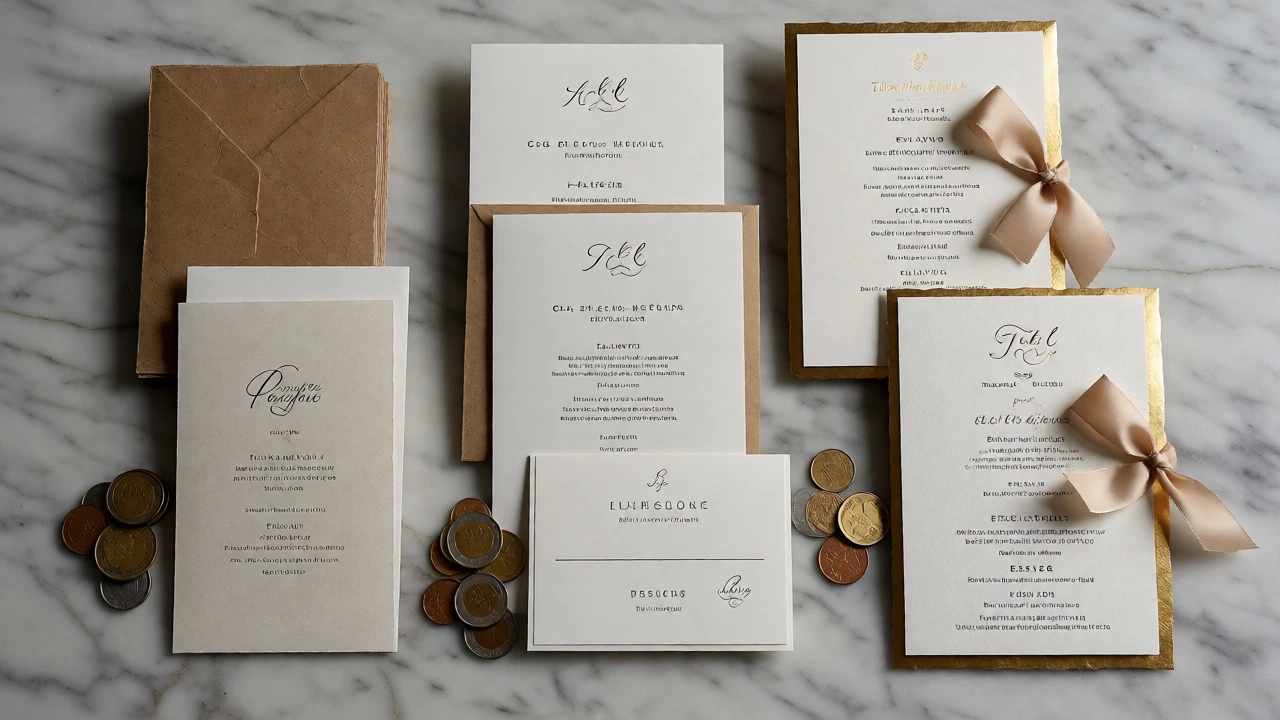
To decide who pays, you first need to know what you’re paying for. Invitation costs vary wildly based on materials, design complexity, and quantity. A basic digital invite might cost pennies, while letterpress cards with custom wax seals can run upwards of $10-$15 per set.
Don’t forget the hidden extras. Postage is a major line item many forget until the last minute. In Australia, sending heavy, multi-piece suites requires extra postage stamps. Then there are addressing services. Hand-addressing envelopes adds a personal touch but costs time or money if outsourced. Printing proofs, rush fees, and backup copies also add up.
| Component | Low End Estimate | High End Estimate | Notes |
|---|---|---|---|
| Design & Setup | $0 (DIY) | $300+ | Custom designer fees vs. online templates. |
| Printing (per set) | $2.50 | $15.00+ | Digital print vs. Letterpress/Foil. |
| Postage (per set) | $1.50 | $4.00+ | Standard vs. Heavyweight/International. |
| Addressing | $0 (Self) | $1.00 | Calligraphy services charge per envelope. |
| Total Per Guest | $4.00 | $20.00+ | Excludes RSVP cards/inserts. |
As you can see, the gap between a simple card and a luxury suite is massive. If your parents are contributing, clarify early whether their contribution covers just the printing or the entire logistical chain including postage and addressing.

Navigating Family Expectations
Money talks can get tricky when emotions are involved. If your parents are offering to pay, ask them directly: "Are you comfortable covering the full suite, including postage and inserts?" Sometimes, well-meaning relatives underestimate the cost of modern stationery. They might remember their own wedding invitations costing fifty cents each!
Conversely, if you are paying yourself, don’t feel guilty about scaling back. You don’t need gold foil if it breaks the bank. A beautiful, simple card printed locally can look just as elegant as a high-end imported suite. The key is transparency. Share your budget breakdown with whoever is contributing so everyone understands where the money is going.
Digital vs. Print: Does It Change Who Pays?
With the rise of eco-friendly and budget-conscious choices, many couples are turning to digital invitations. Platforms like Paperless Post or Canva allow for stunning designs at a fraction of the cost. But does this change who should pay?
Not really. The responsibility remains the same, but the stakes are lower. If you go digital, the cost might be negligible-perhaps just a subscription fee or a small purchase for premium fonts. In this case, the couple usually absorbs the cost easily because it’s minimal. However, some traditionalists still insist on physical mail for the main invite, using digital only for save-the-dates or follow-ups. If you mix both, clarify who covers which part. Perhaps grandparents pay for the physical invites for their friends, while you handle the digital ones for your peers.
Pro Tips for Managing Invitation Budgets
Ready to tackle the stationery list? Here are some practical steps to keep costs down and relationships smooth.
- Get Quotes Early: Don’t wait until six months out. Get pricing from three different printers. Ask for samples to judge quality before committing.
- Count Your Guests Accurately: Over-ordering by 10% is smart, but ordering double is wasteful. Finalize your guest list before ordering.
- Bundle Inserts: Combine details like accommodation info, maps, and menus into one insert rather than multiple separate cards. Fewer pieces mean lower printing and postage costs.
- Check for Hidden Fees: Ask about setup fees, proof charges, and shipping. These can add 15-20% to your final bill.
- Consider Local Printers: Melbourne has a vibrant community of local stationers. Supporting them often means better service and lower shipping risks compared to overseas mass producers.
Frequently Asked Questions
Is it rude to ask my parents to pay for wedding invitations?
No, it is not rude if you approach it politely and provide context. Since traditional etiquette often assigned this task to the bride's family, many parents expect to contribute. Be transparent about the costs and let them decide if they want to cover it fully, partially, or not at all. Never assume; always ask.
What if my parents refuse to pay for anything?
This is becoming more common. If your parents cannot or choose not to contribute, you and your partner simply adjust your budget. You may need to prioritize certain elements, such as choosing simpler invitations or reducing the guest count slightly. Remember, their lack of financial contribution doesn't diminish their importance at the wedding.
Do I have to pay for invitations for plus-ones?
Yes, typically you pay for every invitation sent, regardless of whether the recipient brings a guest. Each household receives one invitation suite. If you are inviting singles who might bring a date, ensure you have enough blank spaces for names or order extra inserts. The cost is per mailed package, not per attending person.
Should I tip the calligrapher or printer?
Tipping is appreciated but not mandatory for large commercial printers. For individual artisans, such as a freelance calligrapher or a small boutique stationer, a tip of 10-15% is a nice gesture if the service was exceptional. Always check if gratuity is already included in the invoice.
How far in advance should I order invitations?
Order invitations 8-10 weeks before the wedding date. This allows time for design revisions, printing, and mailing. Save-the-dates should go out even earlier, 6-9 months in advance. Rush orders are possible but usually incur extra fees, so plan ahead to avoid unnecessary stress and cost.