Who Pays for Wedding Decorations? A Clear Guide to Budgeting and Traditions
 Jan, 1 2026
Wedding Decor Budget Calculator
Estimate Your Decor Costs
Estimated Decor Costs
8-15% of total budgetYour estimated decor budget
Suggested budget options:
- $2,000 for basic flowers and lighting
- $3,500 for standard rentals and centerpieces
- $6,000 for premium custom installations
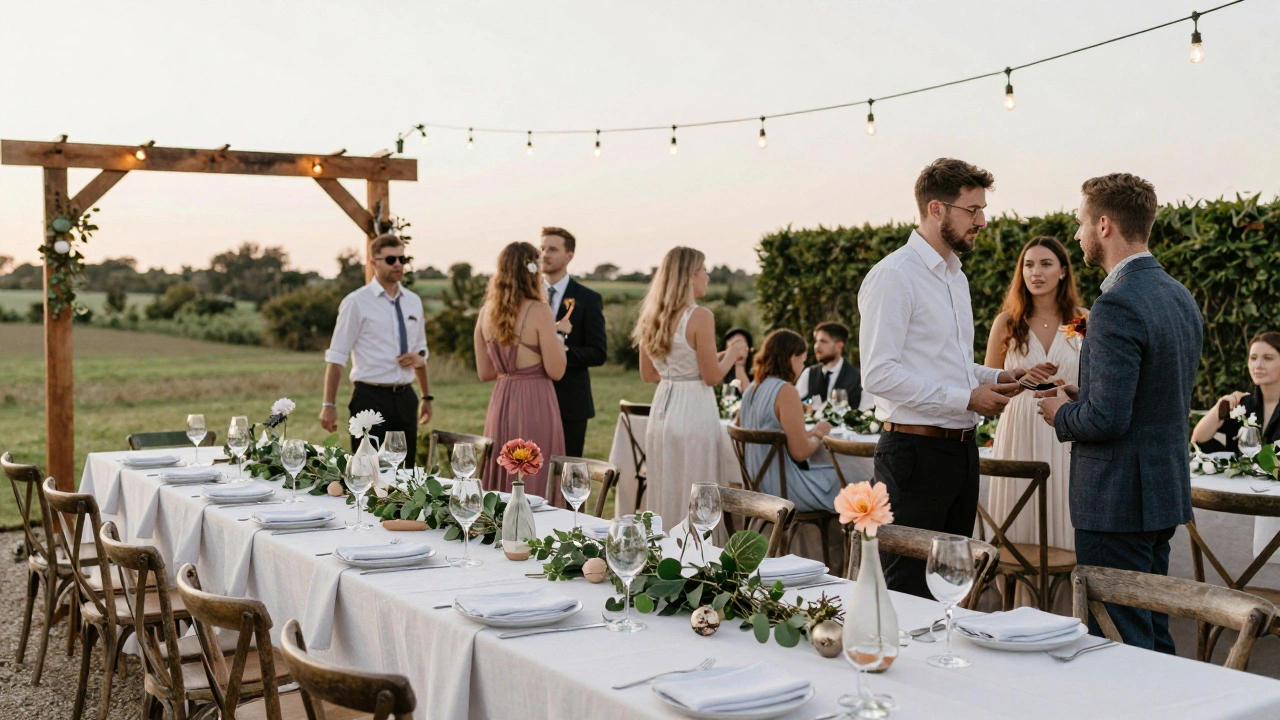
When you’re planning a wedding, decorations are one of the first things that come to mind. Flowers, centerpieces, string lights, aisle runners, signage - they all add magic. But who actually pays for it all? There’s no single rule, and old traditions don’t always fit modern weddings. The truth? It depends on your family, your budget, and what you both agree on.
Traditional Expectations vs. Modern Reality
For decades, the rule was simple: the bride’s family paid for decorations. That came from the idea that the bride’s side covered the bulk of the wedding - venue, food, flowers, and decor. The groom’s family paid for the rehearsal dinner and sometimes the liquor. But today, fewer than 20% of couples follow this exact split, according to The Knot’s 2025 Wedding Report. Most couples pay for their own wedding, or split costs evenly.
Still, you’ll hear older relatives say, “It’s the bride’s family’s job.” That’s not a law. It’s a habit. And habits can be changed. If your parents offer to pay for decorations, great. If they don’t, that doesn’t mean you’re failing tradition - it means you’re making a modern choice.
Who Typically Covers What?
There’s no universal checklist, but here’s how most couples divide it today:
- Both partners - 62% of couples pay for all decorations themselves, either with their own savings or combined funds.
- Bride’s family - 18% still cover decor, especially if they’re paying for the venue or catering.
- Groom’s family - 7% contribute, usually if they’re hosting the rehearsal dinner or paying for a specific element like the bar.
- Wedding planner or venue - 13% of couples hire a planner who includes decor in their package, or choose a venue that offers in-house styling.
Some couples also split it by category: one side handles flowers, the other handles lighting and rentals. Others let vendors handle everything - and just pay the bill.
How to Talk About Money Without Awkwardness
Money talks are hard. But if you wait until the day before the wedding to bring it up, you’ll regret it.
Start with a simple conversation: “We’re thinking about how to cover the decor costs. What are you comfortable with?” Don’t assume. Don’t blame. Just ask. If your parents say, “We’d love to help with the flowers,” say thank you - and then clarify exactly what that means. Do they mean the bouquet and centerpieces? Or also the arch, candles, and table numbers?
Write it down. Even if it’s just a note on your phone. That way, there’s no confusion later. If someone says, “We’re paying for the decor,” make sure you know what’s included. A $2,000 budget for flowers is very different from a $2,000 budget for lighting, linens, and signage.

What If No One Wants to Pay?
It happens. Sometimes families can’t afford it. Sometimes they don’t want to. Sometimes they’re not involved.
That’s okay. You don’t need their money to have a beautiful wedding. Many couples today save for years just to pay for their own decor. You can still have a stunning setup without breaking the bank. Here’s how:
- Use candles instead of expensive floral arrangements - they cost less and look romantic.
- Borrow items from friends or family - vases, lanterns, table runners.
- Shop secondhand or rent decor from local event rental companies. A wooden arch might cost $150 to rent instead of $500 to buy.
- DIY where it matters. Handwriting your place cards or making paper flowers can add personal charm for under $50.
- Focus on 2-3 key areas: the ceremony arch, the sweetheart table, and the entrance. Skip decor in less visible spots.
One couple in Austin spent $800 total on decor by renting linens, buying bulk candles, and using potted plants from their backyard. Their guests said it felt warm and intentional - not cheap.
What About the Venue’s Included Decor?
Some venues - especially all-in-one resorts or barns - include basic decor in their package. That might mean table settings, chair covers, or string lights. But “included” doesn’t always mean “enough.”
Ask for a detailed list: What exactly is included? Are the centerpieces real flowers or fake? Are the lights LED or old-fashioned bulbs? Is there a limit on how many you can use? Some venues charge extra for extending decor beyond a certain time or adding custom elements.
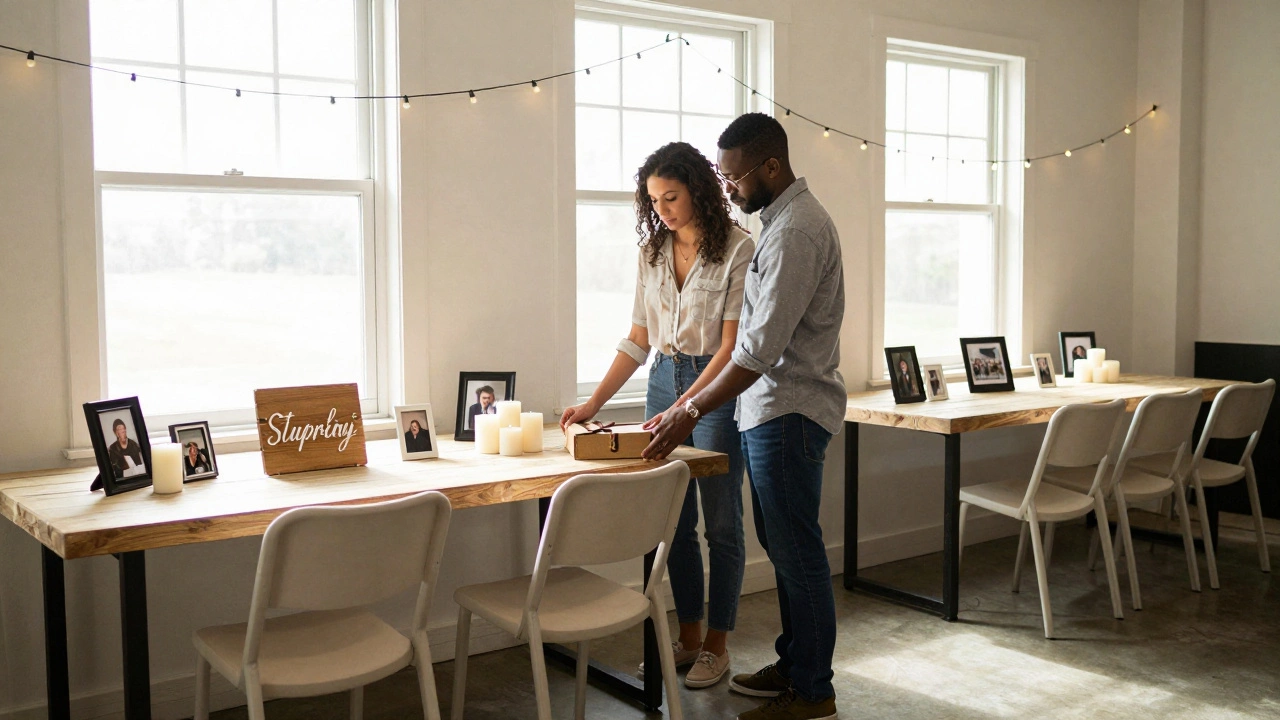
If the venue’s decor feels generic, you can still add your own touches. A simple way: bring your own candles, photos in frames, or a welcome sign. That costs little but makes the space feel like yours.
When Should You Let Someone Else Pay?
It’s okay to accept help - if it doesn’t come with strings attached.
If your aunt offers to pay for the floral arch, and she’s excited about it, say yes. Let her pick the flowers. But if she says, “I’ll pay if you use my cousin’s florist,” that’s a red flag. You’re not obligated to accept a vendor just because someone’s paying.
Set boundaries early. Say: “Thank you so much for helping with the decor. We’d love your input, but we’ll choose the vendors we’re comfortable with.” That keeps the generosity alive without the control.
What About Same-Sex or Non-Traditional Weddings?
Traditions were written for one kind of wedding. Yours might be different - and that’s beautiful.
Two grooms? Two brides? A blended family? A solo bride with no parents? The rules don’t apply. There’s no “bride’s side” or “groom’s side.” You’re the ones planning the day. You decide who pays for what - or if you pay for it all.
Some couples split decor costs by percentage: one pays 40%, the other 60%. Others pool all their money and treat it like a shared project. One couple in Seattle paid for their decor by selling old furniture and using the cash for custom signage. They called it “our wedding fund.”
What to Avoid
Here are three common mistakes:
- Letting one person control the design - If your mom is paying, she might want roses and lace. But you wanted minimalist greenery and concrete. Compromise doesn’t mean surrender. Say: “We love your taste, but we’d like to mix it with our style.”
- Not getting quotes in writing - If someone says, “I’ll pay for the flowers,” get the vendor’s invoice and confirm they’re covering the full amount. Don’t assume.
- Overextending to please others - If you’re paying for a $10,000 floral installation because your future in-laws expect it, you’re setting yourself up for stress. Your wedding should reflect you, not their expectations.
Final Tip: Make It Your Own
There’s no right answer to who pays for wedding decorations. The right answer is the one that works for you.
Some couples hire a planner and let them handle it. Others spend months sourcing thrifted vases. Some get help from grandparents. Some pay entirely out of pocket.
What matters isn’t who writes the check. It’s that the space feels like you. That your guests feel the love you put into it. That you wake up the next day proud of what you created - not exhausted from trying to please everyone else.
Decorations don’t make the wedding. You do.
Do I have to follow tradition and let the bride’s family pay for decorations?
No. Tradition is just a guideline. Today, most couples pay for their own wedding decor, or split costs with their families. What matters is what works for your relationship and budget - not outdated rules.
What if my parents offer to pay but I don’t like their choices?
Thank them for the generosity, then gently set boundaries. Say something like, “We’re so grateful you’re helping. We’d love to work with you to find a style we both love.” Offer to show them mood boards or examples. You can still honor their contribution without sacrificing your vision.
Can I ask guests to help pay for decorations?
It’s not common, and it can feel uncomfortable. Most guests expect to pay for their own attendance - not contribute to decor. If you’re short on funds, consider scaling back instead. A simple, heartfelt setup often means more than an expensive one.
How much should I budget for wedding decorations?
Most couples spend between 8% and 15% of their total wedding budget on decor. For a $20,000 wedding, that’s $1,600 to $3,000. But you can do it for less. Many couples create stunning setups for under $1,000 by renting, borrowing, or DIYing key elements.
Does the venue usually include decorations?
Some venues include basic decor like chairs, linens, or string lights - but rarely high-end or custom items. Always ask for a written list of what’s included. Don’t assume the “package” means you don’t need to buy anything else.