Who Gets the Wedding Ring First? The Order Explained
 Sep, 20 2026
Wedding Ring Exchange Planner & Quiz
Choose an option to see how the ceremony flow changes.
Select an option above to visualize the exchange order.
Q1: In most Western traditions, who traditionally places the ring on the other person's finger first?
You are standing at the altar, your palms are sweaty, and the officiant just said, "Please exchange rings." You reach into your pocket, pull out the box, and then you freeze. Do you slide it on before they do? Do you wait for them to finish? Is there a script you missed in the last six months of planning? This moment causes more panic than most couples admit. It feels like a test you didn't study for, but here is the good news: there is no universal law that says one person must go first. However, there are strong traditions, practical reasons, and modern preferences that can help you decide who gets the wedding ring first.
The confusion usually stems from mixing up two different ceremonies: the engagement and the wedding. People often assume the rules are identical, but they aren't. At an engagement, the giver puts the ring on the receiver. It’s a one-way street. At a wedding, it’s a mutual exchange. So, who goes first? In most Western traditions, including those common in Australia and the US, the groom places the ring on the bride's finger first. But why? And does it actually matter if you flip the script?
Why the Groom Usually Goes First
Tradition dictates that the groom slides the ring onto the bride's finger first. This custom has deep historical roots. For centuries, marriage was viewed partly as a transfer of ownership or responsibility from the father to the husband. The act of the man placing the ring symbolized his commitment to provide and protect. It wasn't necessarily about dominance; it was about public declaration. He was marking her as his partner in front of their community.
There is also a practical reason that persists today. Historically, men wore fewer accessories. Their hands were often empty. Brides, however, might already be wearing an engagement ring. If the bride tried to put the wedding band on first, she’d have to juggle two rings on one hand while trying to hold the groom’s hand steady. By having the groom place the wedding band on the bride’s finger first, the bride can then easily slide her engagement ring back over it (or keep it on a separate chain) without fumbling. It keeps the process smooth and reduces the chance of dropping a diamond in the aisle.
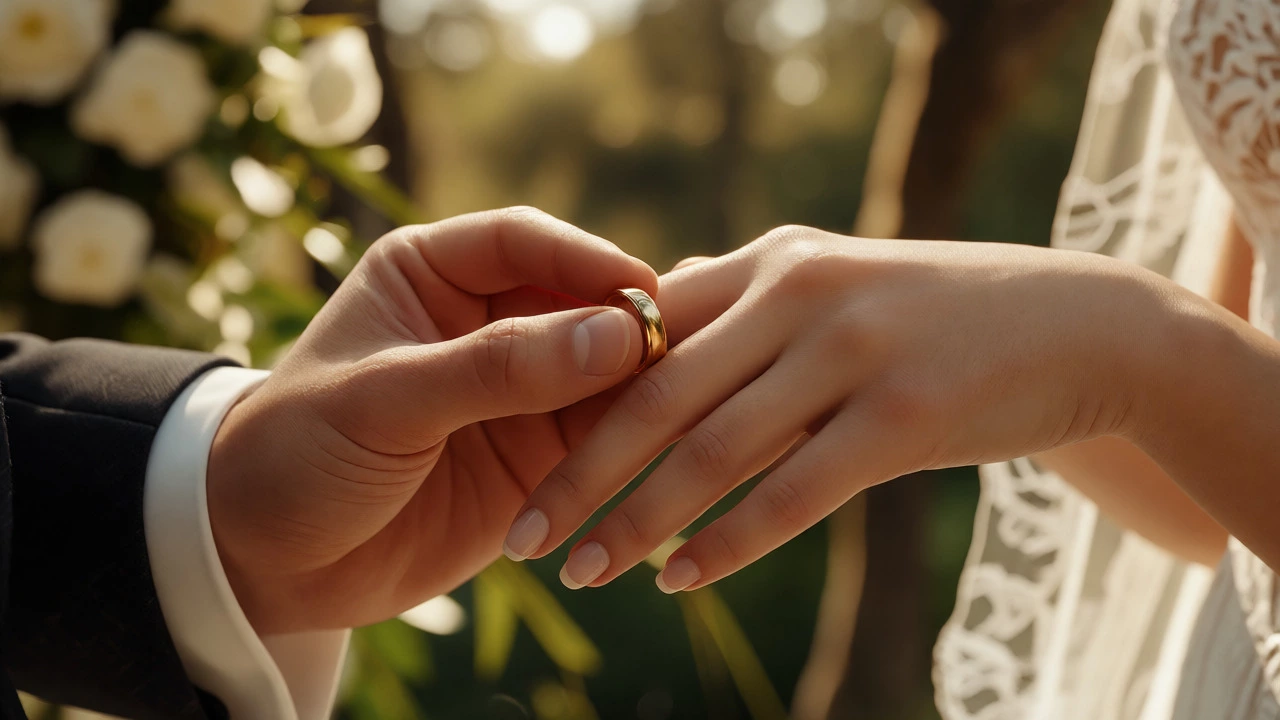
Think about the logistics. The best man or maid of honor holds the rings. When the officiant says, "Groom, please place the ring," he takes the band. He lifts her hand. He slides it on. Then, the officiant turns to the bride. She takes the other band. She lifts his hand. She slides it on. It creates a rhythmic, balanced flow to the ceremony. If you reverse it, you might feel like you’re rushing the second half of the exchange.
Does the Bride Ever Go First?
Absolutely. More couples are ditching strict gender roles. If you are a same-sex couple, or if you simply prefer symmetry, you can choose to exchange rings simultaneously. This is becoming increasingly popular because it emphasizes equality. Both partners extend their hands at the same time. Both slide the rings on together. It looks incredibly romantic in photos and videos because it captures a shared moment rather than a sequential one.
Some brides choose to go first for personal reasons. Maybe the groom is nervous and wants to watch someone else do it first to calm down. Maybe the bride’s family tradition dictates that the woman leads. There is no penalty for breaking the mold. The only rule that really matters is that both people get a ring. If you want to go first, tell your officiant. They will adjust the script. "Bride, please place the ring..." It’s that simple.
Consider the visual impact. If you go first, the camera focuses on your hand moving toward his. If he goes first, the focus shifts to him lifting your hand. Neither is better; they just create different vibes. If you want a traditional look, stick with the groom-first method. If you want a modern, egalitarian vibe, simultaneous or bride-first works perfectly fine.
The Difference Between Engagement and Wedding Rings
To understand the order, you need to know what each ring represents. These are not interchangeable terms, even though people use them loosely.
| Feature | Engagement Ring | Wedding Band |
|---|---|---|
| Purpose | Symbolizes the promise to marry | Symbolizes the actual marriage union |
| Timing | Given during the proposal | Exchanged during the ceremony |
| Design | Often features a prominent gemstone (diamond, sapphire) | Usually a plain metal band or pavé set |
| Placement | Worn closest to the heart (under the wedding band) after marriage | Worn closest to the heart (on top of engagement ring) |
| Who Buys It | Traditionally the proposer | Traditionally each partner buys for the other |
Notice the placement detail. After the wedding, many women wear both rings on the same finger. The wedding band goes on first (closest to the palm/heart), and the engagement ring sits above it. Why? Because the wedding band is considered the primary symbol of the marriage. It should be closest to your heart. During the ceremony, the groom places the wedding band on the bare finger. If the bride is wearing her engagement ring during the ceremony, she might temporarily move it to her right hand so the wedding band can sit properly. Or, she leaves it on, and the groom places the wedding band underneath it? No, that’s physically difficult. Most brides switch the engagement ring to the right hand before walking down the aisle. Then, after the ceremony, they move it back to the left hand, stacking it over the new wedding band.
Practical Tips for the Exchange Moment
Knowing who goes first is only half the battle. Actually doing it without looking like you’re performing surgery on a grape is the other half. Here is how to make sure the ring exchange doesn’t become a blooper reel.
- Practice the Motion: Don’t just think about it. Hold your hands together. Pretend to slide the ring on. Feel the resistance. Real fingers swell slightly when you’re nervous. Practice sliding the ring over the knuckle. If your knuckles are large, buy a ring adjuster or practice with a slightly larger prop.
- Decide on the Script: Ask your officiant exactly what they will say. Will they say, "Groom, please place the ring on the bride's finger," or will they leave it open-ended? Knowing the cue prevents hesitation.
- Hand Off Strategy: Who holds the rings? Usually, the best man or maid of honor. Make sure they know which ring belongs to whom. Label the boxes! A simple sticky note saying "BRIDE'S RING FOR GROOM" saves massive confusion.
- Take Your Time: Nerves make us rush. Count to three in your head before you start moving. Look at your partner, not the ring. Slide it on slowly. If it sticks, wiggle it gently. Don’t yank it.
If you are worried about your hands shaking, hold the ring box with two hands until the last second. Open it calmly. Take the ring out. Then proceed. It gives you a focal point and stabilizes your movements.
Cultural Variations You Should Know
While the groom-first tradition is dominant in English-speaking countries, it isn’t global. In some Eastern European cultures, the exchange happens differently. In certain Jewish traditions, the groom places the ring on the bride’s index finger, not the ring finger, during the ceremony. Later, it may be moved. In Hindu weddings, the exchange might involve garlands instead of rings, or rings might be exchanged after the main rituals.
If you have mixed cultural backgrounds, talk to your families. One side might expect the groom to lead. The other might expect a joint gesture. Find a middle ground that respects both sides. Maybe you do the traditional groom-first exchange, but you write your own vows to emphasize equality. Compromise is key in wedding planning, and this small detail can prevent big arguments later.
Also, consider religious requirements. Some churches require specific wording or actions during the ring exchange. Check with your priest or rabbi. They might have a fixed liturgy where the order is non-negotiable. If you are having a secular ceremony, you have total freedom.
What If You Forget Who Goes First?
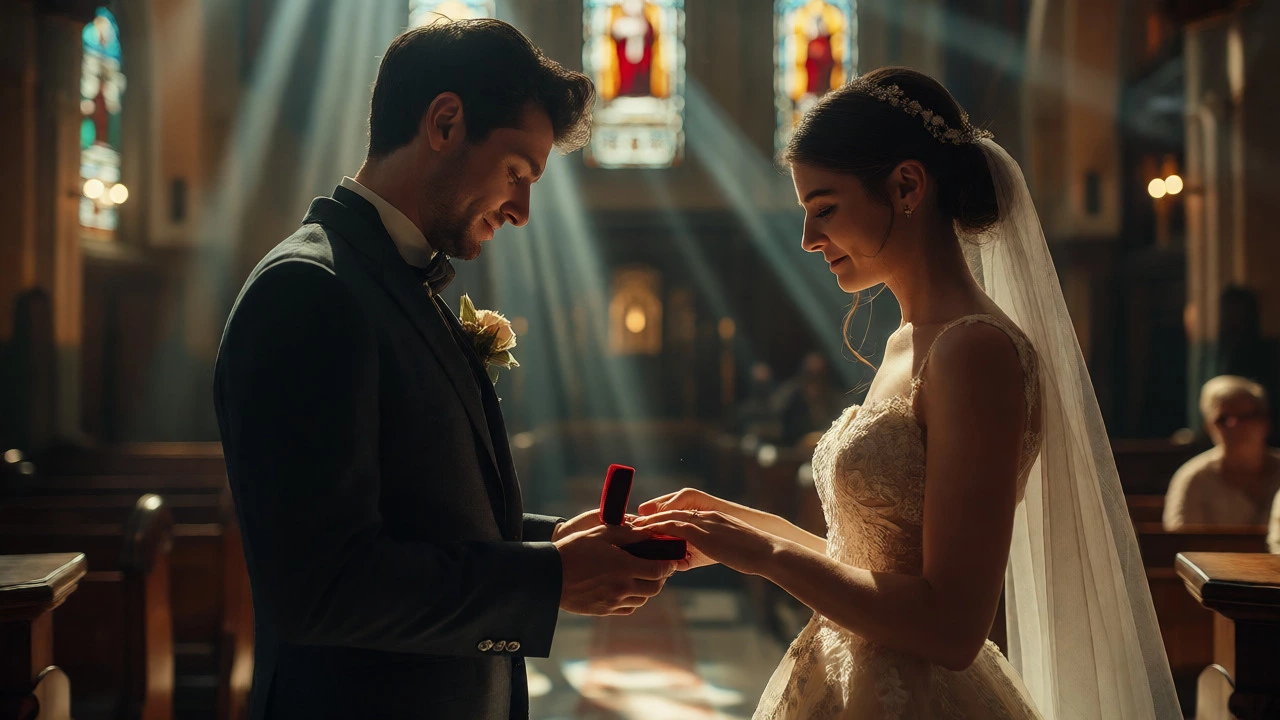
It happens. You are emotional, the music swells, and suddenly your brain goes blank. What do you do? Just go. If you hesitate too long, just take the initiative. If you both reach at the same time, smile. Laugh. It’s endearing. Guests don’t remember if the groom went first or second. They remember if you looked happy and connected.
Don’t let perfectionism ruin the moment. The ring is a symbol, not a trophy. The fact that you are exchanging it matters more than the choreography. If you drop the ring, pick it up. If you put it on the wrong finger, correct it quietly. Everyone will forget by the reception.
Final Thoughts on Making It Yours
So, who gets the wedding ring first? Traditionally, the groom. Practically, it makes sense for the logistics of stacked rings. But personally? You decide. Talk to your partner. Decide if you want to follow tradition or break it. Tell your officiant. Practice once. Then, trust yourself.
This moment is brief. It lasts maybe ten seconds. But it is captured in every photo and video. Choose the method that feels natural to you. Whether he goes first, you go first, or you do it together, the result is the same: you are married, and you have matching bands. That is the part that lasts.
Can I wear my engagement ring during the ceremony?
Yes, but most brides move it to their right hand temporarily. This allows the wedding band to be placed on the bare left ring finger, ensuring it sits closest to the heart. After the ceremony, you can move the engagement ring back to the left hand, stacking it above the wedding band.
Does it matter if we exchange rings simultaneously?
Not at all. Simultaneous exchange is a popular modern choice that emphasizes equality and partnership. It looks great in photos and avoids any debate about who should go first. Just ensure your officiant knows to cue both of you at the same time.
Who holds the rings during the ceremony?
Typically, the best man holds the groom's ring, and the maid of honor holds the bride's ring. Sometimes a single designated person holds both. Whichever arrangement you choose, label the boxes clearly to avoid mix-ups.
What if our fingers are swollen on the wedding day?
Nerves, heat, and salt intake can cause slight swelling. To mitigate this, drink plenty of water, avoid salty foods the night before, and remove jewelry early in the morning. If a ring feels tight, ask a jeweler for a sizing guard or practice putting it on with a bit of lotion.
Is there a difference between a wedding band and a wedding ring?
People often use the terms interchangeably. Technically, a "band" refers to the plain metal circle, while a "ring" might imply a setting with stones. However, in the context of the ceremony, they refer to the same object: the symbol of your marriage exchanged with your partner.