What Kind of Suit Should a Groom Wear? The Ultimate Guide for 2026
 Jun, 8 2026
Groom Suit Style Advisor
Define Your Wedding
Recommendation
Select your preferences and click the button to generate your ideal groom look.
You’ve booked the venue. You’ve picked the date. Now comes the part that actually matters to how you look in every photo: your outfit. It’s not just about looking sharp; it’s about fitting into the story of your day. A black tuxedo at a beach sunset ceremony feels as wrong as jeans at a cathedral mass. Getting the groom suit right means balancing tradition, comfort, and the specific vibe of your wedding.
This isn’t about following rigid rules from a dusty etiquette book. It’s about making smart choices that reflect who you are and where you’re getting married. Whether you’re leaning toward a classic morning suit or a relaxed linen number, here is exactly what you need to know to nail your look.
The Golden Rule: Match the Formality Level
Before you even think about color or fabric, you need to define the formality level. This is the anchor for every other decision. Most weddings fall into one of four categories, and each has a distinct dress code.
White Tie is the most formal dress code, reserved for evening events after 6 PM. If your invitation says this, you don’t have a choice. You wear a tailcoat (tails), a white wing-collar shirt, a white waistcoat, and a white bow tie. No jackets, no suits, no tuxedos. It’s rare, but if it’s on the invite, stick to it.
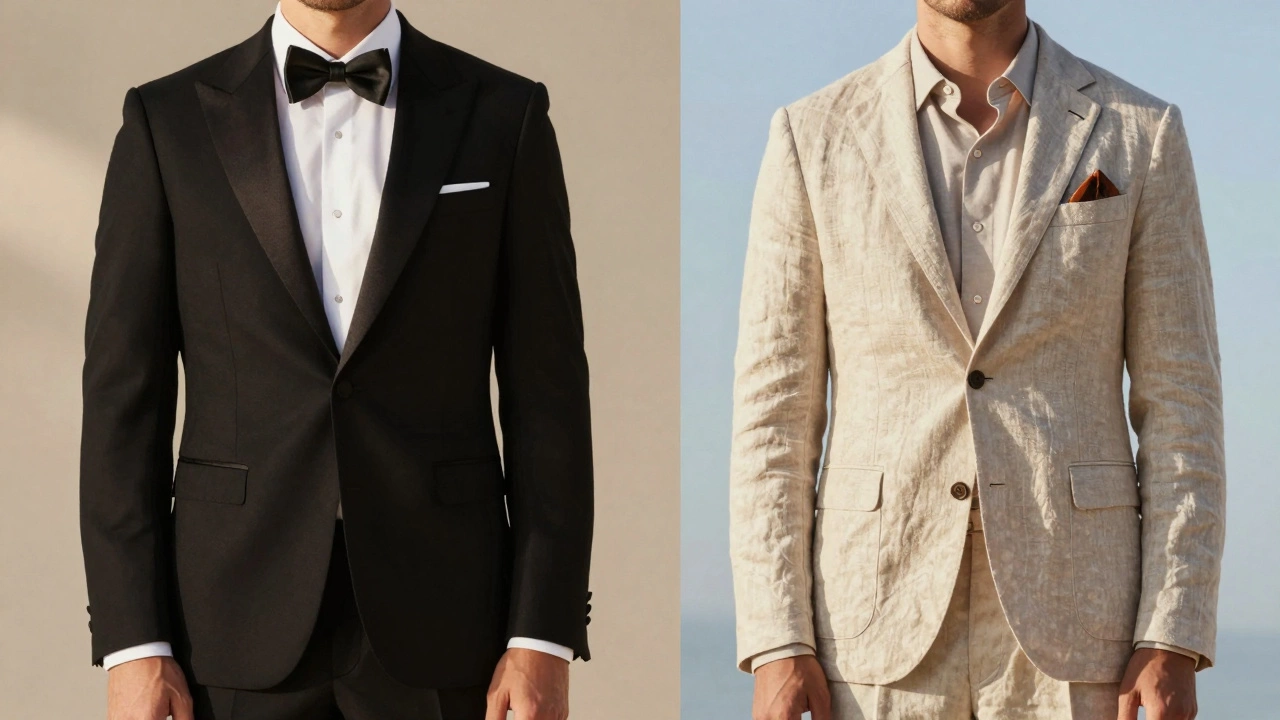
Black Tie is standard for formal evening weddings. This calls for a tuxedo. Think satin lapels, matching trousers with a satin stripe, and a black bow tie. It’s sleek, timeless, and looks incredible in photos. If you’re unsure, Black Tie is the safest bet for a sophisticated night wedding.
Formal / Semi-Formal is common for daytime or early evening ceremonies. Here, a traditional suit takes over. A dark navy or charcoal gray suit works perfectly. You can wear a long tie instead of a bow tie. This gives you more flexibility in color and style while still looking polished.
Casual / Creative is ideal for outdoor, beach, or barn weddings. You can skip the jacket entirely or opt for a lightweight blazer with chinos. Linen, cotton, and seersucker fabrics shine here. The goal is to look put-together without sweating through your shirt.
Tuxedo vs. Suit: When to Choose Which
The biggest debate for grooms is usually between a tuxedo and a regular suit. The difference isn’t just aesthetic; it’s structural. A tuxedo is designed for evening wear. The satin or grosgrain lapels catch the light, giving you a subtle shine that photographs beautifully under flash or candlelight. A standard suit uses matte fabric, which is better for natural daylight.
| Feature | Tuxedo | Suit |
|---|---|---|
| Best Time of Day | Evening (after 6 PM) | Daytime or Early Evening |
| Lapels | Satin or Grosgrain | Matte Fabric (Same as jacket) |
| Trousers | Satin stripe down side | No stripe |
| Accessories | Bow tie, Cummerbund/Waistcoat | Long tie, Pocket square |
| Vibe | Glamorous, Traditional | Modern, Versatile |
If your wedding is outdoors during the day, a tuxedo might feel overdressed and too warm. A well-tailored navy suit offers the same level of respectability but breathes better and fits the lighting. Conversely, wearing a casual suit to a ballroom gala will make you look like you forgot to change.
Fabric Matters More Than You Think
You can buy the most expensive cut, but if the fabric is wrong for the season or location, you’ll regret it. Fabric dictates how the suit moves, how it wrinkles, and how comfortable you’ll be when dancing until midnight.
- Wool: The gold standard. Super 100s to Super 150s wool is breathable, drapes beautifully, and resists wrinkles. For winter weddings, go for a heavier weight (280-340 grams). For summer, choose Tropical Wool or High-Twist Wool, which is lighter and cooler.
- Linen: Perfect for beach or garden weddings in hot climates. It’s airy and cool but wrinkles instantly. Embrace the wrinkles; they’re part of the charm. Avoid pure linen for formal indoor weddings as it can look too rumpled.
- Cotton: Great for spring and autumn. It’s sturdy and holds its shape well. A cotton twill suit looks crisp and professional without being overly stiff.
- Velvet: Making a comeback for winter weddings. A velvet blazer adds texture and luxury. Pair it with wool trousers for a rich, moody look that stands out in winter photos.
Stay away from polyester blends unless budget is your only constraint. They trap heat, shine unnaturally in photos, and don’t breathe. Your body temperature will thank you for natural fibers.
Color Psychology: Beyond Black and Navy
Tradition says black or navy. But 2026 is all about personal expression. Your suit color should complement the bride’s dress, the venue’s palette, and the season.
Navy blue is the new black. It’s slimming, versatile, and looks great on almost every skin tone. It pairs effortlessly with pink, burgundy, or white shirts. Charcoal gray is another powerhouse-it’s softer than black but just as formal. It works for both day and evening events.
For a bolder statement, consider earth tones. Olive green, rust, or deep brown suits work wonderfully for rustic, barn, or woodland weddings. They blend naturally with outdoor settings and feel less corporate than gray. Just ensure your groomsmen’s colors coordinate without clashing. If you’re wearing olive, maybe they wear khaki or cream.
Avoid bright white suits unless you’re in Miami in July. White reflects heat and can wash out your complexion in photos. Light gray is safer for summer, but keep it tailored to avoid looking like a ghost.
Fit Is Non-Negotiable
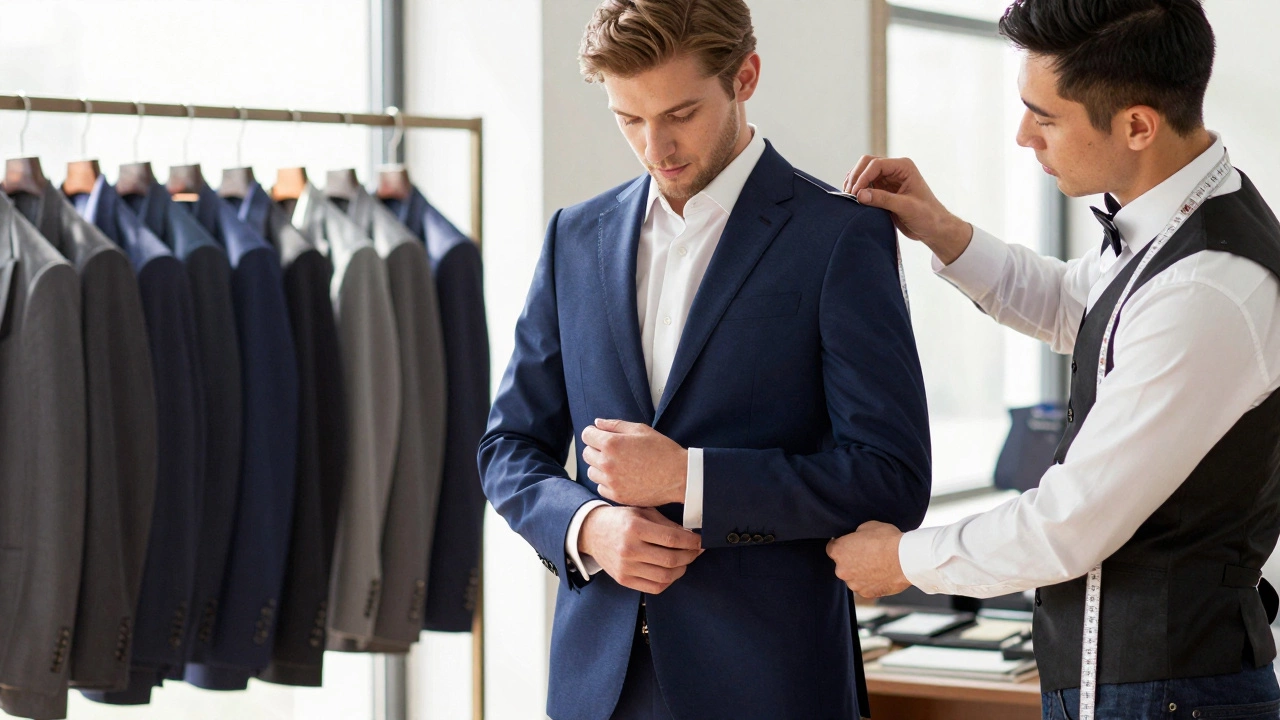
A $5,000 off-the-rack suit will look worse than a $500 suit altered by a good tailor. Fit is everything. Here’s what to check:
- The Shoulders: The seam should end exactly where your shoulder bone ends. If it droops or extends past, the jacket is too big. You can’t easily fix shoulders, so get this right first.
- The Jacket Length: It should cover your seat and end around the middle of your hand curve when arms are at your sides.
- The Sleeves: About half an inch of your shirt cuff should show. Not more, not less.
- The Trousers: Go for a slight break or no break. Piling up fabric at the shoe looks dated and sloppy. Cuffed hems add visual weight and shorten your legs, so skip them unless you’re tall.
If you’re buying online, measure yourself carefully. Chest, waist, inseam, and sleeve length. But even then, plan for alterations. Bodies aren’t rectangles, and suits rarely fit perfectly straight out of the box.
Accessories That Elevate the Look
Your suit is the canvas; accessories are the paint. Small details separate a generic look from a memorable one.
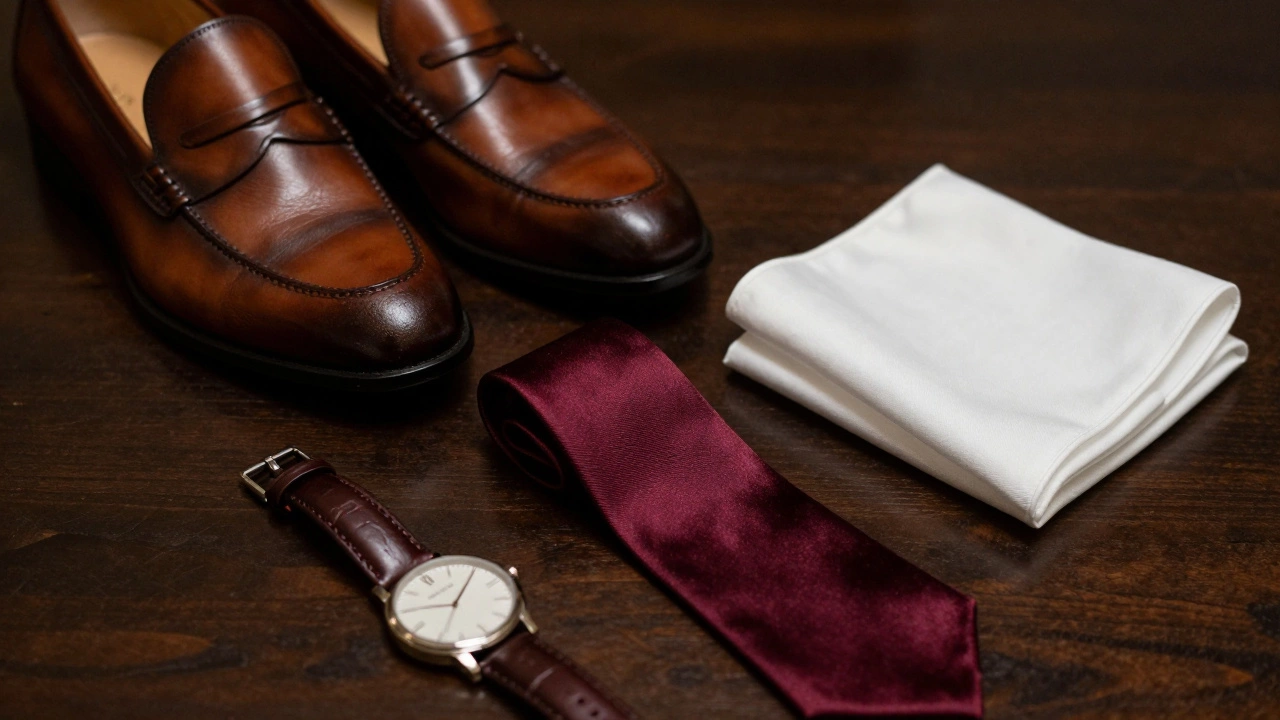
Shoes: Black oxfords for black tie. Brown derbies or loafers for semi-formal. Loafers are perfect for summer weddings-they’re elegant and easy to slip on. Make sure they’re polished. Scuffed shoes ruin an otherwise pristine outfit.
Ties and Bow Ties: Silk is best for sheen and durability. Velvet ties add texture for winter. If you’re nervous about tying a bow tie, practice. Or hire someone to do it for you on the day. A pre-tied clip-on bow tie is a disaster waiting to happen-it looks obvious and cheap.
Pocket Squares: Never match your tie exactly. That looks like a uniform. Instead, pick a complementary color or pattern. A simple white linen pocket square folded in a presidential fold is always classy and never goes out of style.
Watch: Keep it minimal. A leather strap watch matches the warmth of a suit. Metal bracelets can look too sporty. Remove any bulky fitness trackers before photos.
Coordinating with Groomsmen
You want to stand out, but not look like you’re in a different wedding. The groom should be distinct from the groomsmen, yet cohesive.
One common approach: You wear a darker shade. If they’re in light gray, you wear charcoal. If they’re in navy, you wear black or a textured navy. Another option: You wear the waistcoat or cummerbund, while they don’t. Or you wear a unique boutonniere. Maybe yours has a rose, theirs have carnations.
Don’t let groomsmen pick their own suits without strict guidelines. Sizes vary, tastes differ, and you’ll end up with a mismatched mess. Provide a list of approved retailers or rent from the same place. Consistency creates harmony in group photos.
Final Checklist Before the Big Day
Try on your full outfit-including shoes and socks-at least two weeks before the wedding. Walk around. Sit down. Raise your arms. Does the jacket pull across the back? Do the trousers ride up? Fix these issues now, not the morning of.
Steam your suit the night before. Hang it in a steamy bathroom if you don’t have a steamer. Ironing can create shine marks on wool. Steam relaxes the fibers and removes wrinkles gently.
Check your buttons. Sew them tight. Carry a spare button and needle in your pocket. Accidents happen, and you don’t want to panic because a button popped off during the reception.
Can I wear a colored suit to a formal wedding?
It depends on the definition of 'formal.' If it's Black Tie, stick to black or midnight blue tuxedos. For Semi-Formal, yes, you can wear navy, charcoal, or even deep burgundy. Bright colors like red or yellow are generally inappropriate for formal events as they distract from the couple.
Should my groomsmen wear the same suit as me?
Not necessarily. While matching suits create unity, distinguishing yourself is often preferred. You can wear a slightly darker shade, a different fabric texture, or add a waistcoat while they don't. This ensures you remain the focal point in photos.
Is it okay to wear a tuxedo to a daytime wedding?
Technically, no. Black tie is an evening affair. However, modern etiquette is loosening. If you love the look, choose a lighter-colored tuxedo (ivory, silver, or light gray) rather than black. It feels more appropriate for daylight and won't look as severe.
How far in advance should I buy my groom suit?
Aim for 3-4 months before the wedding. This allows time for ordering, shipping, and crucially, alterations. Off-the-rack suits often need hemming and tapering. Rush orders cost more and limit your options.
What shoes should I wear with a navy suit?
Brown leather shoes are the classic choice with navy. Dark brown oxfords for formal events, tan derbies or loafers for casual ones. Black shoes work too but can look stark against navy. Avoid suede for very formal occasions.