What Does the F Stand for in RSVP? The Real Meaning Behind Wedding Invitation Etiquette
 Jan, 5 2026
Ever opened a wedding invitation and stared at the tiny RSVP at the bottom, wondering what the F actually stands for? You’re not alone. Most people know RSVP means ‘please respond,’ but the F? That’s where the confusion starts. And if you’re sending out invitations or replying to one, getting this right matters-because a wrong response can mess up catering, seating, and even the vibe of the whole day.
RSVP Isn’t Just a Fancy Word
RSVP comes from the French phrase répondez s’il vous plaît, which literally means ‘respond if you please.’ It’s been used in formal invitations since the 1700s, especially in European aristocracy. When it landed on wedding invites in the 1900s, it stuck-not because it was easier, but because it felt elegant. Today, it’s everywhere: weddings, galas, even corporate events.
But here’s the thing: RSVP doesn’t mean ‘reply by date.’ It means ‘reply.’ The date? That’s just the deadline. The F? That’s the real puzzle.
The F in RSVP: It’s Not What You Think
Many assume the F stands for ‘follow-up,’ ‘final,’ or even ‘fun.’ Nope. The F doesn’t stand for anything on its own. It’s part of a longer phrase you rarely see printed anymore: Regrets Only or Reply by [date].
Here’s what actually happens on most invitation cards:
- RSVP
- By [date]
- Yes or No
- And sometimes-F for French?
Wait. French?
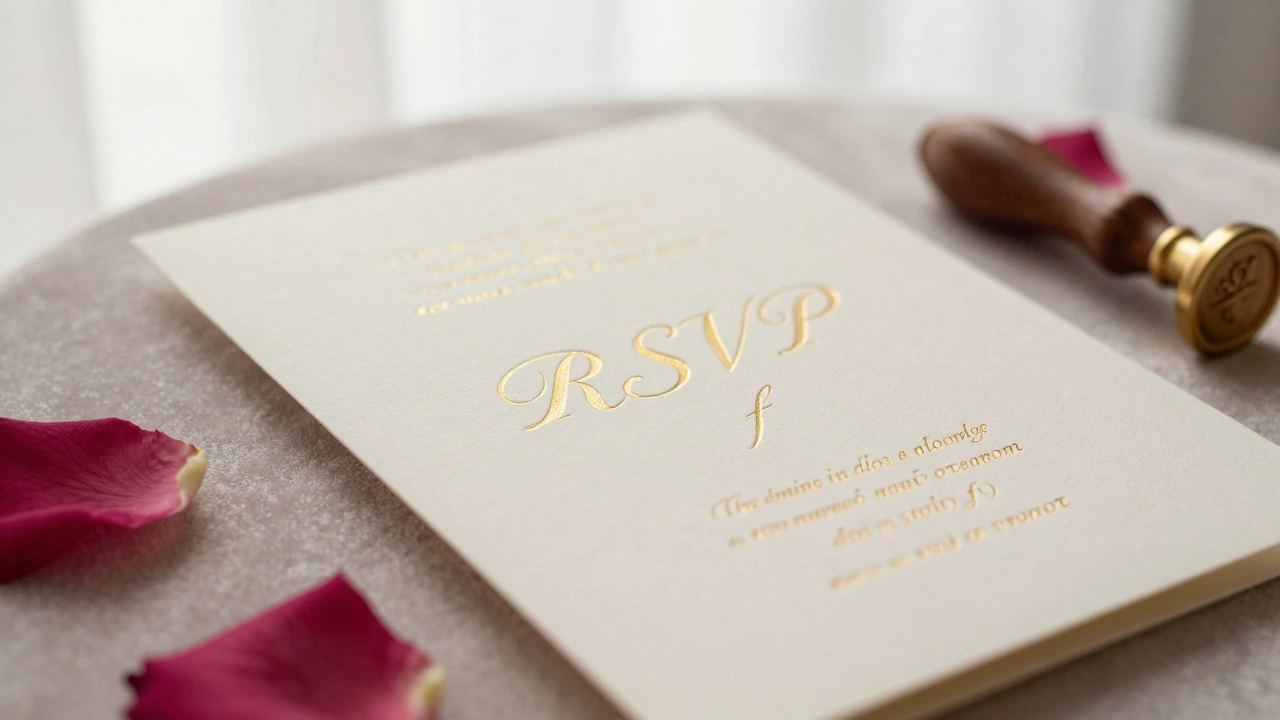
Yes. The F is often a shorthand used by stationers and designers to indicate the language of the original phrase. So when you see ‘RSVP’ with an ‘F’ underneath, it’s not a command. It’s a footnote. It’s saying: ‘This is French. We didn’t translate it because it’s tradition.’
You’ll find this on high-end invitations, especially those printed in France or designed by European stylists. It’s decorative, not functional. It doesn’t change what you need to do. You still reply by the date. You still say yes or no.
What You Actually Need to Do
Forget the F. Focus on what’s clear:
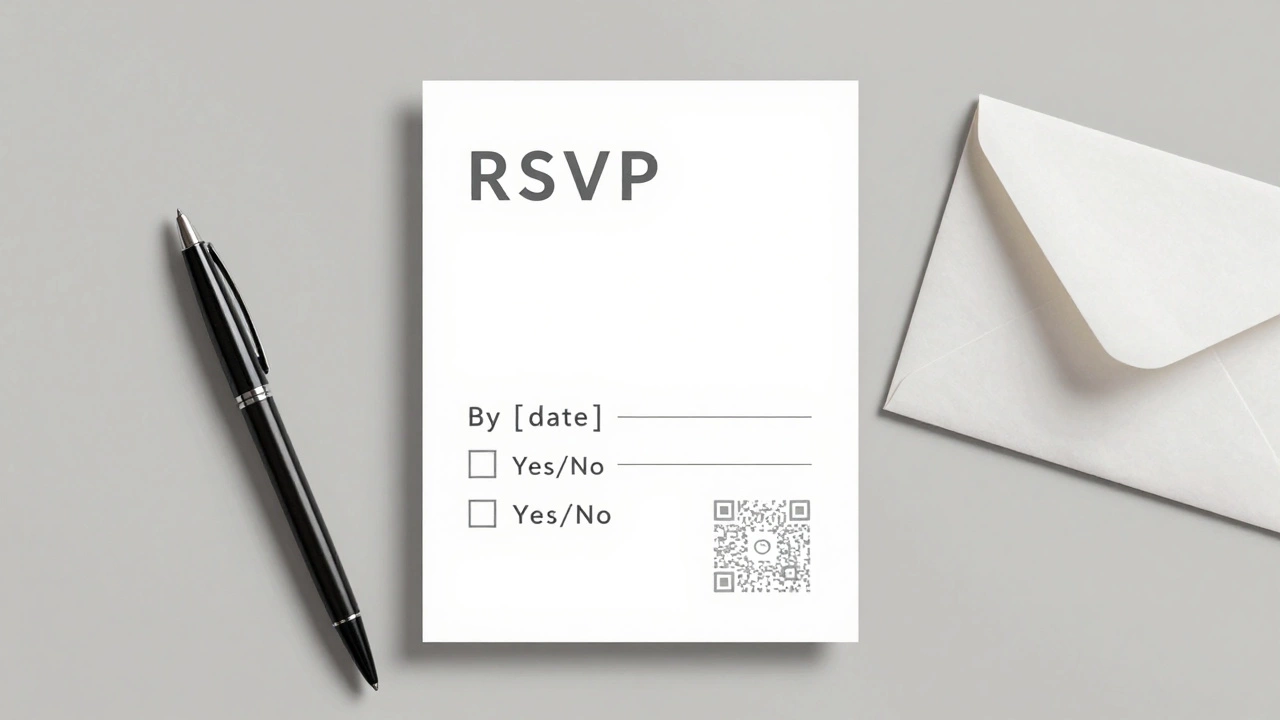
- Find the reply deadline. It’s usually printed right under RSVP.
- Use the response card. If there’s one, fill it out. No need to write a letter.
- If there’s no card, reply by text, email, or phone. Don’t wait until the last minute.
- If you’re unsure, call the couple. Most will appreciate you reaching out.
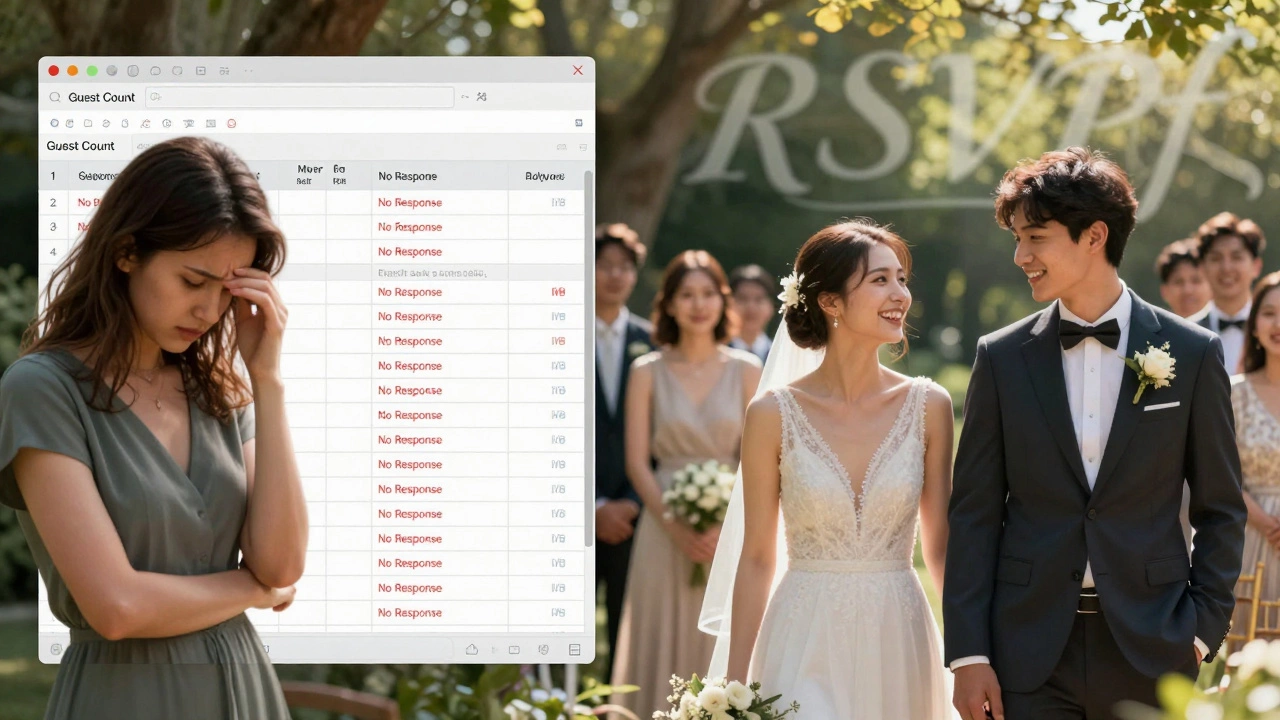
Wedding planners in Melbourne and Sydney report that 30% of guests miss the RSVP deadline. That means caterers over-order food, venues scramble for extra chairs, and the couple loses sleep. A simple reply keeps it smooth.
Why This Matters More Than You Think
Let’s say you’re invited to a wedding with 120 guests. The couple books a venue that holds exactly 120 people. They order 120 meals. You don’t reply. They assume you’re coming. You show up. Now there are 121 people. No extra cake. No extra wine. No extra seat.
That’s not just awkward. It’s expensive. Catering costs can run $100-$200 per person. One unconfirmed guest could cost the couple $2,000.
And it’s not just money. It’s respect. Wedding planning takes months. The couple is stressed. They’re balancing family drama, budget limits, and vendor deadlines. A quick reply? That’s the nicest gift you can give.
What About ‘Regrets Only’?
You might see invitations that say ‘Regrets Only’ instead of RSVP. That’s different. It means: only reply if you can’t come. If you’re coming, don’t say anything.
This style is common in Europe and among older generations. But in Australia and the US, it’s less common because people assume silence means ‘yes.’ That’s risky. If you don’t reply, the couple has to assume you’re coming. And if you’re not? They’re left with extra plates.
Best practice? When in doubt, reply. Always.
Modern Twists on RSVP
These days, couples are ditching paper cards. Many use digital tools:
- Wedding websites with RSVP forms
- Apps like Zola, The Knot, or RSVPify
- Text message links or QR codes on the invite
These tools often include options for dietary needs, plus ones, and even song requests. They make it easy for guests-and way easier for the couple to track responses in real time.
Still, even with tech, the rule stays the same: respond by the date. Don’t wait. Don’t assume. Don’t hope they’ll figure it out.
What to Do If You’re Late
Missed the deadline? Don’t panic. Reply anyway. Send a quick message: ‘I’m so sorry I missed the RSVP date. I’d love to come. Is there still room?’
Most couples will say yes. They’d rather have you there than not. But they might not be able to offer you a full meal or a seat at the main table. That’s the cost of waiting.
And if you’re not sure you’re coming? Say so. Be honest. Say: ‘I’m still unsure. Can I let you know by [new date]?’ Most will agree.
Final Rule: It’s Not About the F
The F in RSVP doesn’t change your responsibility. It’s just a tiny design choice. The real question is: are you going to respond?
Weddings are about connection. Not perfection. Not fancy fonts. Not French phrases. It’s about showing up-for the couple, for the celebration, for the people who’ve spent months planning this day.
So next time you see RSVP with an F underneath? Don’t overthink it. Just reply. By the date. With a yes or no. And if you’re not sure? Ask.
That’s the only thing that really matters.