Wedding Cake Cost for 150 Guests: Pricing Guide
 Sep, 13 2026
Wedding Cake Cost Estimator
Enter your details below to get a realistic estimate. Remember, you typically only need to serve 70-80% of your guests.
Your Wedding Cake Estimate
| Servings Needed: | 0 |
| Base Cake Cost (Avg Rate): | $0 |
| Delivery & Logistics: | $0 |
| Extras (Stand/Setup): | $0 |
| Estimated Total: | $0 |
You just got the quote for your wedding cake and it looks like you need to sell a kidney. Or maybe the number looks suspiciously low, making you wonder if you're getting styrofoam and frosting instead of actual sponge. The truth is somewhere in between, but it depends entirely on how many people you actually plan to feed.
Most couples assume they need enough cake for every single guest. But do you really? If you have 150 guests, do you need 150 slices? Not necessarily. And that distinction alone can save you hundreds, sometimes thousands, of dollars. Let's break down exactly what it costs to feed 150 people, why the math isn't as simple as "guests times price," and how to avoid the classic wedding cake budget traps.
The Golden Rule: You Don't Need One Slice Per Guest
Here is the industry standard that most bakers will tell you: you only need to serve about 70% to 80% of your total guest count with cake. Why? Because not everyone eats dessert. Some guests are diabetic, some are full from dinner, some prefer coffee over sweets, and some kids simply don't want cake. Planning for 150 slices when you only have 150 guests is a waste of money and food.
For a wedding reception with 150 guests, you should aim for approximately 110 to 120 servings. This buffer accounts for those who might take two pieces (because, let's be honest, someone always does) while acknowledging that a significant chunk of your list won't touch the plate. Bakers calculate this based on years of data; planning for fewer servings than guests is standard practice, not a sign of stinginess.
How Bakers Actually Calculate the Price
You might think bakers charge by the pound or by the tier. They don't. They charge by the serving. It’s the most transparent way to price custom work because it scales directly with labor and ingredients. A typical range in the US market for a standard three-tier fondant-covered cake is $4 to $8 per serving. For buttercream cakes, which require less labor-intensive decoration, the range drops to $3 to $6 per serving.
Let's run the numbers for our 150-guest scenario. If you decide to serve 120 people at a mid-range rate of $5 per slice, your base cost is $600. If you go high-end with intricate sugar flowers and hand-painted details at $8 per slice, you're looking at $960. If you keep it rustic and simple with naked layers and fresh fruit at $3.50 per slice, you could get away with $420. See the spread? The design complexity drives the price more than the size of the crowd.
| Cake Style | Price Per Serving | Total Estimated Cost | Labor Intensity |
|---|---|---|---|
| Rustic / Naked Cake | $3.00 - $4.50 | $360 - $540 | Low |
| Classic Buttercream | $4.00 - $6.00 | $480 - $720 | Medium |
| Fondant / Smooth Finish | $5.00 - $7.50 | $600 - $900 | High |
| High-End Custom Art | $7.00 - $12.00+ | $840 - $1,440+ | Very High |
Why Tier Sizes Matter More Than You Think
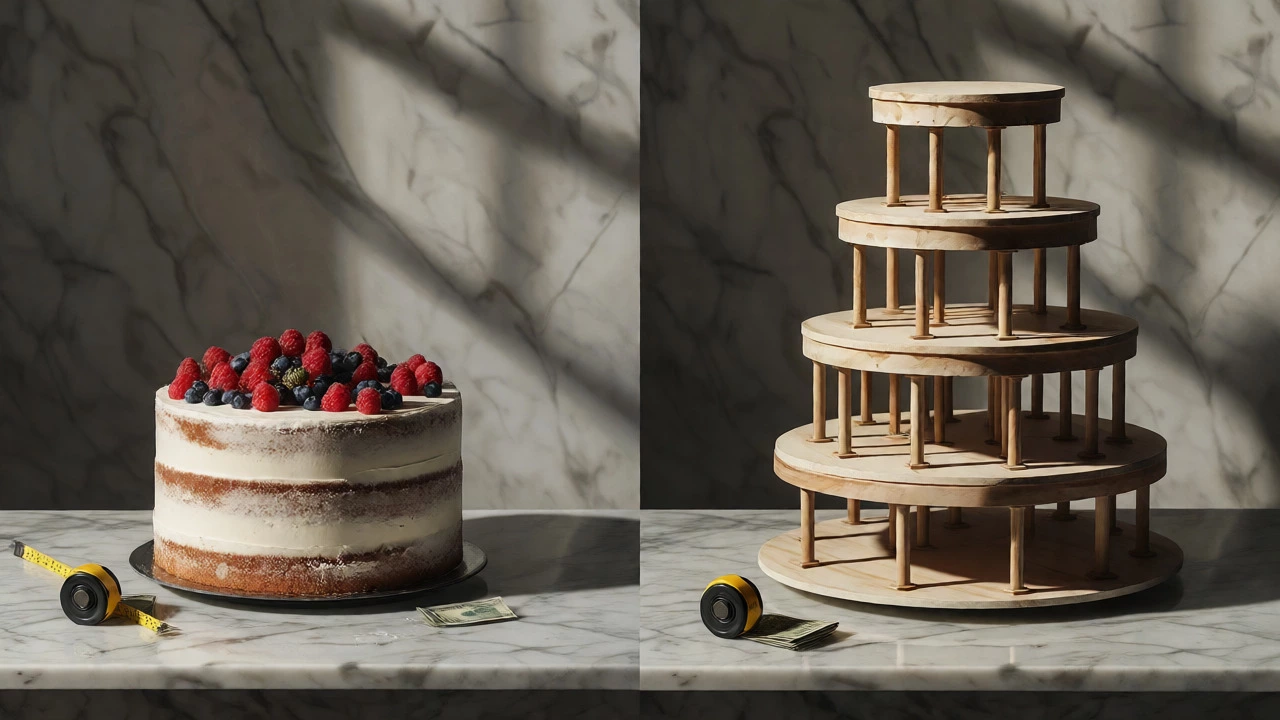
A common mistake is asking for a specific number of tiers without considering serving efficiency. A four-tier cake doesn't automatically mean more food; it often means more height and more structural engineering, which adds cost. For 120 servings, a well-designed three-tier cake is usually sufficient and cheaper than a four-tier setup.
Bakers use standard pan sizes to maximize yield. A 6-inch round tier yields about 12-15 servings. An 8-inch round yields 20-25. A 10-inch yields 30-35. To hit 120 servings, you might combine a 6-inch, an 8-inch, and a 10-inch tier. That structure is stable, transportable, and cost-effective. Adding a fourth small tier just for aesthetics might add $100-$200 to the bill for minimal extra cake volume.
Hidden Costs That Blow Up Your Budget
The per-serving price is rarely the final number on the invoice. Here are the line items that sneak up on you:
- Delivery Fees: Transporting a fragile, tall cake requires specialized vehicles and time. Expect to pay $50 to $150 depending on distance and accessibility. If your venue is on a hill or has no elevator, this fee spikes.
- Setup and Cutting Service: Many bakers include basic setup, but if you want them to cut and plate the cake during the reception, that’s an hourly labor cost, typically $50-$100 per hour.
- Tasting Box: Most reputable bakers charge $25-$50 for a tasting box of flavors. This is often credited toward the final purchase if you book, but ask upfront.
- Stand Rental: If you don't own a cake stand, renting one from the baker can cost $20-$50. Buying a cheap one online might seem cheaper, but ensure it fits the dimensions of your specific cake design.
Alternatives That Save Money (Without Looking Cheap)
If the traditional tiered cake feels too expensive for 150 people, consider these strategic swaps that maintain elegance while lowering the per-head cost.
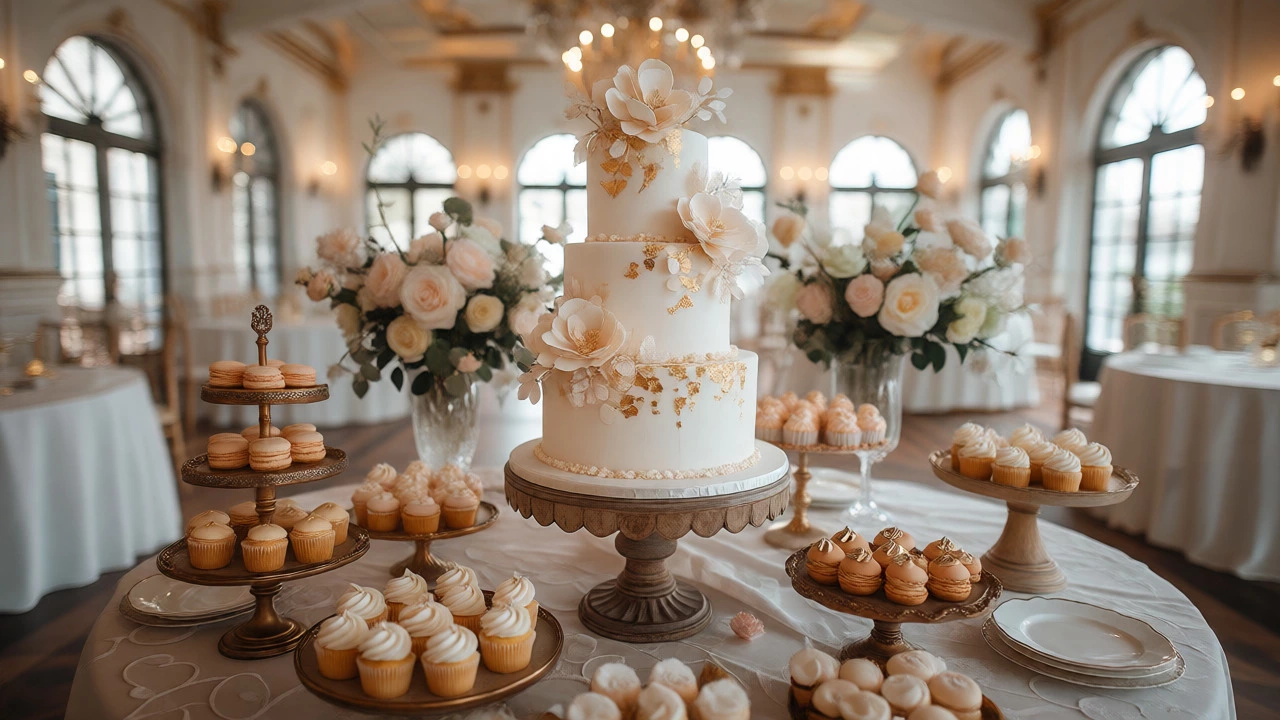
Dessert Tables: Instead of one giant cake, offer a variety of smaller desserts-cupcakes, macarons, tarts, and brownies. You still provide a "cake" moment for the photo (a small top-tier cake), but the bulk of the dessert comes from cheaper-to-produce items. This approach often reduces the total dessert budget by 20-30% because you aren't paying for the labor-intensive construction of a massive tiered structure.
Sheet Cakes Behind the Scenes: Have a beautiful, small decorative cake for the cutting ceremony photos. Then, serve sheet cakes from the kitchen. Sheet cakes are significantly cheaper per serving ($2-$3) because they are easy to bake, stack, and frost. Guests never know the difference once the fork hits their mouth.
Naked or Semi-Naked Styles: These styles skip the expensive fondant covering. Fondant requires skilled labor to roll and apply smoothly without bubbles. Skipping it saves hours of prep time, passing savings directly to you. Plus, it showcases the quality of your sponge and filling, which is arguably tastier anyway.
Questions to Ask Your Baker Before Booking
To ensure you get an accurate quote for 150 guests, don't just ask "how much?" Ask these specific questions:
- "What is your price per serving for [specific style]?"
- "Do you recommend we serve all 150 guests or a percentage?"
- "Does the quoted price include delivery, setup, and the cake stand?"
- "Are there additional fees for complex decorations like sugar flowers or gold leaf?"
- "What happens if we need to reduce the guest count last minute?" (Some bakers allow a 10% reduction within 2 weeks of the event.)
Final Thoughts on Value vs. Cost
Feeding 150 people a wedding cake is a balance of logistics and aesthetics. You don't need to overserve, and you don't need to overdecorate. By calculating for 120 servings rather than 150, choosing efficient tier structures, and being aware of hidden fees, you can land a stunning centerpiece for under $800 in many markets. Remember, the goal is a memorable taste and a great photo, not a surplus of leftovers.
Do I really need to buy cake for every guest?
No. Industry standards suggest buying cake for 70-80% of your guest list. For 150 guests, ordering 110-120 servings is standard and prevents waste.
Is fondant more expensive than buttercream?
Yes. Fondant is generally $1-$3 more per serving than buttercream due to the higher skill level and time required to apply it smoothly.
How many tiers do I need for 150 people?
Typically three tiers are sufficient for 120 servings. Four tiers may be used for height but add cost without significantly increasing yield.
What is the average cost per serving for a wedding cake?
In the US, expect to pay between $4 and $8 per serving for standard designs. Simple rustic cakes can be $3-$4, while high-end art cakes exceed $10.
Can I save money with a dessert table?
Yes. Replacing part of the tiered cake with cupcakes or cookies can lower the overall dessert budget by 20-30% while offering more variety.