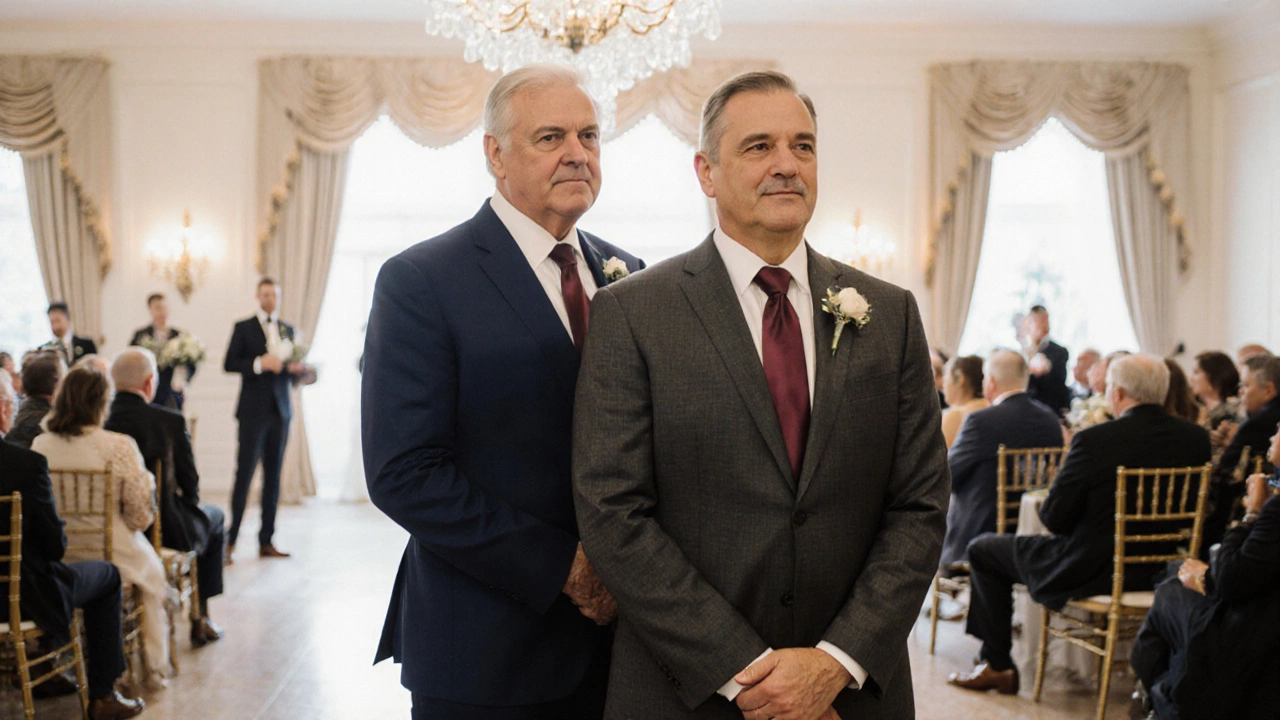
Wedding Suit Guidelines: What to Wear, What to Avoid, and How to Get It Right
When it comes to wedding suit guidelines, the unwritten rules that help grooms and male guests choose attire that fits the occasion without stealing the spotlight. Also known as formal wedding dress code, these guidelines aren’t about being fancy—they’re about being respectful, coordinated, and comfortable on a day that’s not yours. Too many men show up in black tuxedos for afternoon weddings, or wear bright blues that clash with the bridal party. It’s not about rules for rules’ sake—it’s about knowing when to keep it simple and when to step up your game.
One of the biggest mistakes? Assuming all weddings are the same. A beach wedding in June calls for a light gray or beige suit, not a heavy charcoal. A formal evening ceremony in December? That’s where a classic navy or black suit shines. groom suit colors, the shades that work best for different times of day, seasons, and venues. Also known as wedding suit palettes, they’re not random—they’re tied to lighting, season, and tradition. Navy is safe for most events. Charcoal works for winter or evening. Light gray? Perfect for spring or garden weddings. Avoid white—it’s reserved for the bride. And no, neon green or plaid isn’t a statement, it’s a red flag.
Fit matters more than brand. A suit that’s too tight or too loose looks sloppy, no matter the price tag. Shoulders should sit flat, sleeves should end at your wrist bone, and pants should break just slightly over your shoes. If you’re renting, try it on. If you’re buying, get it tailored. formal suit etiquette, the practical standards that keep you looking polished without overdoing it. Also known as wedding attire norms, this includes pairing your suit with the right shoes, tie, and accessories—no sneakers, no baseball caps, no untucked shirts. Tie? Optional for casual weddings, expected for formal ones. Pocket square? Nice touch, but skip the matching set with the bride’s bouquet. Shoes should be polished, not new. And if you’re unsure? Ask the couple. Most will tell you exactly what they’re looking for.
There’s also the question of who pays. More couples today are giving clear dress codes, not because they’re controlling, but because they don’t want guests to feel lost. Some weddings say "black tie," others say "smart casual." Don’t guess. If it says "semi-formal," that usually means a suit—no tuxedo needed. If it says "beach formal," think linen, not wool. And if you’re the groom? Your suit should match the tone of the whole day—not just your personal style. It’s not about looking like a model. It’s about blending in so the focus stays where it belongs.
You’ll find real examples in the posts below—from which suit colors work best for outdoor weddings, to what groom’s parents should expect to cover, to how to avoid the most common wedding suit mistakes. No fluff. No theory. Just what works, what doesn’t, and why.