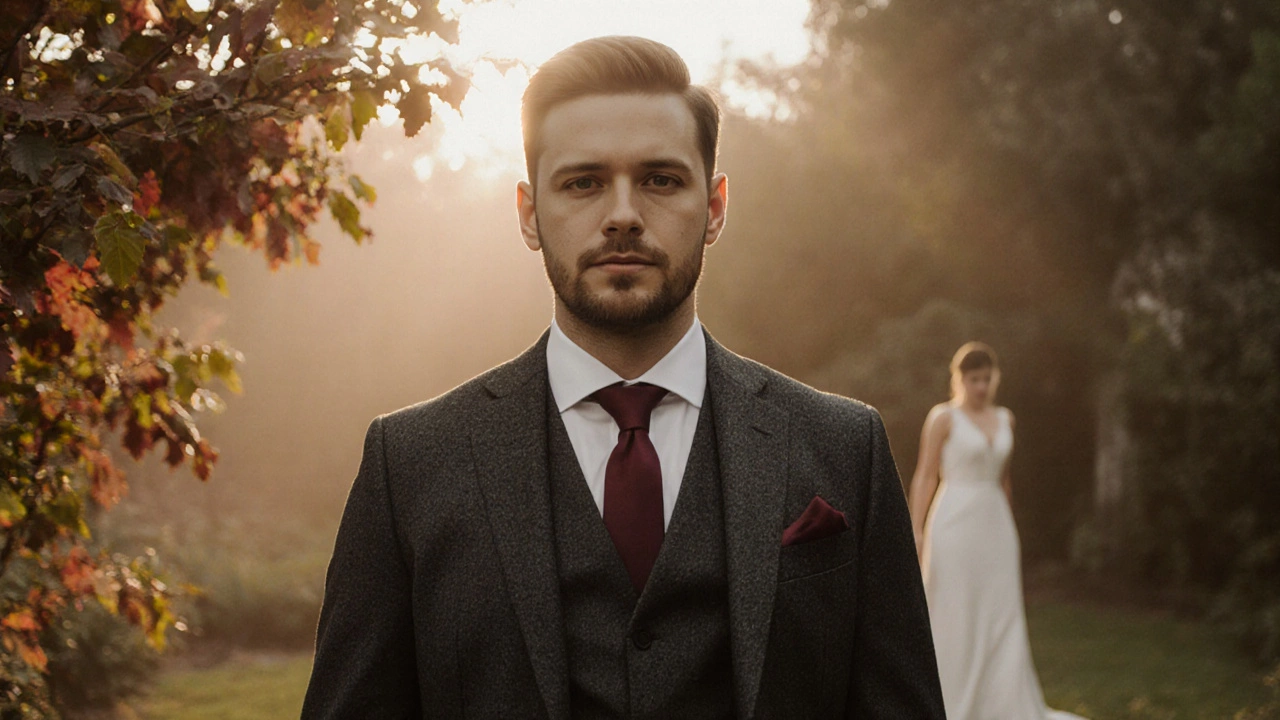
Formal Wedding Suit
When you're invited to a wedding, a formal wedding suit, a tailored outfit designed for formal ceremonies, typically in dark colors like navy, charcoal, or black, worn by grooms, fathers, and male guests. Also known as tuxedo in some contexts, it's not just clothing—it's a signal of respect, timing, and social awareness. Too many men show up in suits that are too light, too casual, or worse—too similar to the groom’s. That’s not just awkward, it’s disrespectful. A formal wedding suit should frame the occasion, not compete with it.
The groom, the central male figure in a wedding ceremony, usually wears the most formal suit or tuxedo of the day sets the tone. His outfit tells everyone what level of formality to match. If he’s in a classic black tuxedo, you don’t show up in a navy blazer with khakis. If he’s in a charcoal three-piece, your suit should be darker or at least equally structured. The father of the groom, the male parent of the groom, often expected to wear a suit one shade darker than the groom’s to honor his role without overshadowing follows the same logic. He’s not there to steal the spotlight—he’s there to support it. That’s why navy and charcoal come up so often in wedding guides. They’re safe, sharp, and silent.
And it’s not just about color. Fit matters more than brand. A suit that hangs off your shoulders or bunches at the waist looks like you grabbed the first thing off the rack. Tailoring isn’t a luxury—it’s a requirement. Even a budget suit can look expensive if it’s adjusted to your body. The wedding party attire, the coordinated clothing worn by the groom, groomsmen, fathers, and ushers to maintain visual harmony at the ceremony is a team effort. Everyone should feel like part of the same visual story, not a fashion show with conflicting themes.
Who pays for it? That’s a question that comes up more than you’d think. In 2025, most grooms and their families cover the cost of their own suits. The father of the groom might get one as a gift, but it’s not a given. And if you’re just a guest? You’re not expected to buy a brand-new suit unless you don’t already own one. But if you’re going to wear it for a wedding, make sure it’s clean, pressed, and fits. A rented suit is better than a worn-out one you haven’t touched since your cousin’s baptism.
Season matters too. A heavy wool suit in July? That’s not formal—it’s a heatstroke waiting to happen. Lighter fabrics like linen blends or tropical wool work better in summer. Winter weddings? Stick to wool, add a vest, and maybe a pocket square. No one needs to see you sweating through your lapels while the bride walks down the aisle.
And yes, black suits are still okay—just don’t wear them if the groom is also wearing black. That’s when things get messy. Stick to the rule: darker than the groom, but never the same. White or cream suits? Only if the wedding is beachside and the invitation says so. Otherwise, skip it. Red? Don’t even think about it. You’re not at a nightclub. You’re at a wedding.
What you wear says more than you think. It tells the couple you took the time to understand their day. It tells your family you respect tradition. It tells the photographer you’ll look good in the pictures. A formal wedding suit isn’t about showing off—it’s about showing up. And when you get it right, no one notices. That’s the point.
Below, you’ll find real advice from people who’ve been there—what works, what doesn’t, and what no one tells you until it’s too late.