Is $5000 a Lot for an Engagement Ring? A Realistic Guide to Budgeting in 2026
 Jun, 21 2026
Engagement Ring Budget Visualizer
Estimated Result
- Stone Cost (approx.) $0
- Setting Cost (approx.) $0
- Annual Insurance (1.5%) $0
Select options and click 'Visualize Value' to see expert advice based on your choices.
Adjust the settings and click calculate to see what your budget gets you in 2026.
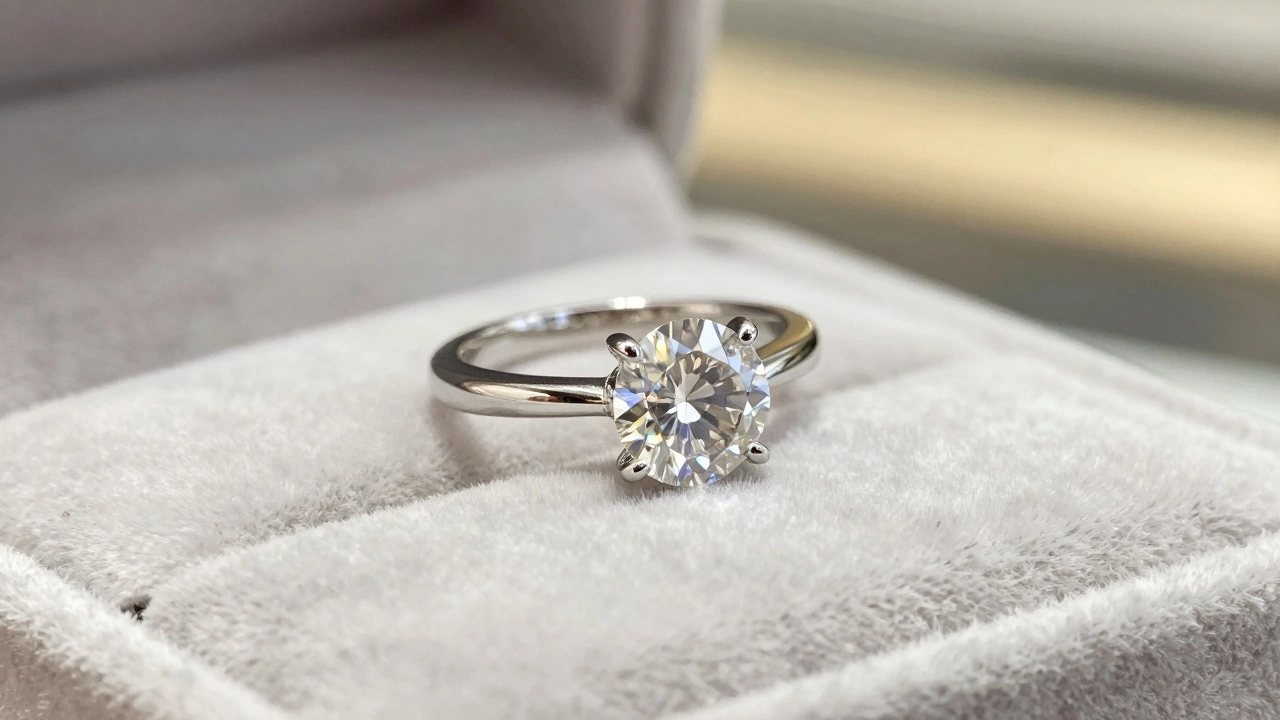
Walking into a jewelry store with a specific number in your head can feel like walking into a trap. You see the sparkle, you hear the sales pitch about "the two-month salary rule," and suddenly that $5,000 figure feels either like a steal or a financial disaster. The short answer is no, $5,000 is not too much money for an engagement ring in 2026. In fact, it places you comfortably in the upper-middle tier of spending. It is enough to buy a beautiful, high-quality stone without draining your savings account or forcing you into debt.
However, whether it is "too much" depends entirely on your personal finances, not some arbitrary industry standard. Let’s break down what $5,000 actually gets you today, why the old rules are dead, and how to spend that money wisely so you don’t regret it six months later when the honeymoon bills arrive.
The Death of the "Two-Month Salary" Myth
If you grew up hearing that you should spend two months’ worth of gross income on an engagement ring, you need to know that this was a marketing campaign, not a moral imperative. De Beers launched this slogan in the 1930s to boost diamond sales during the Great Depression. It stuck because it worked. But in 2026, with housing costs, inflation, and student loans still weighing heavily on millennials and Gen Z, following this rule is financial suicide for most couples.
Data from recent wedding surveys shows that the average engagement ring cost in Australia and the US hovers between $2,000 and $3,000. Spending $5,000 puts you well above average, but not in the realm of extravagance. Many people spend $10,000 or more, while others find stunning options for under $1,000. The goal isn’t to hit a benchmark; it’s to buy a ring that fits your life. If $5,000 means you have to delay saving for a house or skip your honeymoon, then yes, it is too much. If it comes from a discretionary fund you’ve set aside specifically for this milestone, it’s a reasonable investment in a symbol of your commitment.
What Does $5,000 Actually Buy You in 2026?
Pricing for diamonds has shifted significantly over the last few years. Supply chain issues post-pandemic caused spikes, but increased availability of lab-grown diamonds has created a new market dynamic. With a $5,000 budget, you have distinct choices depending on whether you choose natural or lab-grown stones.
| Feature | Natural Diamond | Lab-Grown Diamond |
|---|---|---|
| Carat Weight | 0.7 - 0.9 carats | 1.5 - 2.0+ carats |
| Color Grade | G-H (Near Colorless) | D-F (Colorless) |
| Clarity | VS1-VS2 (Very Slightly Included) | VVS1-VVS2 (Very Very Slightly Included) |
| Cut Quality | Good to Very Good | Excellent/Ideal |
| Setting Material | 14k Gold or Platinum | Platinum or 18k Gold |
With a natural diamond, your $5,000 will likely secure a stone just under 1 carat. This is a sweet spot because once you cross the 1-carat threshold, prices jump significantly due to rarity. You’ll get a stone that looks substantial, especially if you choose a cut like oval or marquise, which appear larger than round brilliants of the same weight.
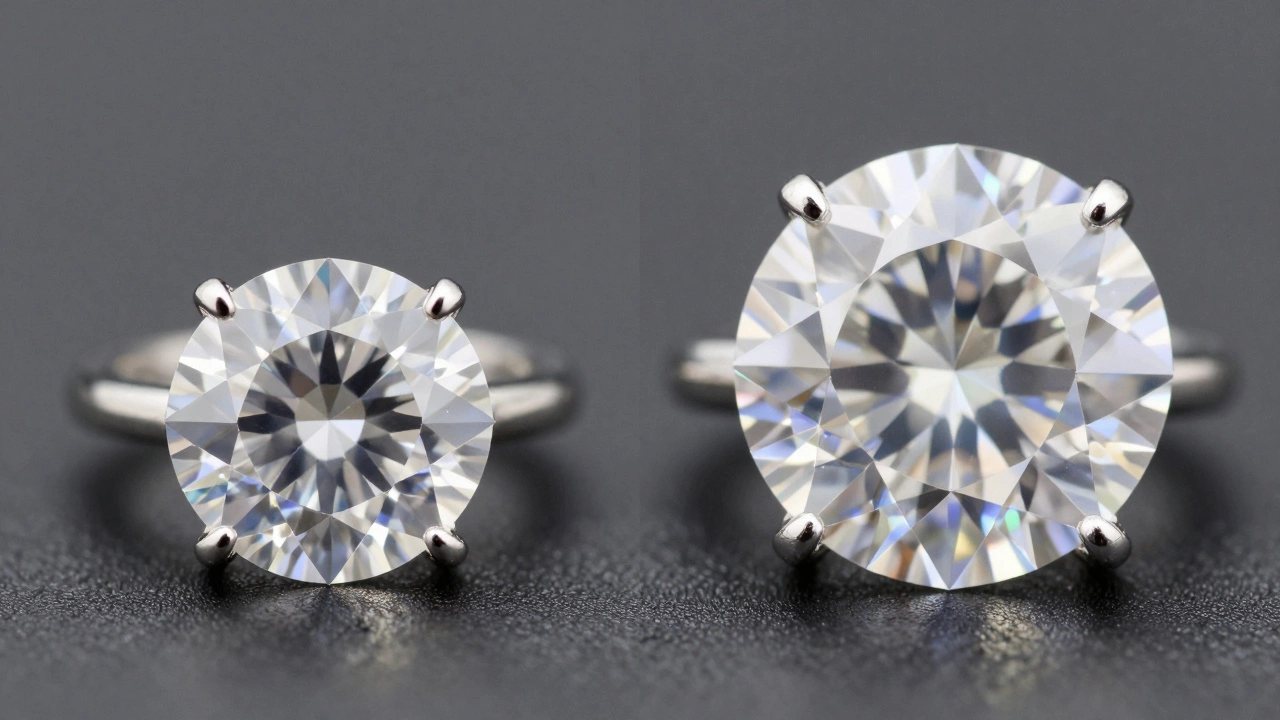
If you opt for a lab-grown diamond, the math changes completely. These stones are chemically, physically, and optically identical to mined diamonds but cost 30-50% less. For $5,000, you could walk out with a 1.5 to 2-carat stone with top-tier color and clarity grades. The trade-off is resale value-lab-grown diamonds have almost zero resale value compared to natural ones-but if you view the ring as jewelry rather than an asset, this is often the smarter choice for visual impact.
Allocating Your Budget: Stone vs. Setting
A common mistake is dumping 90% of the budget into the center stone and leaving $500 for the setting. This leads to a fragile band or a design that doesn’t complement the stone. A better approach is the 70/30 or 60/40 split.
- The Stone (60-70%): This is where the visual appeal lives. Focus on the "Four Cs": Cut, Color, Clarity, and Carat. Prioritize Cut above all else. A poorly cut diamond will look dull even if it’s large and clear. A well-cut smaller stone will sparkle brighter than a large, poorly cut one.
- The Setting (30-40%): Don’t skimp here. The setting holds the stone and affects durability. Platinum is durable but pricey. 14k gold is affordable and strong. Consider the lifestyle of the wearer. If they work with their hands, a low-profile bezel setting might be safer than a high-prong solitaire, regardless of the stone’s price.
Also, remember hidden costs. Insurance is non-negotiable. Adding a jewelry rider to your homeowner’s or renter’s insurance typically costs 1-2% of the appraised value annually. For a $5,000 ring, that’s $50-$100 a year. Factor this into your long-term budget, not just the upfront purchase.
Where to Shop: Brick-and-Mortar vs. Online
Your shopping method drastically impacts what you get for $5,000. Traditional brick-and-mortar jewelers have overhead costs-rent, staff, inventory display-that are baked into the price. You might pay a 30-50% markup compared to online retailers.
Online jewelers, particularly those specializing in lab-grown diamonds or direct-to-consumer models, offer transparency. They provide detailed reports from grading labs like GIA (Gemological Institute of America) or IGI (International Gemological Institute). When buying online, ensure the retailer offers:
- Free returns: At least 30 days. You need to see the ring in person to judge size and style.
- Independent certification: Never buy a diamond over $1,000 without a GIA or IGI report. In-house certificates are often inflated.
- Lifetime warranty: Covering prong tightening and basic cleaning.
If you prefer the experience of trying rings on, consider visiting local Melbourne jewelers for consultations but comparing prices online. Some local artisans may charge more, but they offer customization and immediate repairs, which adds value beyond the raw materials.
Alternatives to Traditional Diamonds
If $5,000 feels tight for the diamond quality you want, or if you simply dislike diamonds, there are excellent alternatives that stretch your budget further.
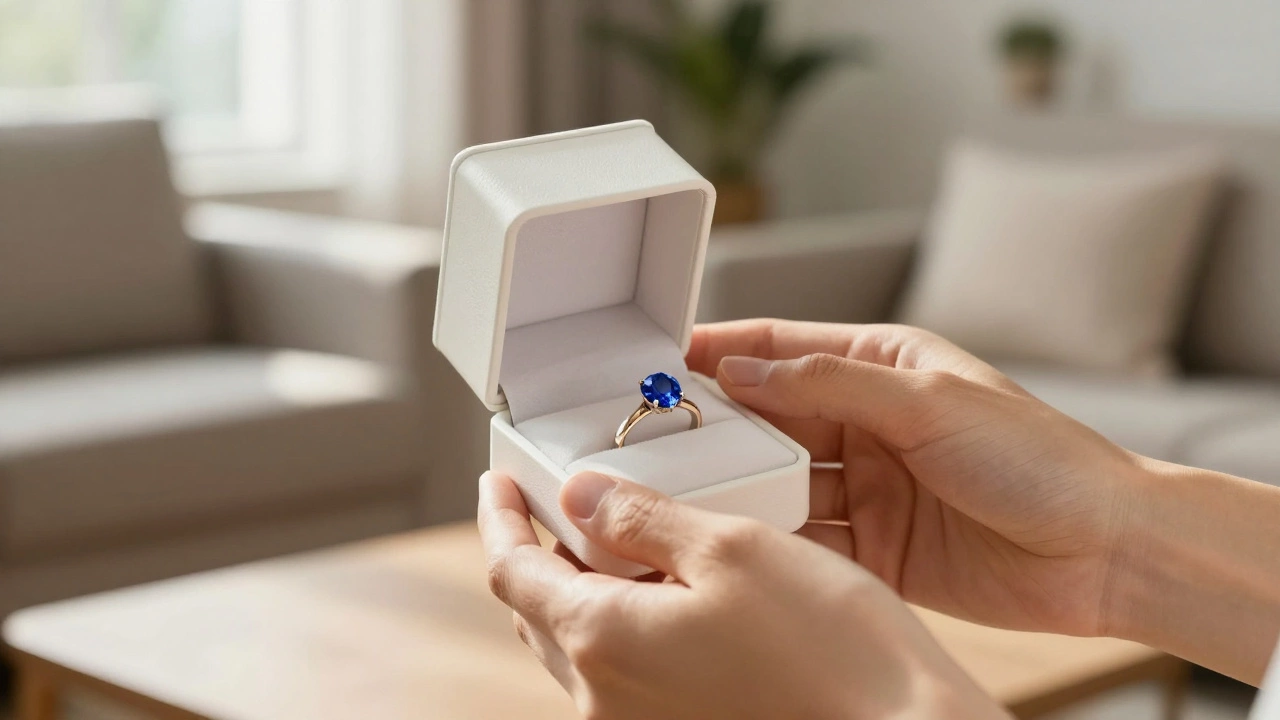
Sapphires are a durable, colorful alternative to diamonds that often cost less per carat. A high-quality blue sapphire can be half the price of a comparable diamond. They are hard (9 on the Mohs scale), making them suitable for daily wear. Moissanite is another option-it sparkles more than a diamond and costs a fraction of the price. For $5,000, you could buy a massive, flawless moissanite ring that would cost $20,000+ if it were a natural diamond.
Morganite, ruby, and emerald are also popular. However, note that emeralds and rubies are softer and more inclusion-heavy, requiring more careful maintenance. If you choose these, invest in a protective setting.
Questions to Ask Before You Swipe the Card
Before committing to the $5,000 price tag, ask yourself these three questions:
- Does this fit our broader financial goals? Are you saving for a home, paying off high-interest debt, or planning a family soon? If the ring compromises these goals, lower the budget.
- Does my partner care about brand names? Tiffany & Co. or Cartier carry a premium for the logo, not necessarily the quality. You can get the same stone for 40% less at a reputable independent jeweler.
- Is the ring practical? A huge, high-setting ring might not suit someone who types all day or works in healthcare. Practicality matters more than prestige.
Remember, the ring is a symbol, not a scorecard. The best ring is one that brings joy without causing stress. $5,000 is a healthy budget that allows for quality and beauty, provided you shop smartly and prioritize what truly matters to you and your partner.
Is $5,000 considered expensive for an engagement ring in 2026?
No, $5,000 is considered a moderate-to-high budget but not excessive. The average spending range is $2,000-$3,000. $5,000 allows for a high-quality natural diamond near 1 carat or a large, high-grade lab-grown diamond of 1.5+ carats. It is only "expensive" if it strains your personal finances or delays other major life goals.
Should I buy a natural or lab-grown diamond for $5,000?
It depends on your priorities. Choose a natural diamond if you value rarity, tradition, and potential resale value (though resale is always low). Choose a lab-grown diamond if you want maximum size and clarity for your budget, ethical sourcing certainty, and lower environmental impact. Lab-grown diamonds are chemically identical to natural ones but cost significantly less.
What is the best cut for a $5,000 budget?
Round brilliant cuts are the most expensive per carat. To maximize size within a $5,000 budget, consider fancy shapes like Oval, Marquise, Pear, or Emerald cut. These shapes often appear larger than round diamonds of the same carat weight and are typically 10-20% cheaper. Always prioritize an "Excellent" or "Ideal" cut grade for maximum sparkle.
Do I need insurance for a $5,000 ring?
Yes, absolutely. Standard homeowner’s or renter’s insurance policies often have limits on jewelry coverage. You should add a "rider" or floater to your policy. This typically costs 1-2% of the appraised value annually ($50-$100 for a $5,000 ring) and covers loss, theft, and damage. Keep the appraisal document safe.
Can I get a 1-carat diamond for $5,000?
Yes, but with compromises. For a natural diamond, $5,000 can buy a 1-carat stone if you accept lower color (I-J) or clarity (SI1-SI2) grades, which are often eye-clean. Alternatively, you can get a slightly smaller stone (0.8-0.9 carats) with higher color (G-H) and clarity (VS) grades. Lab-grown diamonds easily exceed 1 carat for this price with top grades.
Is it better to buy online or in-store?
Online retailers generally offer better prices due to lower overhead, allowing you to get a higher-quality stone for $5,000. Look for reputable sites with GIA/IGI certifications, free returns, and lifetime warranties. In-store shopping offers the benefit of trying on styles and immediate support, but expect a markup. A hybrid approach-researching online and visiting local jewelers for fittings-is often ideal.