Is $5,000 Too Much for a Wedding Photographer? The Real Cost Breakdown
 Jun, 4 2026
Wedding Photography Value Calculator
Enter Your Quote Details
Analysis Results
Enter your details to see if the price is fair.
Imagine you’re scrolling through Instagram. You see a couple’s wedding photos that look like they were shot by a Hollywood director. The lighting is perfect, the emotions are raw, and every detail pops. Then you check their vendor list and see the photographer charged $5,000. Your stomach drops. Is that reasonable? Or are they getting ripped off?
The short answer is: it depends. But the longer, more useful answer involves looking at what you actually get for that money. In 2026, wedding photography prices have shifted significantly due to inflation, equipment costs, and the changing expectations of couples. A $5,000 price tag sits right in the middle of the market-not the cheapest, but certainly not the most expensive. Whether it’s "too much" depends entirely on your location, the length of coverage, and the specific deliverables included in the package.
Understanding the Market Rates in 2026
To figure out if $5,000 is a good deal or a bad one, you first need to know where it lands on the spectrum. Wedding photography isn’t a standardized product like a gallon of milk; it’s a service industry with wide variances based on geography and experience level.
| Tier | Price Range | Typical Coverage Hours | Who It’s For |
|---|---|---|---|
| Budget / Entry-Level | $1,500 - $3,000 | 6-8 hours | Small weddings, elopements, DIY couples |
| Mid-Range / Professional | $3,000 - $6,000 | 8-10 hours | Standard weddings, experienced pros |
| Premium / Luxury | $6,000 - $10,000+ | 10+ hours, second shooter | Large events, destination weddings, top-tier artists |
If you live in a major metropolitan area like New York City, Los Angeles, or London, $5,000 is actually quite standard for a mid-to-high-level professional. These photographers often have high overhead costs, including studio rent, assistant salaries, and marketing budgets. If you’re in a smaller town or rural area, however, $5,000 might be on the higher end unless you’re hiring a specialist who travels from a big city.
Geography plays a massive role. A photographer in Nashville might charge $4,500 for the same package that costs $7,000 in San Francisco. Always compare local averages, not national ones.
What Are You Actually Paying For?
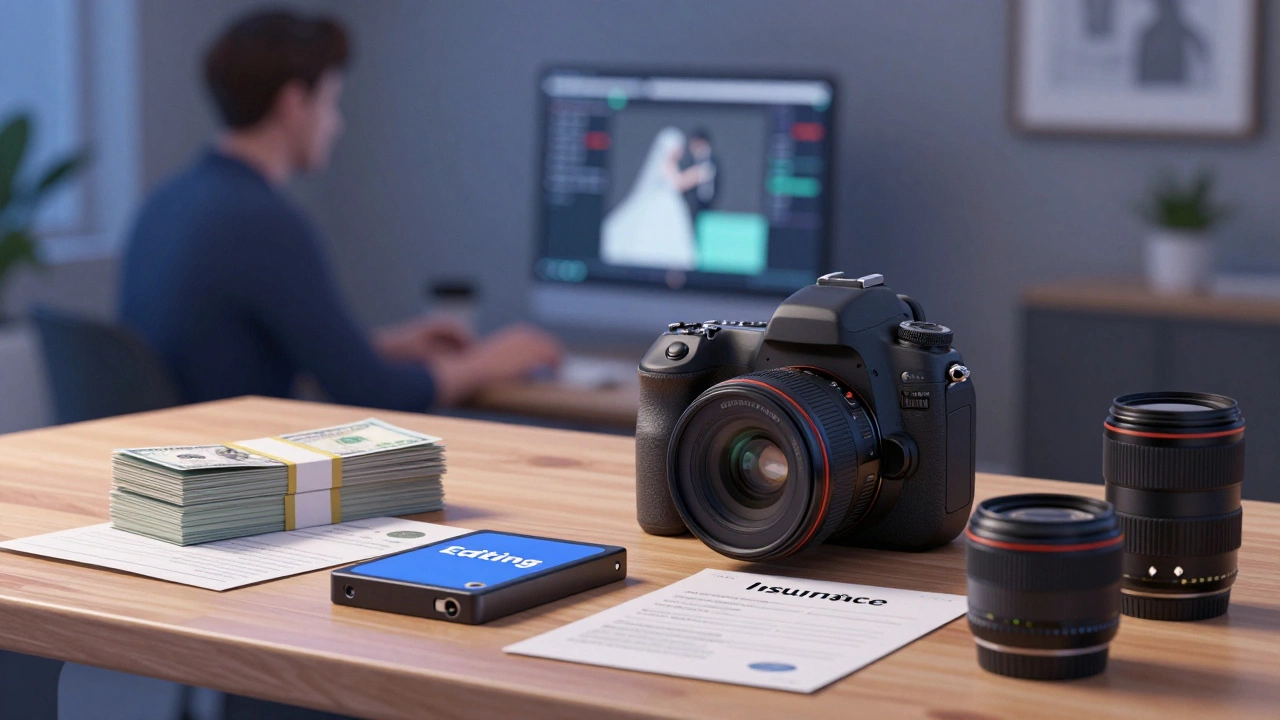
When you hand over $5,000, you aren’t just paying for someone to click a button. You’re paying for years of training, expensive gear, insurance, and post-production labor. Let’s break down the hidden costs that justify the price tag.
- Equipment: Professional wedding photographers don’t use one camera. They carry two bodies (to prevent failure), multiple lenses (wide angle, prime, telephoto), flashes, batteries, and memory cards. This setup can easily cost $10,000 to $20,000 upfront.
- Post-Production Time: This is the biggest hidden cost. Editing 500-800 high-resolution images takes time. Color correction, exposure balancing, skin retouching, and culling (selecting the best shots) can take 10-20 hours per wedding. At a conservative rate of $50/hour for editing alone, that’s $500-$1,000 in labor before the wedding even happens.
- Insurance and Business Overhead: Professional photographers carry liability insurance to protect venues and clients. They also pay for software subscriptions (Adobe Creative Cloud, backup drives, website hosting), marketing, and travel expenses.
- Experience and Reliability: You’re paying for someone who won’t panic when it rains, when the reception starts late, or when the lighting is terrible. An experienced pro knows how to solve problems quickly without missing key moments.
If a photographer charges $2,000, ask yourself: Are they spending less time editing? Do they have older gear? Are they still building their portfolio? There’s often a reason for the lower price.
Key Factors That Influence the Price
Not all $5,000 packages are created equal. To determine if the price is fair, you need to scrutinize what’s included. Here are the main variables that drive up or down the cost.
1. Hours of Coverage
This is the single biggest factor. Most standard packages cover 8 hours. If your wedding day runs from 12 PM to 10 PM, you need at least 10 hours. Some photographers charge an hourly overtime rate (often $150-$300/hour). If your $5,000 quote includes only 6 hours, you’ll likely end up paying more once you add the necessary extra time. Make sure the quoted price covers the entire timeline you envision.
2. Second Shooter vs. Solo
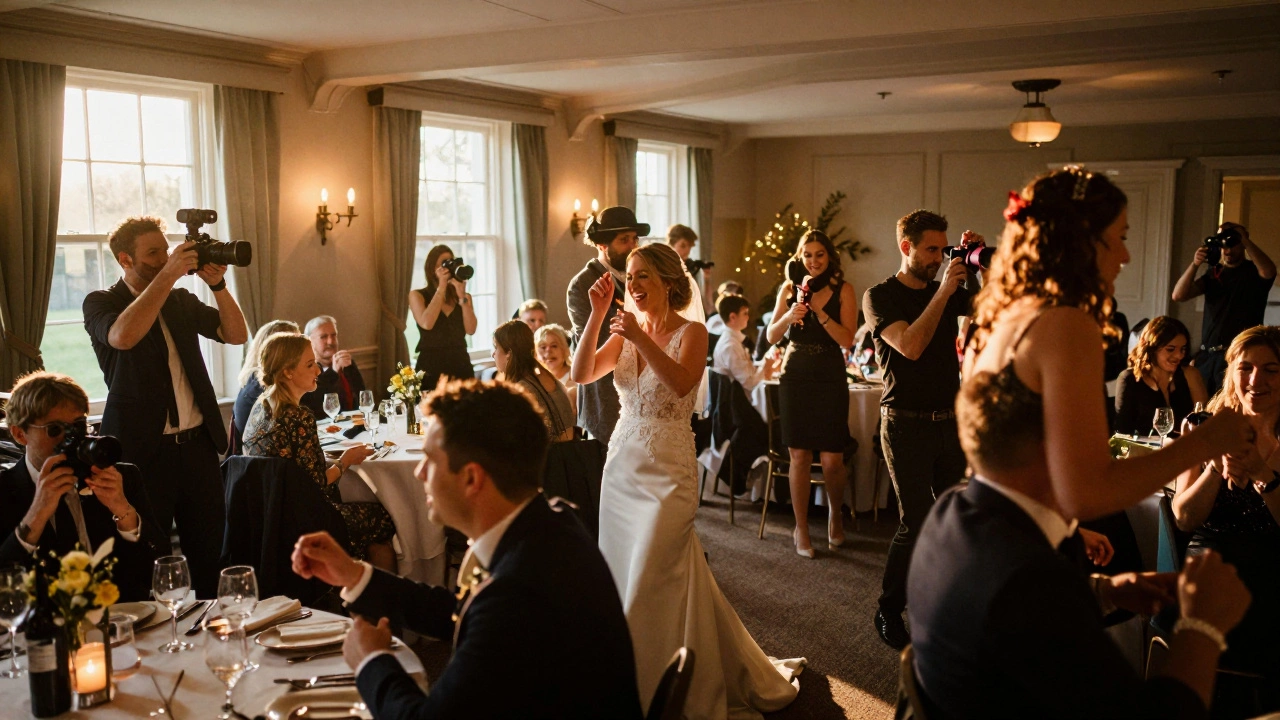
A solo photographer can only be in one place at a time. If the bride is getting her hair done while the groom is taking vows with his best man, a solo shooter misses half the story. A second shooter doubles the perspective and ensures no moment is missed. Packages with a second shooter typically cost $500-$1,000 more. If your $5,000 package includes a second shooter, that’s a strong value proposition.
3. Deliverables: Digital Files vs. Prints
In the past, photographers sold physical albums and prints as the primary product. Today, most couples want digital files. However, the number of edited images matters. A low-end package might give you 200 edited photos. A premium package might deliver 600-800. More images mean more editing time for the photographer. Also, check if they provide an online gallery for easy sharing or if you’re just getting a USB drive.
4. Engagement Session
Many photographers include a pre-wedding engagement shoot in their higher-tier packages. This session helps you get comfortable in front of the camera and builds rapport with the photographer. If your $5,000 quote includes an engagement session, that adds significant value compared to a bare-bones wedding-day-only contract.
Red Flags: When $5,000 Is Too Much
While $5,000 is a common price point, there are scenarios where it feels like a rip-off. Watch out for these warning signs.
- Vague Contracts: If the contract doesn’t specify the exact number of hours, the number of delivered images, or the turnaround time, walk away. Ambiguity leads to disappointment.
- No Backup Plan: Ask what happens if the photographer gets sick or has an accident. Professional photographers have associates who can step in. If they say, "I hope I don’t get sick," that’s a major risk.
- Poor Communication: If they’re slow to respond during the booking process, imagine how they’ll handle the stress of your wedding day. Responsiveness is a proxy for reliability.
- Staged-Only Portfolios: Look at their full wedding galleries, not just their highlight reel. If every photo looks posed and stiff, you might be paying for a portrait photographer, not a documentary wedding artist. Modern couples prefer candid, emotional storytelling over rigid poses.
How to Negotiate or Save Money
You don’t always have to accept the first price offered. Here are practical ways to manage your photography budget without sacrificing quality.
- Reduce Hours: If you’re having a late afternoon ceremony and a short reception, you might not need 10 hours. Cutting back to 6 or 7 hours can save you $500-$1,000.
- Skip the Album: Physical albums are beautiful but expensive. If you love digital organization, opt for a high-quality online gallery instead. You can always order prints later if you change your mind.
- Book Off-Peak: Weddings on Fridays, Sundays, or in winter months are often cheaper. Photographers have more availability and may offer discounts to fill their calendars.
- Hire Emerging Talent: Look for photographers with 2-3 years of experience who are building their reputation. They may charge $3,000-$4,000 for work that rivals established pros charging $6,000.
The Verdict: Is It Worth It?
Wedding photos are often the only tangible reminder of the day after the cake is eaten and the flowers wilt. You’ll look at them for decades. While $5,000 is a significant investment, it represents roughly 10-15% of the average wedding budget. Compared to venue rentals or catering, photography is a relatively small slice of the pie-but it has the longest shelf life.
If the $5,000 photographer offers 8-10 hours of coverage, a second shooter, 500+ edited images, and a proven track record of handling real weddings, then no, it’s not too much. It’s a fair market price for professional service. If the same price comes with limited hours, no second shooter, and vague deliverables, then yes, it’s too much-and you should keep looking.
What is the average cost of a wedding photographer in 2026?
The national average for a wedding photographer in 2026 ranges from $2,800 to $3,500. However, in major metropolitan areas, the average often exceeds $5,000. Budget-friendly options start around $1,500, while luxury photographers can charge $10,000 or more.
Should I hire a second shooter for my wedding?
Yes, if you want comprehensive coverage. A second shooter captures angles and moments the lead photographer misses, such as guests reacting while the couple exchanges vows. It also provides backup in case of equipment failure. Expect to pay an additional $500-$1,000 for this service.
How many photos should I expect from a $5,000 package?
For a standard 8-hour wedding, you should expect between 400 and 800 professionally edited images. This number varies based on the photographer’s style and the size of the event. Always confirm the minimum delivery count in your contract.
Is it worth paying more for a photographer with a unique style?
Absolutely. Style is subjective, but consistency is key. If you love a specific aesthetic-such as moody, dark-and-moody, or bright and airy-paying a premium for a specialist ensures your photos match your vision. Generic photographers may try to adapt, but specialists deliver guaranteed results.
Can I negotiate the price with my wedding photographer?
You can, but approach it carefully. Instead of asking for a discount, ask what can be removed from the package to lower the cost. For example, skipping the engagement session or reducing coverage hours might bring the price down without devaluing their work.