Is $3000 a Lot for a Wedding Dress? Budget Guide
 Sep, 7 2026
Wedding Dress Budget & Value Calculator
Enter your estimated dress price and anticipated extras to see if you are within standard market ranges or overspending on hidden costs.
1. Input Your Costs
Your Financial Breakdown
Value Assessment
- Resale potential depends on brand recognition.
- Consider re-wearability if buying separates or simple silhouettes.
Enter your dress details to calculate the total investment and compare it against industry standards.
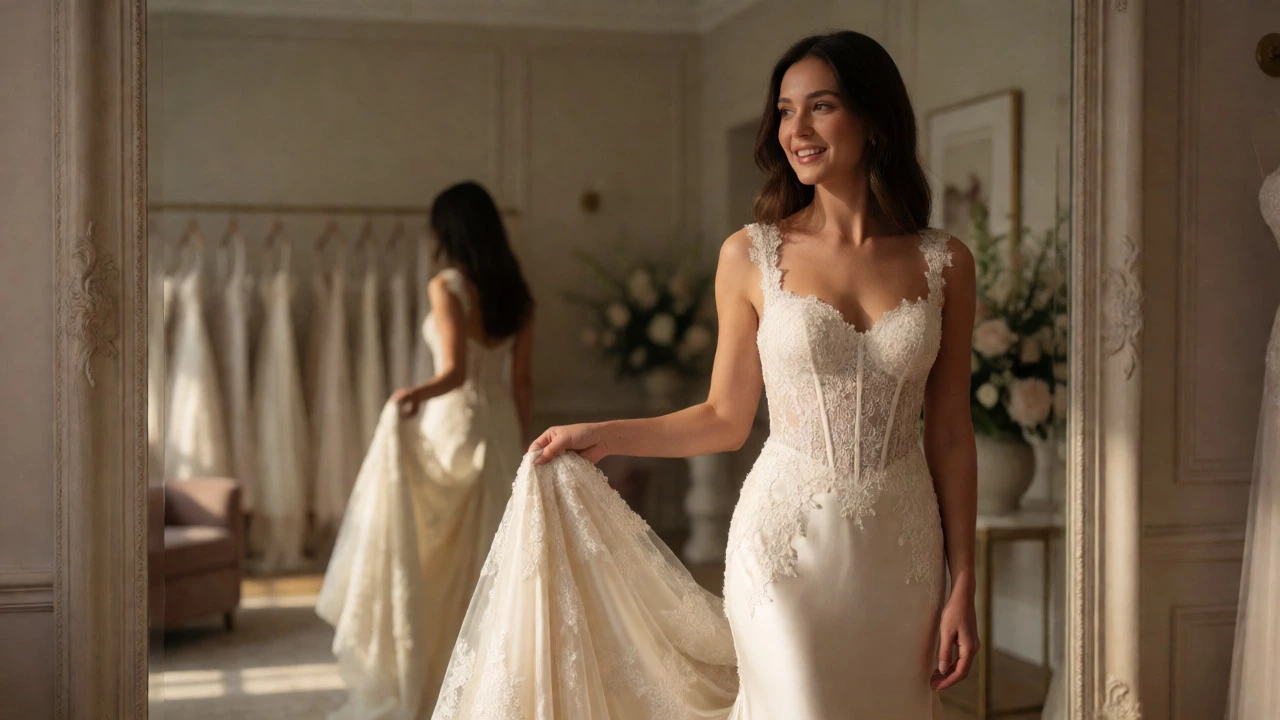
You’re standing in a boutique, holding a dress that makes you feel like the main character of your own movie. The tag says $3000. Your heart skips a beat-not just from joy, but from panic. Is this normal? Are you overspending? Or are you actually getting a bargain?
Here’s the truth: there is no single "right" number. But understanding where that $3000 sits in the current market landscape can save you months of stress and thousands of dollars. Whether you’re planning a lavish ballroom affair or an intimate garden ceremony, knowing the real costs behind bridal fashion helps you make decisions based on value, not just fear.
The Real Cost Breakdown: Where Does the Money Go?
When you see a price tag, it’s rarely just about the fabric. A wedding dress is a formal garment specifically designed for the bride to wear during her wedding ceremony and reception. It’s a complex product involving design labor, specialized materials, and retail markup. To understand if $3000 is a lot, you have to look under the hood.
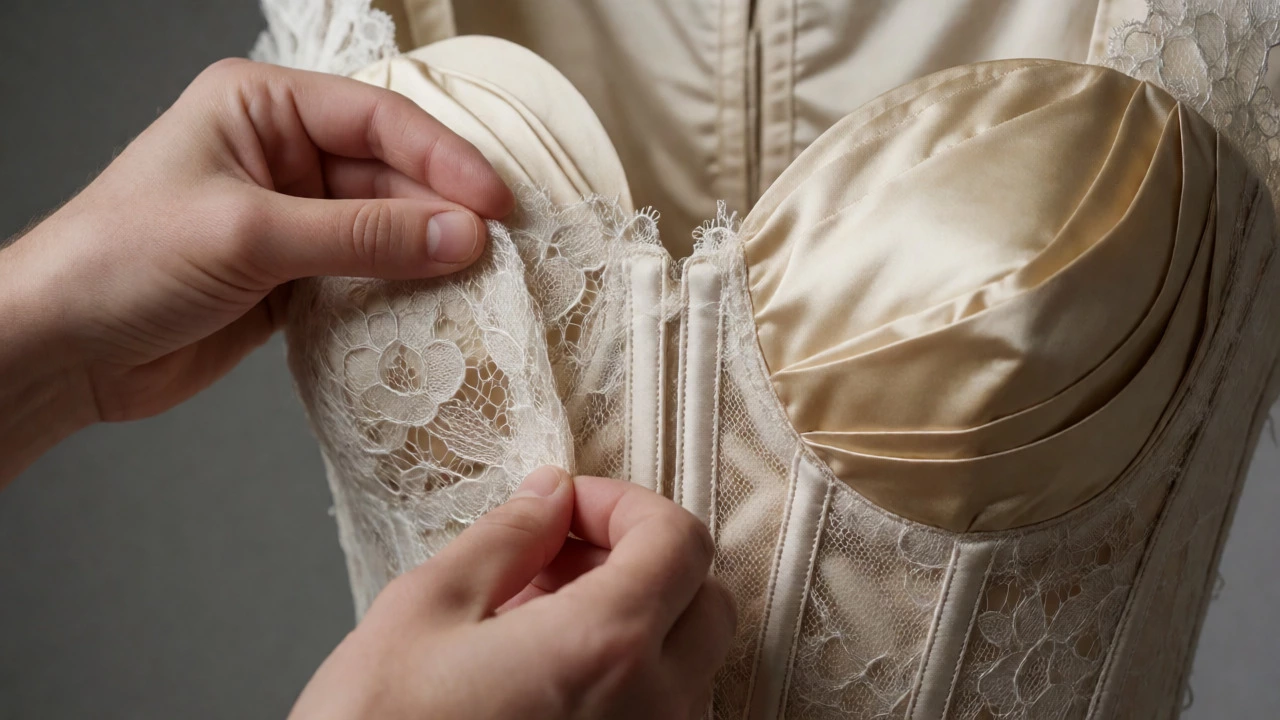
First, consider the construction. A high-quality gown isn’t just sewn together; it’s engineered. Boning (the structural support inside the bodice) must be placed precisely to hold posture without digging into ribs. Lace appliqués are often hand-stitched, not glued. If you’re paying $3000, you should expect features like:
- Structured Bodice: Built-in corsetry or boning that supports you without needing a separate bra.
- Natural Fabrics: Silk, satin, or high-grade lace rather than cheap polyester that feels plastic-y after two hours.
- Lining: Multiple layers of lining to ensure the outer fabric drapes correctly and doesn’t cling to your skin.
- Custom Fit Potential: Enough seam allowance to allow a tailor to adjust the fit significantly.
If you’re looking at a $1500 dress, you might get synthetic fabrics and minimal structure. At $3000, you’re entering the mid-to-high tier of off-the-rack options. This is where quality starts to become noticeable in comfort and durability.
Average Wedding Dress Prices: What Do People Actually Pay?
Let’s cut through the noise with data. While luxury couture gowns can hit $10,000+, and budget-friendly online retailers sell dresses for $500, the median spend tells a clearer story. According to recent industry reports from sources like The Knot and a leading wedding resource platform providing vendor listings and budgeting tools, the average American bride spends between $1,650 and $2,000 on her gown before alterations. However, averages skew low because many brides shop sales or buy second-hand.
In major metropolitan areas, including cities like Melbourne, Sydney, New York, or London, the baseline for a new, designer-label gown from a brick-and-mortar boutique typically starts around $2,500. So, is $3000 a lot? In the context of a full-service boutique experience with fitting sessions, it’s actually quite standard. You aren’t buying a discount bin find; you’re buying a service package that includes multiple fittings and expert advice.
| Price Tier | Typical Source | What You Get | Risk Factor |
|---|---|---|---|
| $500 - $1,000 | Online Retailers, Fast Fashion Bridal | Synthetic fabrics, limited sizing, self-tailoring required. | High risk of poor fit and material quality issues. |
| $1,500 - $2,500 | Budget Boutiques, Sample Sales | Better fabrics, some structure, basic alterations included. | Medium risk; may require extra tailoring costs. |
| $2,500 - $4,000 | Standard Designer Boutiques | High-quality materials, professional fitting services, brand prestige. | Low risk; reliable quality and support. |
| $5,000+ | Couture, Luxury Designers | Custom designs, exclusive fabrics, white-glove service. | Very Low risk; premium experience. |
The Hidden Costs: Why the Tag Price Isn’t Final
Here is where most brides get caught out. The sticker price is only the beginning. When people ask, "Is $3000 a lot?", they often forget that a wedding dress is never worn straight off the rack. It requires customization to fit your specific body shape.
Alterations are non-negotiable for 90% of brides. Even if you order your exact size, wedding dresses are cut for sample sizes, which are usually smaller and shaped differently than real human bodies. Here’s what you need to budget on top of the dress cost:
- Basic Alterations ($150 - $300): Hemming, taking in side seams, and adjusting straps.
- Complex Alterations ($300 - $800+): Reshaping the bust, moving boning, adding sleeves, or altering the neckline.
- Undergarments ($100 - $200): Specific shapewear or bras designed for the dress structure.
- Accessories ($200 - $500): Veil, shoes, jewelry, and hair accessories.
If you spend $3000 on the dress, add another $500-$1000 for alterations and extras. Suddenly, your total attire cost is closer to $4000. Compare this to a $1000 online dress that needs $600 in heavy restructuring because the proportions were wrong. Sometimes, spending more upfront saves money later.
Value vs. Cost: How to Judge Your Purchase
So, how do you decide if $3000 is worth it for *you*? Forget what other people paid. Focus on value. Value is determined by three factors: emotional resonance, practical utility, and longevity.
First, emotional resonance. Does the dress make you feel confident? If you try on a $1000 dress and feel okay, but the $3000 dress makes you cry happy tears, the latter has higher emotional value. Weddings are memory-heavy events. Regret over a dress that didn't feel "right" lasts longer than regret over a slightly higher bank balance.
Second, practical utility. Will you wear this again? Some modern brides choose separates or simpler gowns that can be re-worn as cocktail dresses. If you’re buying a massive ballgown with 10 layers of tulle, its utility ends after the reception. In this case, does the $3000 price tag justify a one-time use? Maybe. But if you can find a similar style for $1500 that looks just as good in photos, you might be overpaying for brand name alone.
Third, longevity and resale potential. High-end designers like Vera Wang or an iconic American fashion designer known for bridal wear hold their value better. You can often resell a designer gown for 50-70% of its original price on platforms like Stillwhite or PreOwnedWeddingDresses. A generic fast-fashion dress sells for pennies. If you view the dress as a semi-investment, $3000 for a recognizable designer label might actually be cheaper long-term than $1500 for an unknown brand.
How to Save Without Sacrificing Quality
If $3000 stretches your budget too thin, you don’t have to compromise on looking great. There are smart ways to lower the cost while keeping the quality high.
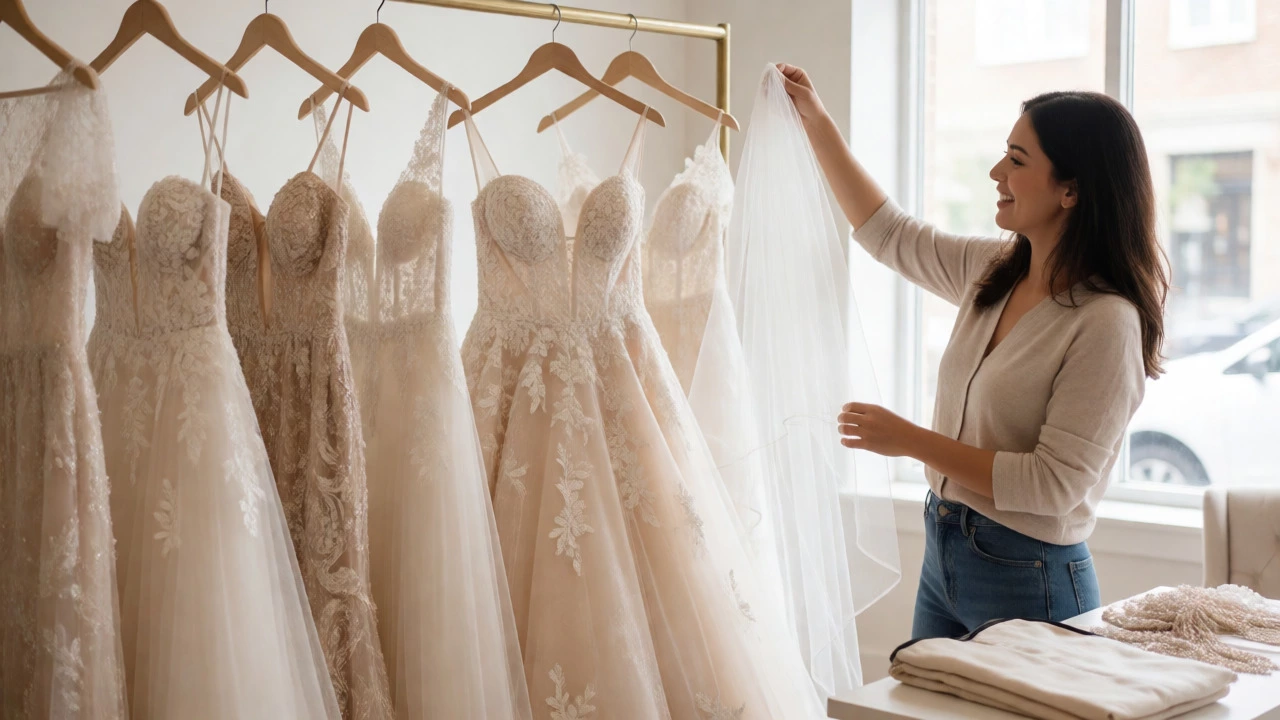
Shop Sample Sales: Boutiques sell display models at the end of seasons. These are already cleaned and steamed. You can often get a $3000 dress for $1500. The catch? You take it home immediately, so you must commit to alterations quickly.
Consider Non-Bridal Sections: Many brides now look at evening wear sections of department stores or brands like Reformation or ASOS. A $400 silk slip dress can look incredibly chic with the right veil and shoes. This frees up budget for photography or flowers.
Rent Your Gown: For destination weddings or multi-day events, renting is popular. Companies like Rent the Runway offer designer dresses for a fraction of the purchase price. You get the $3000 look for $300.
Buy Off-Rack: If you’re flexible on color (champagne, blush, ivory) and size, boutiques often discount off-the-rack inventory to clear space for new arrivals.
Final Verdict: Is It Worth It?
Is $3000 a lot for a wedding dress? Objectively, yes-it’s more than a typical work wardrobe. But subjectively? It depends on your priorities.
If you value the boutique experience, custom fit, and a designer label that holds resale value, $3000 is a fair market rate. If you prioritize saving money for your honeymoon or down payment, you can absolutely find stunning alternatives under $1500. The key is to set a hard cap before you start shopping. Decide today: "I will not spend more than $X." Then stick to it. The perfect dress exists at every price point; your job is to find the one that fits your body and your budget.
Is $3000 considered expensive for a wedding dress?
$3000 is in the mid-to-high range for a new, designer-label gown from a physical boutique. It is above the national average (which is often cited around $1,650-$2,000), but it is standard for high-quality materials and professional fitting services. It is not considered "luxury" pricing, which typically starts at $5,000+.
Do I really need to pay for alterations?
Yes, almost always. Wedding dresses are manufactured in standard sample sizes that do not match individual body shapes. Alterations ensure the dress fits properly, stays secure, and looks tailored. Budgeting $200-$800 for alterations is realistic depending on the complexity of the changes needed.
Can I negotiate the price of a wedding dress?
It varies by store. Large chain boutiques often have fixed prices. Independent boutiques may offer discounts on samples, last-season styles, or if you buy accessories (like a veil or shoes) alongside the dress. Always ask if there are any promotions or package deals available.
Is it better to buy a dress online or in-store?
In-store allows you to try on different silhouettes and get professional advice, which is crucial for finding a flattering fit. Online shopping offers lower prices but carries higher risk regarding fit and fabric quality. If you buy online, order early to allow time for returns and alterations.
How far in advance should I buy my wedding dress?
For custom orders, 6-9 months in advance is recommended to account for production and shipping delays. For off-the-rack or sample purchases, 3-4 months is usually sufficient, allowing ample time for alterations and cleaning before the big day.