Is $1000 Enough for a Wedding Ring? A Realistic Guide
 Sep, 10 2026
Wedding Ring Budget Estimator
Build your ideal ring configuration below to estimate its retail price. This tool uses average market rates for materials and craftsmanship as described in our guide.
1. Choose Your Components
2. Estimated Retail Price
Includes material, labor, and markup
Cost Breakdown:
- Metal Base: $0
- Stone Cost: $0
- Setting/Labor: $0
- Extras: $0
Note: Does not include sales tax or insurance. Aim for ~$900 base price to stay under $1000 total with taxes.
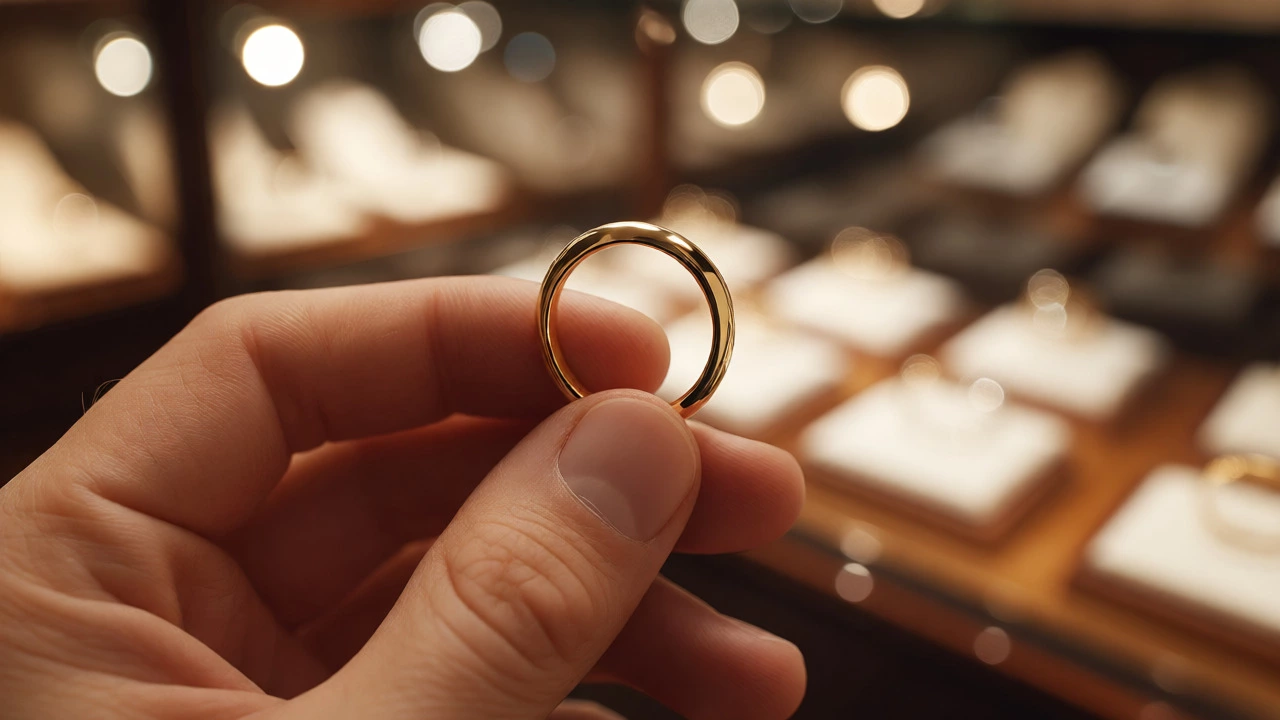
You’re standing in front of a jeweler’s display case, heart pounding, looking at a simple gold band. The price tag reads $1,250. You hesitate. Is this too much? Or is it a steal? This exact moment plays out in jewelry stores everywhere. The question isn’t just about money; it’s about value, expectation, and what you actually get for your cash.
So, is $1,000 enough for a ring? The short answer: yes, absolutely. But the long answer depends entirely on what kind of ring you want. If you’re hunting for a two-carat natural diamond solitaire, you’ll be disappointed. If you’re looking for a solid, beautiful, durable symbol of commitment that lasts a lifetime, $1,000 is a very healthy budget.
The Reality of Metal Costs
Let’s strip away the marketing fluff first. Before we talk about diamonds or design, we have to talk about metal. Gold prices fluctuate, but they don’t drop below a certain floor. In 2026, gold remains a stable asset. When you buy a ring, you are buying raw material plus labor.
A standard plain gold band weighs between 3 to 5 grams. If you choose 14k yellow gold, which is the most common choice for durability and color, the raw gold content alone might cost you $150-$250 depending on the current spot price. Add in the craftsmanship-the melting, casting, filing, polishing-and the labor markup, and a basic plain band from a reputable local jeweler usually starts around $300 to $500.
This means if you have $1,000, you already have plenty left over for stones or intricate designs. You aren’t scraping by; you’re comfortably in the mid-range market. Many people assume all wedding rings cost thousands. That’s a myth perpetuated by luxury brands charging for their logo, not just the product.
Diamonds vs. Alternatives: Where Your Money Goes
Here is where budgets explode. Natural diamonds are expensive because of mining costs, scarcity, and complex supply chains. A 0.5-carat natural diamond of decent quality (G color, VS2 clarity) can easily cost $800-$1,200 on its own. Pair that with a setting, and you’re pushing past $1,500 quickly.
But do you need a natural diamond? Most couples today are open to alternatives. This is where $1,000 becomes powerful.
| Stone Type | Approx. Cost (0.5ct) | Durability (Mohs Scale) | Visual Appeal |
|---|---|---|---|
| Natural Diamond | $900 - $1,200 | 10 | Classic sparkle, high prestige |
| Lab-Grown Diamond | $300 - $500 | 10 | Identical to natural, lower price |
| Moissanite | $100 - $200 | 9.25 | High fire, slightly different sparkle |
| White Sapphire | $150 - $300 | 9 | Clear, subtle brilliance |
Lab-Grown Diamonds are diamonds created in controlled facilities using advanced technological processes that deposit carbon atoms layer by layer. They possess the same chemical, physical, and optical properties as mined diamonds but cost 60-80% less. With $1,000, you could buy a stunning 0.75-carat lab-grown diamond set in 14k gold and still have change left for a matching band.
Moissanite is a naturally occurring mineral composed of silicon carbide, now primarily produced synthetically for jewelry. It was discovered by Henri Moissan in 1893. While initially found in meteorites, modern moissanite is lab-created. It’s incredibly hard-second only to diamond. For under $200, you get a stone that looks like a diamond to the untrained eye. This frees up $800 of your budget for the setting or a thicker, more substantial band.
Design Choices That Save Money
If you stick to a traditional solitaire, you pay for the center stone. But there are other ways to spend $1,000 wisely.
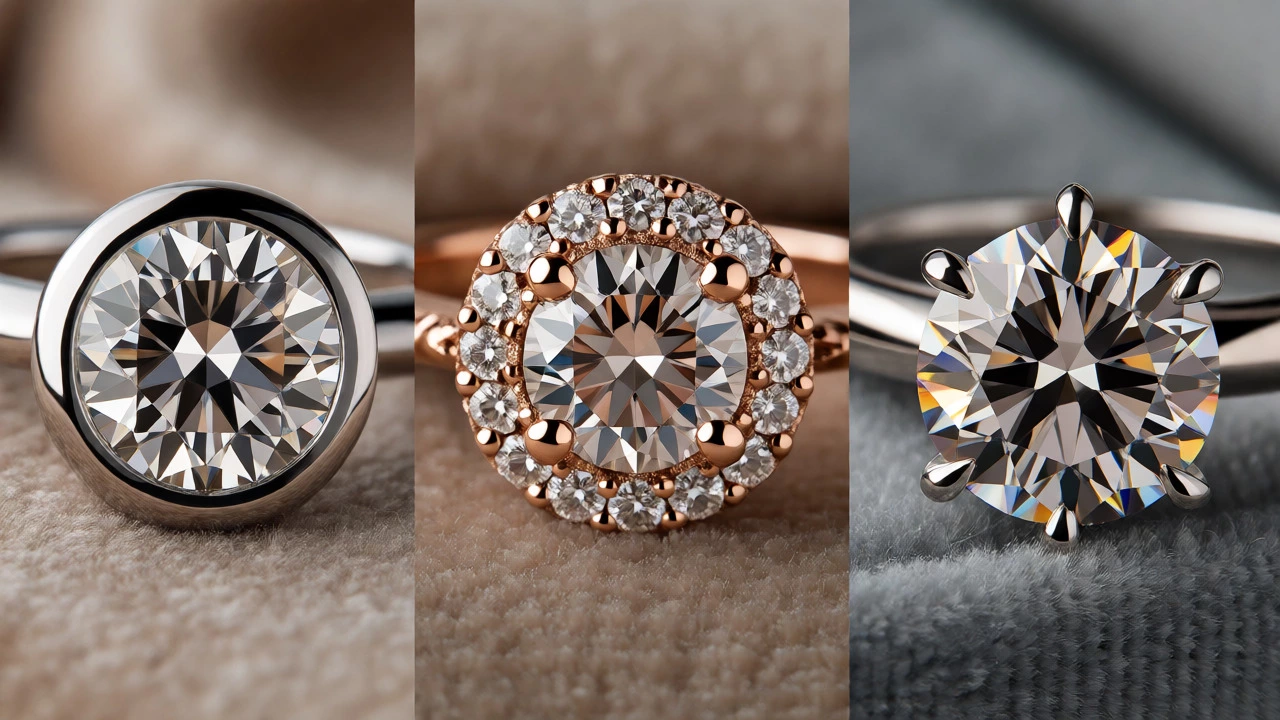
- Halo Settings: Instead of one big rock, use a cluster of smaller diamonds or gems around a central stone. This creates the illusion of size without the massive price tag of a large single carat weight.
- Vintage Styles: Antique-style rings often feature milgrain detailing or filigree work. These rely on craftsmanship rather than carat weight. You can find exquisite vintage-inspired pieces within your budget.
- Three-Stone Rings: Use smaller side stones to flank a modest center stone. This adds width and presence to the finger without requiring a huge center diamond.
Consider the profile of the ring. A high-profile setting (where the stone sits high above the finger) requires more metal and security prongs, adding to the cost. A low-profile or bezel setting protects the stone better and uses less metal, keeping costs down while increasing durability for active lifestyles.
Where to Buy: Retail vs. Online vs. Local
Your purchasing channel impacts your budget significantly. Big-name retail jewelers in shopping malls charge high overheads. They have staff, rent, and marketing costs baked into every ring. A $1,000 ring there might be worth $600 elsewhere.
Online retailers offer competitive pricing due to lower overheads. However, you cannot try them on before buying. Returns policies vary, so read the fine print. Look for sites offering free resizing and lifetime warranties.
Local independent jewelers are an underrated option. Many source directly from suppliers and avoid brand markups. Building a relationship with a local craftsman means you get personalized service. You can ask them to customize a design within your $1,000 limit. Maybe they can adjust the band width or swap a stone type to hit your number exactly. This flexibility is something big chains rarely offer.
The Hidden Costs You Must Budget For
The sticker price isn’t the final price. When planning your $1,000 budget, account for these extras:
- Taxes: Depending on your location, sales tax can add 10-15%. Always ask if the quoted price includes GST or VAT.
- Insurance: Insuring a ring costs roughly 1-2% of its value annually. For a $1,000 ring, that’s $10-$20 a year. Not huge, but necessary if you lose it.
- Engraving: Adding names or dates inside the band usually costs $20-$50. Some jewelers include this for free.
- Sizing Adjustments: If you order online, you might need a resize later. Some places charge $50-$100 for this service after the warranty period ends.
If you buy a ring for $950, you might go over budget when taxes and engraving are added. Aim for a base price of $850-$900 to keep your total under $1,000.
What ,000 Actually Buys You: Three Scenarios
To make this concrete, let’s look at three realistic options available right now in the Australian market.
Scenario A: The Modern Minimalist
You choose a 14k white gold band with a bezel-set lab-grown diamond. The diamond is 0.60 carats, F color, VS1 clarity. The setting is sleek and modern. Total cost: $920. You get a real diamond look, maximum durability, and a clean aesthetic.
Scenario B: The Vintage Romantic
You select a rose gold band with a halo setting. The center stone is a 0.40-carat natural diamond, surrounded by tiny pavé diamonds. The rose gold gives it warmth, and the halo makes the center stone look larger. Total cost: $980. This feels luxurious and detailed.
Scenario C: The Ethical Alternative
You opt for a recycled platinum band (platinum is denser and heavier, so bands are thinner) with a moissanite stone. Platinum doesn’t tarnish and is hypoallergenic. The moissanite sparkles intensely. Total cost: $950. This is eco-friendly, durable, and visually striking.
Common Pitfalls to Avoid
Don’t fall for the "carat trap." Sellers will push you toward higher carat weights by lowering clarity or color grades. A 1-carat diamond with visible inclusions (I1 clarity) might look cloudy compared to a 0.7-carat diamond with excellent clarity. Prioritize cut quality. A well-cut smaller stone sparkles more than a poorly cut larger one.
Beware of "gold-plated" rings. They look like gold but wear off in months. At $1,000, you should be buying solid gold (10k, 14k, 18k) or platinum. Never compromise on the metal quality for a daily-wear ring.
Finally, don’t ignore comfort fit. A comfort-fit band has rounded edges inside, making it easier to slide on and off. Flat bands can feel sharp. Ask to try both. Comfort matters more than you think when you wear it 24/7.
Frequently Asked Questions
Can I really buy a diamond ring for $1000?
Yes, but you likely won't get a large natural diamond. You can find natural diamonds under 0.5 carats or lab-grown diamonds up to 0.8-1.0 carats within this budget. Lab-grown options offer the best balance of size and quality for this price point.
Is moissanite a good alternative to diamond?
Moissanite is an excellent alternative. It is nearly as hard as diamond (9.25 vs 10 on the Mohs scale), meaning it resists scratches well. It also has higher refractive index, creating more 'fire' or rainbow flashes. To many, it looks indistinguishable from a diamond.
Which metal is best for a $1000 budget?
14k gold offers the best balance of durability and affordability. Platinum is more expensive per gram, so a platinum band will be thinner or simpler at this price point. White gold is popular for its bright appearance, while yellow and rose gold provide distinct aesthetic choices at similar costs.
Should I buy the ring online or in-store?
Buying in-store allows you to see the light performance of the stone and ensure proper fit. Online retailers often have lower prices due to reduced overheads. If buying online, choose vendors with clear return policies and certification reports for the stones.
Do I need to insure my ring?
It is highly recommended. Even a $1,000 ring is a significant loss if stolen or lost. Homeowners or renters insurance often covers personal property, but you may need a rider for jewelry. Check your policy details before purchasing.