Is $10,000 Enough for an Engagement Ring? Real Costs in 2025
 Dec, 1 2025
Engagement Ring Cost Estimator
What You Can Get for $10,000
Based on 2025 Australian market data. See how your budget translates to real diamonds.
Enter your preferences to see what $10,000 buys
Is $10,000 enough for an engagement ring? The short answer: yes - if you know what you’re buying. But if you walk into a store thinking that’s a "luxury" budget without understanding what that actually buys you today, you could end up disappointed. In 2025, $10,000 doesn’t buy the flashy, oversized diamond you might see on social media. It buys something real, thoughtful, and lasting - if you spend it wisely.
What $10,000 Actually Buys Right Now
In 2025, the average engagement ring in Australia costs between $5,500 and $7,500. That’s according to data from the Australian Jewellers Association. So $10,000 puts you comfortably above average. But averages don’t tell the whole story. A $10,000 budget lets you get a high-quality diamond with excellent cut, clarity, and colour - not just size.
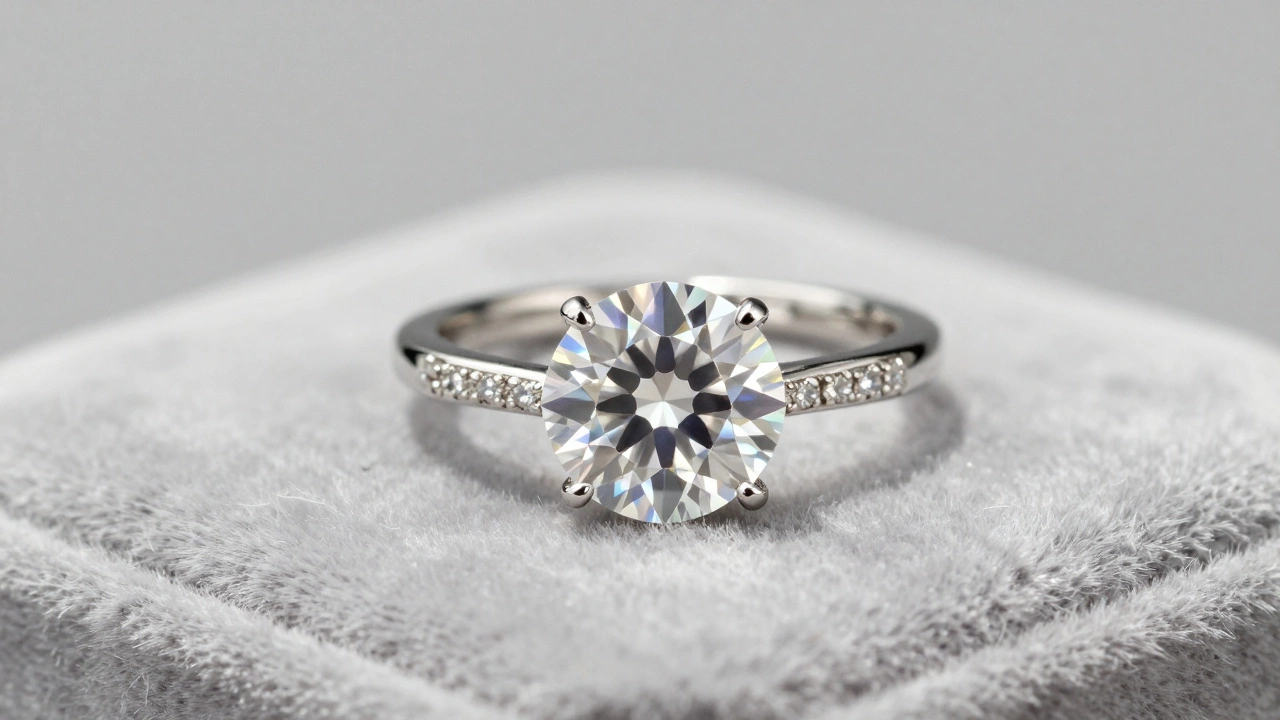
For example, you could get a 1.25-carat round brilliant diamond with G colour, VS2 clarity, and an Excellent cut. That’s a ring that sparkles brilliantly under any light, looks clean to the naked eye, and holds its value. Add a platinum or 18k white gold band with subtle pave diamonds, and you’re at $9,800. No need to stretch. No need to compromise.
But if you’re chasing a 2-carat stone with D colour and IF clarity? That’s a $20,000+ ring. $10,000 won’t get you there. And that’s okay. Because most people don’t notice the difference between a 1.25-carat and a 2-carat diamond unless they’re holding a loupe. What they notice is how the ring looks on the hand - and that’s all about cut and proportion.
The 4 Cs - What Matters Most
Everyone talks about carat weight. But here’s the truth: cut is king. A poorly cut 2-carat diamond looks dull. A perfectly cut 1.25-carat diamond looks alive. That’s why jewelers in Melbourne and Sydney are pushing cut quality over size these days. The Gemological Institute of America (GIA) rates cut from Excellent to Poor. Always choose Excellent or Very Good.
Colour? G to H is the sweet spot. Anything below I starts to show yellow, especially in white gold or platinum. Above F, you’re paying for something the naked eye can’t tell apart. Clarity? VS1 or VS2 is perfect. Inclusions at that level are invisible without magnification. You’re not saving money by going to SI1 - you’re risking a ring that looks cloudy under certain lights.
And don’t get tricked by "certified" diamonds that aren’t GIA-certified. IGI or EGL certificates are cheaper to issue and often inflate grades. Stick to GIA or AGS. They’re the gold standard.
Lab-Grown vs Natural Diamonds
If you’re open to alternatives, lab-grown diamonds are a game-changer. For $10,000, you could get a 2.5-carat lab-grown diamond with the same GIA certification as a natural stone. Same sparkle. Same durability. Same chemical structure. Just no mining.
Lab-grown diamonds cost 60-70% less than natural ones. That’s not a compromise - it’s a smart upgrade. More size. Better clarity. Same beauty. And more couples in Melbourne are choosing them now. A 2024 survey by Australian Bridal Magazine found that 41% of engaged couples under 35 considered lab-grown first. That number’s climbing.
Some people still feel uneasy about lab-grown. But here’s the thing: your partner won’t care if it’s mined or made in a lab. They’ll care if it’s beautiful. And if you save $4,000 on the ring, you can use that for a honeymoon in Italy or a down payment on your first home.
Setting Matters More Than You Think
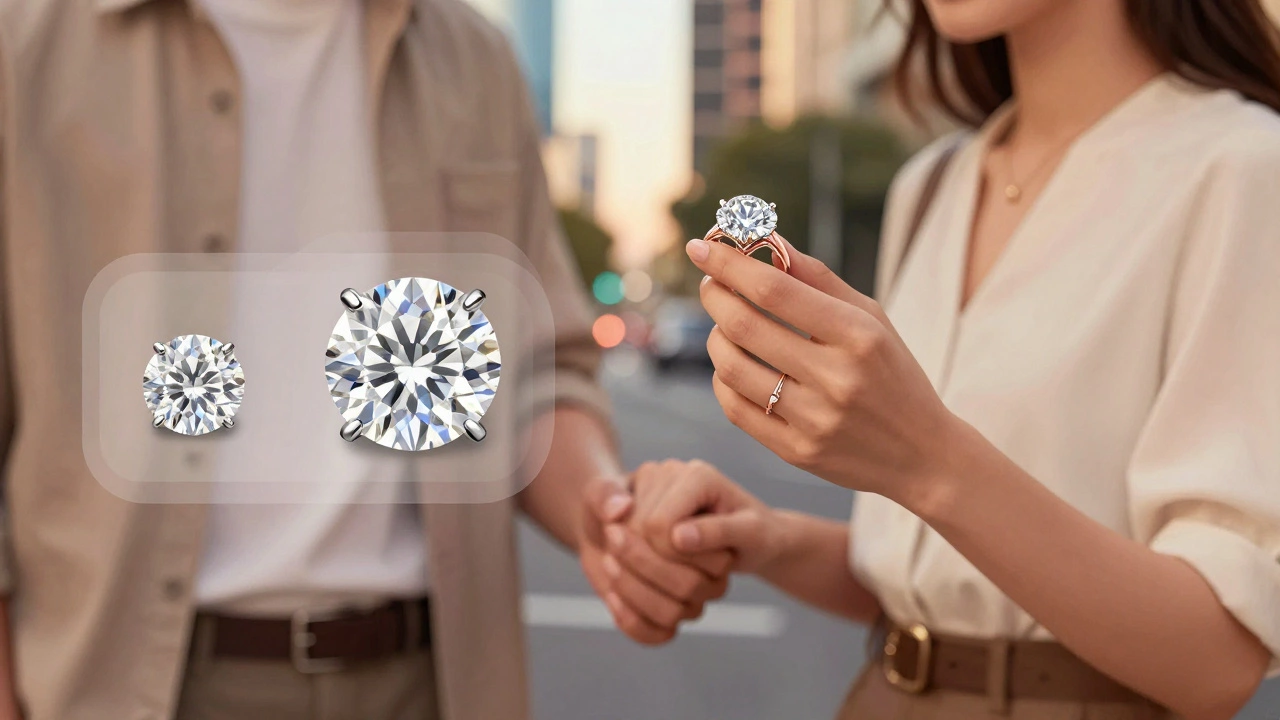
A $7,000 diamond in a cheap, thin band looks cheap. A $5,000 diamond in a well-made, solid platinum setting looks like a million. The setting isn’t just a holder - it’s part of the design. Thick prongs? They protect the stone. A hand-finished band? It lasts decades. A ring made in Australia or the US? It’s built to last.
Steer clear of rings with thin, hollow shanks. They bend. They crack. They’re cheaply made. Look for bands that are at least 2mm thick. Solid metal, not plated. If you’re going for a halo setting, make sure the accent diamonds are real, not cubic zirconia. Real diamonds in the halo add sparkle without breaking the bank.
Also, consider the style. A solitaire is timeless. A three-stone ring adds meaning. A vintage-inspired setting? It’s unique. Don’t let trends dictate your choice. Pick something that fits her hand, her style, and your story.
Where to Buy in 2025
Big-box retailers like James Allen or Blue Nile offer transparency and great prices. You can zoom in on 3D images, compare stones side by side, and read real customer reviews. Many have free returns and lifetime warranties.
Local jewelers in Melbourne - like those in Collins Street or Hawthorn - offer custom design and personal service. You can meet the craftsman. See the stones in person. Get advice without pressure. Many local makers now offer lab-grown options too.
Avoid mall stores with flashy signs and "50% off" deals. Those rings often use low-grade stones, thin settings, and fake certifications. You’re paying for the brand name, not the quality.
What to Avoid
Don’t buy based on carat alone. A 1.5-carat diamond with I colour and SI2 clarity looks yellow and cloudy. It’s a trap.
Don’t finance a ring with credit unless you can pay it off in six months. Interest wipes out your savings.
Don’t let anyone tell you "you have to spend two months’ salary." That myth was created by De Beers in the 1940s. Today, the average Australian spends less than $7,000. Your budget should reflect your life - not an ad.
Don’t skip the appraisal. Even if you buy online, get a GIA report and a local jeweler’s appraisal. It’s insurance. It’s resale value. It’s peace of mind.
Real Examples from Real Couples
Emma and Tom from Fitzroy spent $9,600 on a 1.3-carat GIA-certified lab-grown diamond in a platinum halo setting. They used the leftover $400 for a weekend getaway. "We didn’t want a ring that made people jealous. We wanted one that made her smile every morning," Emma said.
Maya and Luke from Geelong chose a 1.1-carat natural diamond with G colour and VS1 clarity. The setting was a vintage-inspired 18k rose gold band with hand-engraved details. Total cost: $9,850. "It’s not the biggest, but it’s the most beautiful thing I’ve ever seen," Luke told me.
These aren’t outliers. They’re the new normal.
Final Thought: It’s Not About the Price
A $10,000 ring isn’t extravagant. It’s responsible. It’s thoughtful. It’s a symbol of commitment - not competition. You’re not buying status. You’re buying something meant to last a lifetime.
If you focus on cut, clarity, and craftsmanship - not carat weight - you’ll get a ring that shines brighter than any oversized stone. And your partner will remember how it made her feel, not how much it cost.
$10,000 is more than enough. It’s the perfect starting point for a ring that tells your story - not someone else’s.
Is $10,000 a lot for an engagement ring in 2025?
In 2025, $10,000 is above average in Australia, where most couples spend between $5,500 and $7,500. It’s enough to get a high-quality 1.25-carat diamond with excellent cut and clarity, or a larger lab-grown diamond. It’s not excessive - it’s practical and thoughtful.
Can I get a 2-carat diamond for $10,000?
Only if you choose a lab-grown diamond. A natural 2-carat diamond with good colour and clarity typically costs $18,000-$25,000. With lab-grown, you can get a 2.5-carat stone for around $9,500 with the same certification and sparkle. It’s the smartest way to get size without overspending.
Should I buy online or from a local jeweller?
Both work. Online retailers like James Allen offer better prices and detailed images. Local jewelers offer personalized service, try-ons, and custom design. If you’re unsure about size or style, visit a local maker first. Then compare online. Many local shops now offer lab-grown options too.
Are lab-grown diamonds worth it?
Yes. Lab-grown diamonds are chemically identical to natural ones, just made in a lab. They cost 60-70% less, so you get more size or better quality for the same money. More Australian couples are choosing them - not because they’re cheaper, but because they’re ethical and smart.
What’s the best metal for an engagement ring?
Platinum is the strongest and most durable, ideal for daily wear. 18k white gold is popular and slightly softer but still excellent. Avoid 14k gold if you want long-term durability. For a vintage look, rose gold is beautiful and hides slight colour differences in diamonds. Choose based on lifestyle - not just looks.
How do I know if a diamond is real?
Always ask for a GIA or AGS certificate. These are the only labs trusted globally. Avoid IGI or EGL unless you’re getting a lab-grown diamond - their grading is looser. Check the report number online to verify it matches the stone. A reputable seller will provide this without asking.
Can I negotiate the price?
At big retailers, prices are usually fixed. At local jewelers, you can often negotiate, especially if you’re buying the band and stone together. Ask about seasonal sales - many have promotions around Valentine’s Day or before Christmas. Don’t be shy - it’s normal.