How Much Should You Spend on an Engagement Ring on a $100k Salary?
 May, 25 2026
Personal Engagement Ring Budget Calculator
Your Financial Details
Recommended Budget Analysis
You make $100,000 a year. That’s a solid income, especially if you’re living in Melbourne or similar mid-sized cities. But when it comes to buying an engagement ring, that number doesn’t automatically tell you how much you should spend. The old rule-two months’ salary-is dead. It was a marketing campaign from the 1930s, not financial advice. Today, smart couples look at their actual budget, lifestyle, and priorities.
So, what’s a realistic amount? For someone earning $100k gross, a sensible range is between $2,500 and $5,000 AUD. This keeps you financially healthy while still allowing for a beautiful, meaningful ring. Let’s break down why this range works, how to calculate your personal limit, and where to save without sacrificing style.
The Myth of the Two-Month Salary Rule
If you’ve heard “spend two months’ salary,” you’re hearing history, not math. De Beers popularized this idea in the 1940s to boost diamond sales. It has no basis in modern economics. In 2026, with housing costs up and inflation affecting everyday goods, locking yourself into a rigid percentage of your income can cause real stress.
Consider this: If you earn $100,000 AUD annually, your take-home pay after tax (assuming standard Australian deductions) is roughly $72,000-$75,000 depending on your state and superannuation contributions. Two months of *gross* salary would be about $16,600. Spending that on a single piece of jewelry? Most financial advisors would call that reckless unless you have zero debt, massive savings, and no other major expenses coming up.
Instead of following a myth, ask yourself: What does my bank account look like right now? Do I have an emergency fund? Am I saving for a house deposit? Your ring budget should fit comfortably within your existing financial plan, not disrupt it.
Calculating Your Personal Ring Budget
There’s no one-size-fits-all formula, but here’s a practical way to figure out your number:
- Start with your disposable income. Subtract rent/mortgage, utilities, groceries, transport, insurance, and minimum debt payments from your monthly take-home pay.
- Look at your savings rate. Are you putting aside 20% of your income? If so, don’t dip into that long-term savings for a ring.
- Set a cap. A good rule of thumb is to spend no more than 3-5% of your annual gross income on the ring. For $100k, that’s $3,000-$5,000.
- Add buffer room. Always leave 10-15% extra for resizing, insurance, or unexpected costs.
Example: Sarah earns $100k in Melbourne. After tax, she takes home ~$6,000/month. Her fixed costs are $3,500. She saves $1,000 and spends $1,500 on discretionary items. She decides to allocate $4,000 for the ring because it fits her discretionary spending over six months without touching her savings. That’s sustainable.
| Annual Gross Income | Recommended Budget Range | Percentage of Income |
|---|---|---|
| $60,000 | $1,500 - $2,500 | 2.5% - 4% |
| $80,000 | $2,000 - $3,500 | 2.5% - 4.5% |
| $100,000 | $2,500 - $5,000 | 2.5% - 5% |
| $150,000+ | $4,000 - $8,000+ | Flexible based on savings |
What Can You Get for $3,000-$5,000?
A lot. In 2026, the diamond market is more transparent than ever. You don’t need to spend $10k+ to get a stunning stone. Here’s what’s realistic in that price range:
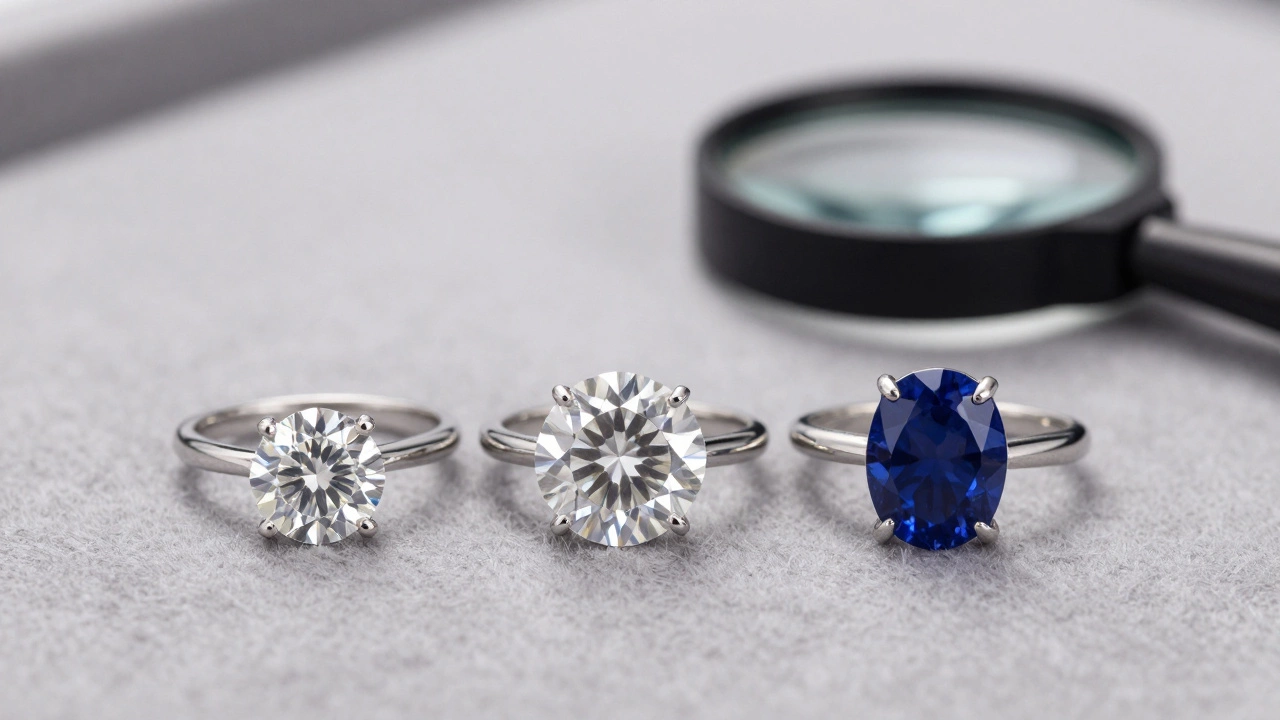
- Natural Diamonds: Expect 0.5-0.8 carats with good cut, color (G-H), and clarity (VS2-SI1). These stones sparkle beautifully and hold value reasonably well.
- Lab-Grown Diamonds: For the same money, you can get 1.0-1.5 carats with excellent grades (E-F color, VVS1-VS2 clarity). Lab-grown diamonds are chemically identical to natural ones but cost 30-50% less.
- Salt-and-Pepper or Fancy Colors: Unique stones often come at lower prices. A 1-carat black diamond or brown fancy diamond might cost under $2,000.
- Alternative Gemstones: Sapphires, moissanite, or morganite offer brilliance and durability at fraction of the cost of diamonds.
Pro tip: Prioritize cut over carat weight. A well-cut 0.7-carat diamond will look bigger and brighter than a poorly cut 1-carat stone. Cut affects sparkle more than anything else.
Where to Save Without Sacrificing Quality
Buying smart means knowing where to splurge and where to cut corners. Here’s how:
- Shop online. Retail markups in physical stores can be 30-100%. Online retailers like Blue Nile, James Allen, or local Australian jewelers with strong web presence offer better prices.
- Choose simpler settings. A solitaire setting costs less than intricate halo or pavé designs. You can always upgrade the band later.
- Consider lab-grown. As mentioned, they’re identical in appearance and performance but cheaper. Many buyers prefer them for ethical and environmental reasons.
- Buy slightly off-color or off-clarity. An H-color diamond looks white to the naked eye. SI1 clarity is usually eye-clean. These small compromises save hundreds.
- Avoid brand-name premiums. Tiffany, Cartier, and other luxury brands charge for the logo, not the stone. You’re paying for prestige, not quality.
Common Mistakes to Avoid
Even well-meaning buyers make costly errors. Don’t let these happen to you:
- Going into debt. Credit card interest rates in Australia average 15-20%. Paying $5k over three years could cost you $1,500+ in interest. Not worth it.
- Focusing only on size. Carat weight isn’t everything. A large, cloudy diamond looks worse than a smaller, brilliant one.
- Ignoring certification. Always buy GIA or AGS certified diamonds. Ungraded stones are risky-you might pay premium prices for low-quality gems.
- Rushing the decision. Take time. Visit multiple shops, compare quotes, and sleep on it. Pressure tactics (“This deal ends today!”) are red flags.
- Forgetting insurance. Once you buy the ring, insure it. Home contents policies often cover jewelry, but check limits. Standalone jewelry insurance is cheap (~$100/year) and essential.

Real-Life Scenarios: How Different Couples Handle It
Let’s look at three real-world examples to see how context changes the budget:
Case 1: The Savers
Mark and Lisa both earn around $100k combined. They live in Brisbane, own their home, and have $50k saved. They decide to spend $4,500 on a lab-grown 1.2-carat diamond. Why? Because they can afford it without impacting their retirement goals. They prioritize quality and ethics over tradition.
Case 2: The First-Timers
Jake earns $100k but rents in Sydney. He has $10k in savings and wants to buy a house in two years. He sets his ring budget at $2,800. He chooses a 0.6-carat natural diamond with VS2 clarity. It’s modest, but it fits his life stage. His partner loves it-and they’re focused on building wealth together.
Case 3: The Minimalists
Emma and Tom are both teachers earning ~$90k each. They value experiences over things. They spend $1,800 on a vintage sapphire ring from an estate sale. No new purchase, no markup, just history and beauty. Their friends think it’s gorgeous-and they didn’t go into debt.
Each couple made a different choice. All were valid. The key? Aligning the spend with their values and financial reality.
Questions to Ask Before You Buy
Before handing over your credit card, pause and answer these honestly:
- Will this purchase delay any major financial goal (house, travel, education)?
- Am I choosing this ring because I want it-or because society expects me to?
- Does my partner care about diamond size, or do they prefer unique styles?
- Have I compared at least three sources?
- Is the seller offering a return policy and certification?
If you answered “yes” to most of these, you’re ready. If not, keep researching. There’s no rush. The perfect ring won’t disappear if you wait a week.
Final Thoughts: It’s About Meaning, Not Math
An engagement ring symbolizes commitment, not net worth. The best rings aren’t the most expensive-they’re the ones that reflect your relationship, respect your finances, and bring joy every day. Whether you spend $2,000 or $6,000, what matters is that you chose wisely, communicated openly with your partner, and stayed true to your values.
In 2026, we have more options than ever. Lab-grown diamonds, alternative gemstones, custom designs, and second-hand treasures all give you flexibility. Use that freedom. Build a future together-not a debt burden.
Is the 2-month salary rule still relevant in 2026?
No. The two-month salary rule originated as a marketing tactic by De Beers in the 1940s. It has no basis in modern financial planning. Today, experts recommend spending 3-5% of your annual gross income, adjusted for your personal savings, debts, and goals.
What’s a good engagement ring budget for someone earning $100k in Australia?
A reasonable budget is $2,500-$5,000 AUD. This range allows for a high-quality ring without jeopardizing other financial priorities like home ownership or retirement savings.
Are lab-grown diamonds a good option?
Yes. Lab-grown diamonds are chemically, physically, and optically identical to natural diamonds. They cost 30-50% less, making them ideal for buyers who want larger stones or higher grades within a fixed budget.
Should I finance my engagement ring?
Generally, no. Credit card interest rates in Australia are high (15-20%). Financing a ring can turn a $4,000 purchase into a $5,500+ expense over time. Only consider financing if you have a zero-interest promotional period and can pay it off before interest accrues.
How do I choose between carat weight and cut quality?
Prioritize cut. A well-cut diamond reflects light better, appearing brighter and larger than its actual size. A poor cut makes even a large diamond look dull. Aim for Excellent or Very Good cut grades, then maximize carat within your budget.
Do I need GIA certification for my diamond?
Yes. GIA (Gemological Institute of America) provides unbiased, standardized grading. Without certification, you risk overpaying for a lower-quality stone. Always request the report number and verify it on GIA’s website.
Can I get a nice ring for under $2,000?
Absolutely. Under $2,000, you can find beautiful lab-grown diamonds (0.5-0.8 carats), salt-and-pepper diamonds, sapphires, or vintage rings. Focus on design and craftsmanship rather than size.
Is it okay to ask my partner what they want?
Yes! Modern engagements are collaborative. Asking your partner about style preferences, metal type, or budget expectations shows respect and ensures you choose something they’ll love. Surprise elements (like exact design or proposal location) are fine-but don’t guess core details.