Groom vs. Groomsmen Suits: Do They Have to Match?
 Oct, 22 2026
Wedding Suit Coordinator
Select your wedding vibe and priorities below to get a tailored recommendation for your wedding party's attire.
Recommended Strategy:
Why This Works
- ✅ Visual Harmony:
- ✅ Practicality:
Groom's Role
Action:
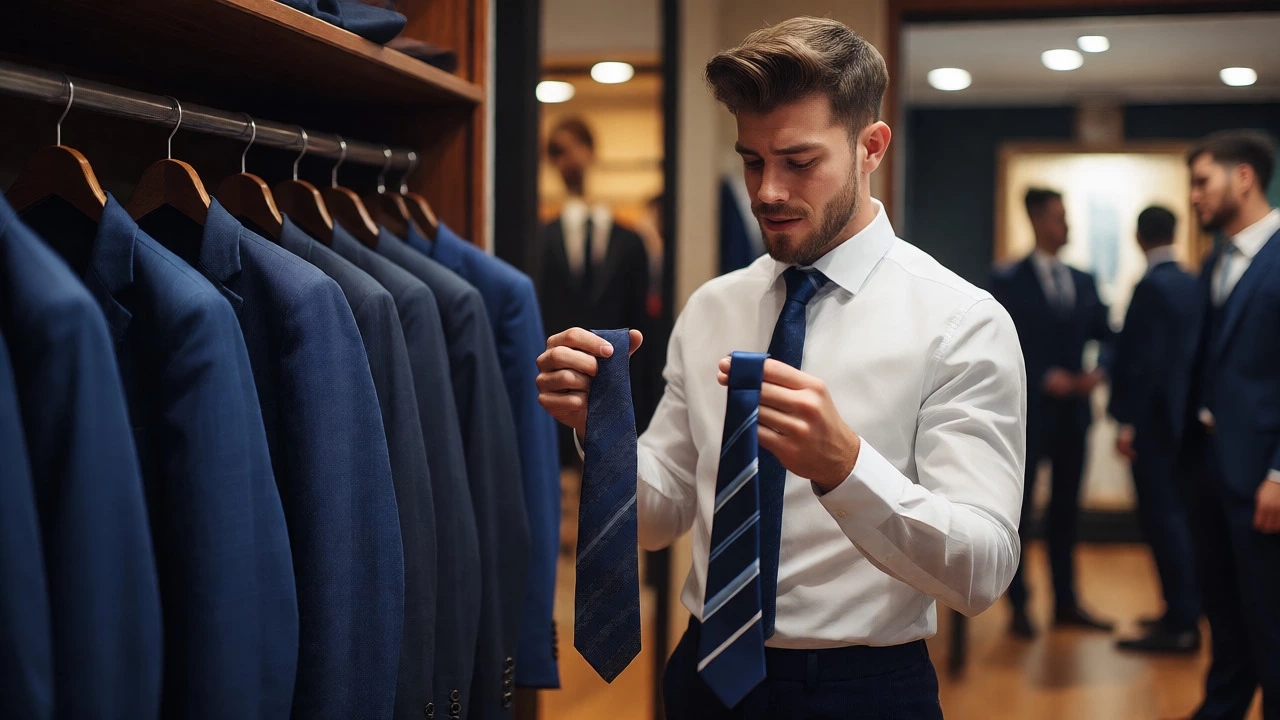
You’re standing in front of a rack of navy blazers, holding two identical ties, and suddenly panic sets in. Does the groom suit have to be an exact replica of what his best man is wearing? It’s one of the most common questions couples ask during the final stages of wedding prep. The short answer? No. In fact, making them match exactly can sometimes make the groom look like he got lost on his way to a corporate sales conference.
The goal isn’t uniformity; it’s cohesion. You want your wedding party photos to look intentional, not accidental. Think of it less like a military drill and more like a curated gallery wall. Everything belongs together, but each piece has its own character. Let’s break down how to navigate this without losing your mind or your budget.
The Myth of Perfect Uniformity
Historically, strict matching was a sign of formality and order. But modern weddings have shifted toward personality and comfort. If you and your four groomsmen all wear the exact same charcoal grey three-piece suit with the same white shirt and black tie, you might struggle to spot yourself in group shots. Worse, if one guy is slightly shorter or broader than the others, the identical cut will highlight those differences rather than flatter everyone.
Instead of aiming for identical twins, aim for "close cousins." This means sharing a color palette or fabric family while allowing variations in cut, texture, or accessories. This approach gives you flexibility when buying off-the-rack (which saves money) and ensures everyone looks their best, regardless of body type.
Three Ways to Coordinate Without Matching Exactly
If you’re worried about looking disjointed, here are three proven strategies used by stylists and planners in Melbourne and beyond. These methods keep things tight without forcing everyone into the same box.
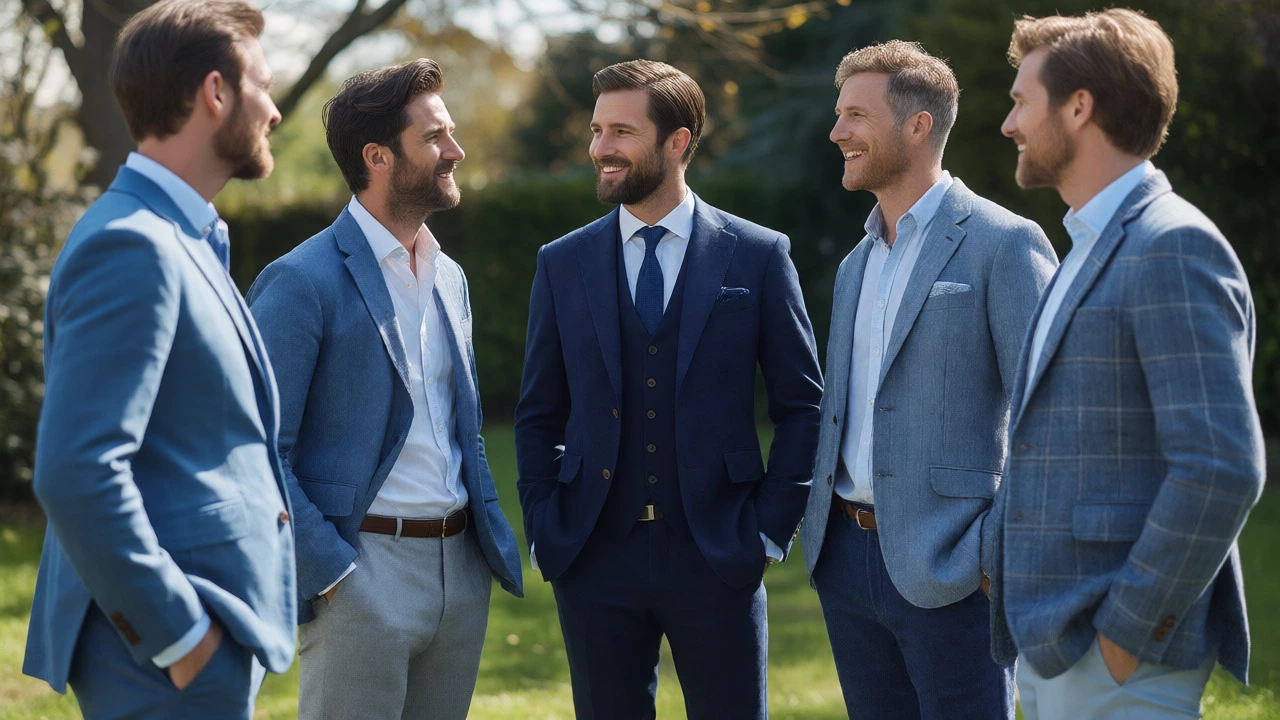
- The Color Block Method: Everyone wears suits in shades of the same color family. Maybe you go deep navy, and your groomsmen wear lighter blues or greys. Or perhaps you stick to earth tones-olive, tan, and khaki. This creates visual harmony because the eye sees a unified block of color, even if the specific shades differ.
- The Texture Play: Stick to one color, say midnight blue, but vary the fabrics. You could wear a subtle wool blend, while your groomsmen wear cotton-linen blends or tweeds. The difference in texture adds depth to photos, especially outdoors where light hits different materials differently.
- The Accessory Anchor: This is the easiest route. Let everyone pick their own suit within a set guideline (e.g., "dark grey or navy"), but require the same tie color or pocket square pattern. This is great if your groomsmen already own suitable suits. It keeps costs low and lets individuals express their style while still feeling part of the team.
When Should You Actually Match?
There are scenarios where going identical makes sense. If you’re having a highly formal, traditional wedding-think black-tie optional or morning dress-uniformity signals respect for tradition. In these cases, deviations can look sloppy rather than stylish. Also, if you’re hiring a professional stylist who provides rental packages, they often offer pre-matched sets that ensure perfect consistency in fit and fabric. This removes the stress of coordinating five different shopping trips.
Another reason to match is simplicity. If you hate decision-making, just buy five identical suits. Done. It’s efficient, foolproof, and guarantees no one shows up in a beige suit when you asked for grey. Just be aware that identical fits rarely look identical on different bodies, so tailor adjustments are still non-negotiable.
How to Make the Groom Stand Out
If the suits are similar, how do people know who the groom is? You need a subtle differentiator. This doesn’t mean wearing a top hat unless that’s your vibe. Small tweaks work best:
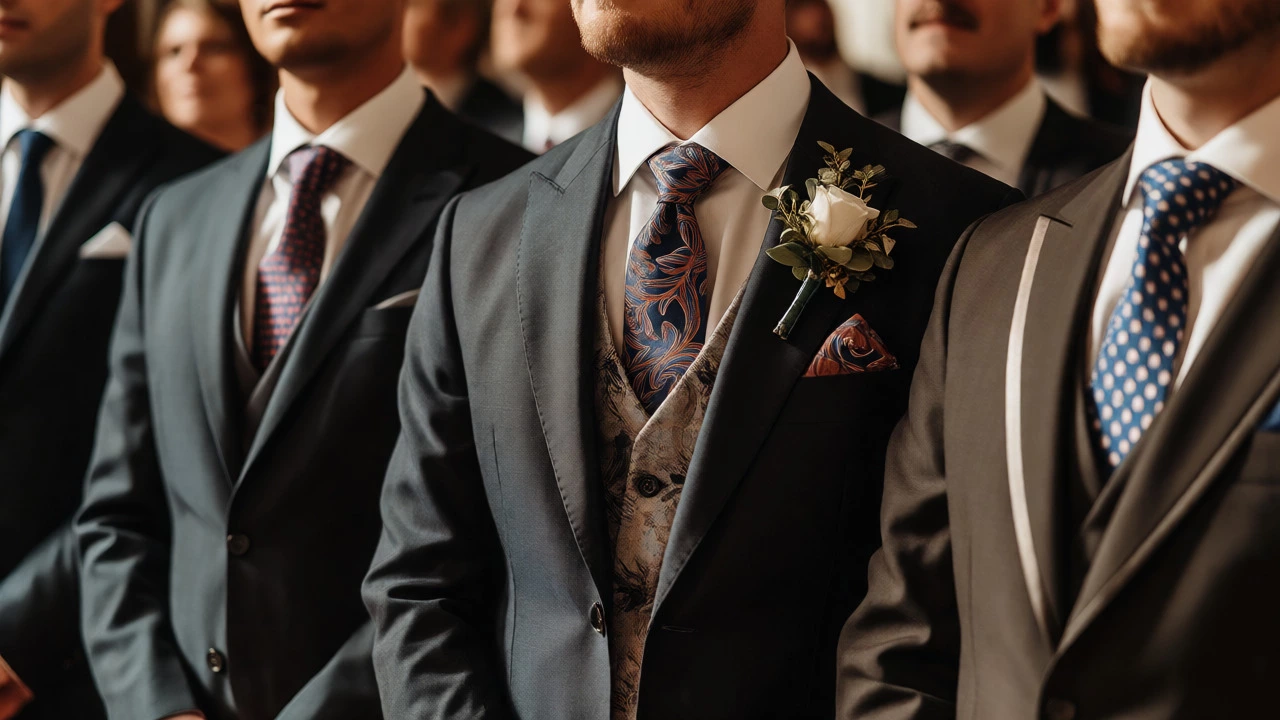
- Tie or Bow Tie Variation: If groomsmen wear solid ties, you wear a patterned one, or vice versa. Or you wear a bow tie while they wear long ties.
- Vest or Waistcoat: Add a vest to your outfit while groomsmen skip it. This instantly elevates your look and separates you from the pack.
- Boutonniere Difference: Give the groom a slightly larger or distinct flower arrangement compared to the smaller boutonnieres on the groomsmen.
- Jacket Detail: Choose a jacket with peak lapels for yourself and notch lapels for the groomsmen. Peak lapels draw the eye upward and signal importance.
These changes are small enough to feel cohesive but distinct enough to guide guests’ eyes to you during the ceremony and reception.
Practical Tips for Shopping and Fitting
Coordinating multiple men is logistically tricky. Here’s how to handle it without drama:
- Set a Budget Early: Be clear about whether you’re covering the cost or if they are paying themselves. If they’re paying, give them a price range and a link to a specific retailer. Don’t leave it vague.
- Create a Visual Guide: Send a Pinterest board or a simple image collage showing the exact shade of navy you mean. "Navy" can mean anything from dark blue to almost black. Show them the swatch.
- Allow Mix-and-Match Retailers: Direct them to stores that sell separates (jackets and trousers sold individually). This helps guys who don’t fit standard sizing find pieces that actually fit their legs and shoulders properly.
- Schedule a Group Fitting: If possible, get everyone together for a final check before the big day. This lets you see how the colors look side-by-side under natural light. Sometimes a tie that looked great alone clashes horribly with the bouquet flowers.
| Strategy | Best For | Cost Implication | Visual Effect |
|---|---|---|---|
| Exact Match | Traditional/Formal Weddings | High (if renting/buying new) | Uniform, serious, classic |
| Color Family | Outdoor/Rustic Weddings | Medium (flexible sourcing) | Cohesive, relaxed, photogenic |
| Accessory Only | Budget-Conscious/Casual | Low (use existing suits) | Personalized, varied, easy |
Common Pitfalls to Avoid
Even with good intentions, things can go wrong. One major issue is lighting. Navy can look black indoors and bright blue outdoors. Always test your chosen colors in both environments. Another trap is ignoring seasonality. A heavy velvet jacket looks great in winter but miserable in a summer garden ceremony. Check the weather forecast and choose breathable fabrics accordingly.
Also, beware of "accidental mismatching." If you tell groomsmen to wear "grey," one might show up in silver-grey and another in charcoal. To the untrained eye, these are different colors. Specify the tone: warm grey vs. cool grey, light vs. dark. Providing a physical swatch or a digital color code (like Pantone) eliminates ambiguity.
Finally, don’t forget the shoes. If everyone is wearing brown leather boots but you’re in black oxfords, it breaks the line. Keep footwear consistent in style and color family, even if the exact shoe model differs.
Final Thoughts on Wedding Attire Harmony
Your wedding photos will last decades. You want them to reflect your relationship, not a rigid rulebook. If you prefer the safety of matching, go for it. If you love the idea of individual expression within a framework, try the coordinated approach. Either way, communicate clearly, plan ahead, and prioritize comfort. A groom who feels confident and comfortable looks better than one who is technically correct but itching in a polyester suit.
Do groomsmen have to wear the exact same suit as the groom?
No, they do not. While traditionally they might have matched, modern weddings often favor coordination over duplication. You can share a color palette, fabric type, or accessory style while allowing variations in cut and shade to accommodate different body types and personal styles.
How can I make sure the groom stands out if we are wearing similar suits?
Use subtle details to differentiate the groom. This can include a different tie pattern, a waistcoat/vest, peak lapels instead of notch lapels, or a unique boutonniere. These small changes guide the eye to the groom without breaking the overall visual harmony of the wedding party.
Is it cheaper to let groomsmen wear their own suits?
Yes, generally it is much cheaper. If groomsmen already own suitable suits, requiring only a matching tie or pocket square significantly reduces costs. However, this requires clear communication about color codes and styles to avoid mismatches.
What is the best way to coordinate colors for groomsmen?
Provide a visual reference, such as a fabric swatch or a specific Pantone color code. Avoid vague terms like "blue" or "grey." You can also use the "color family" method, where everyone wears shades within the same spectrum (e.g., various blues) rather than the exact same hue.
Should the groom's suit be a different color from the groomsmen?
Not necessarily. The groom can wear the same color but with different details (like a vest or tie). Alternatively, he can wear a contrasting color that complements the groomsmen's suits, such as a navy groom with grey groomsmen, provided the colors harmonize with the wedding theme.