Do You Ask for RSVP on Save the Date Cards?
 Sep, 24 2026
Wedding Communication Planner
Not sure when to send your cards or if you need an RSVP yet? Answer three quick questions to get a personalized timeline and etiquette guide.
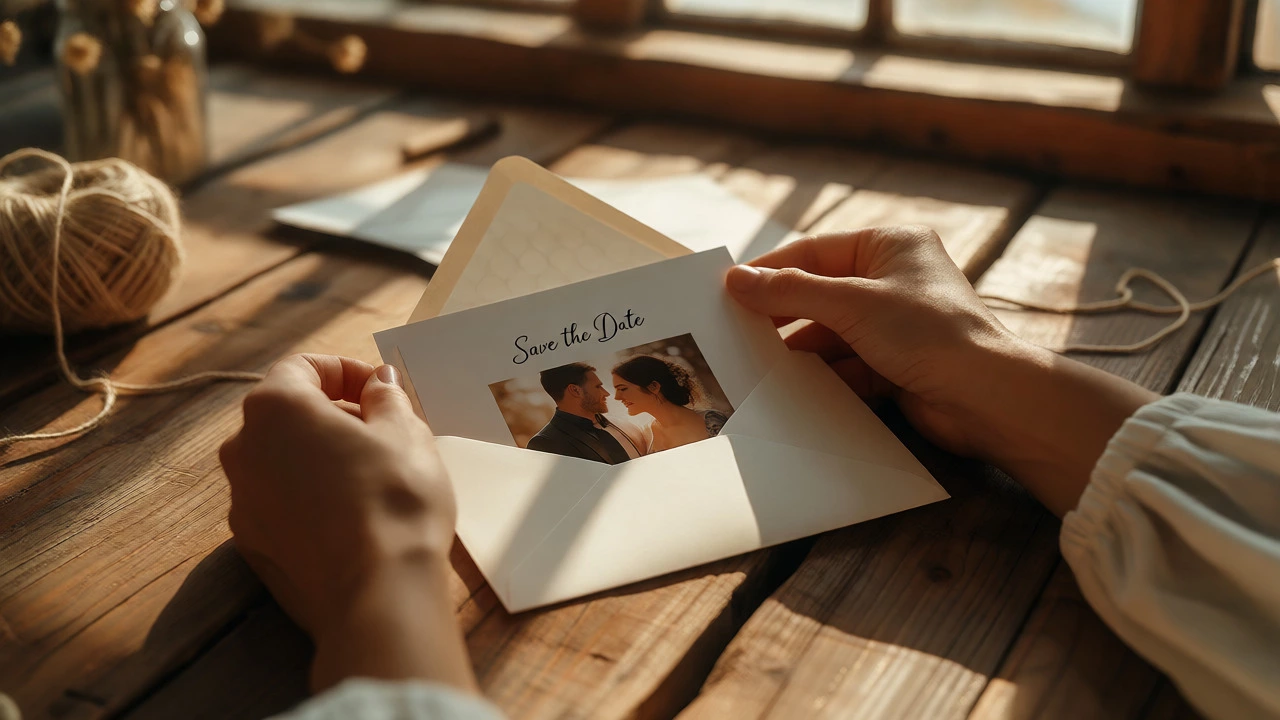
You just sent out your Save the Dates. It’s a beautiful card with a photo of you and your partner, maybe a witty one-liner about the venue. Now comes the part that trips up almost every couple: the envelope. Do you include an RSVP card? Do you ask people to reply now? Or do you just wait for the actual invitation?
Here is the short answer: No. You generally do not ask for an RSVP on a Save the Date. In fact, doing so can confuse your guests and create unnecessary administrative headaches for you later. But why? And what should you do instead? Let’s break down the etiquette, the logistics, and the rare exceptions where you might actually want a reply before the formal invite goes out.
The Core Purpose of a Save the Date
To understand why we don’t ask for RSVPs here, you have to look at what a Save the Date is a preliminary notice sent to guests to inform them of the upcoming wedding date and location, allowing them to reserve time in their calendars actually does. Think of it as a "heads-up" notification. It’s not a contract. It’s not a bill. It’s a courtesy alert.
When you send a Save the Date, you are asking guests to block out a weekend or a specific day. You aren’t asking them to commit financially yet (though they will soon), nor are you asking them to confirm their attendance definitively. People change plans. Jobs get demanding. Relationships end. If someone says "yes" to a Save the Date in January but can’t make it in June because of a work conference, that’s fine. That’s life.
If you ask for an RSVP on this early card, you’re treating it like a formal invitation. This blurs the lines between two distinct stages of wedding communication:
- Save the Date: Informational. "Hey, mark your calendar." No commitment required.
- Invitation: Transactional. "Please come. Please let us know if you can attend by [Date]." Commitment requested.
Mixing these two confuses the guest. They might think, "If I RSVP now, am I locked in? What if I need to bring a plus-one later? What if my spouse gets sick?" It creates anxiety where there should be ease.
Why Asking for Early RSVPs Backfires
Let’s talk logistics. Wedding planning is essentially project management with high emotional stakes. Every extra step you add multiplies the workload. When you skip the RSVP on the Save the Date, you keep your tracking system clean.
Imagine you send 100 Save the Dates. If you ask for replies, you expect responses over the next three months. Some people reply immediately. Others take six weeks. Others forget entirely. Now, imagine trying to track those early replies against your final headcount when the real invitations go out four months later. You’ll end up with a spreadsheet nightmare.
Furthermore, early RSVPs often lead to double-counting errors. A guest might reply "Yes" to the Save the Date, then receive the formal invitation six months later and reply "No" due to unforeseen circumstances. If you already booked a table based on the early "Yes," you’ve wasted money or space. By waiting for the formal RSVP, you get a single, definitive data point closer to the event date, when plans are more likely to be solidified.
There’s also the cost factor. Including an RSVP card, a pre-addressed return envelope, and postage stamps adds up. For a mid-sized wedding of 100 guests, that’s roughly $50-$80 in extra printing and postage costs that provide zero value. Why pay for a service you aren’t using?
What Should Go on Your Save the Date?
If you’re not asking for an RSVP, what exactly belongs on the card? Keep it simple. The goal is clarity, not clutter. Here is the standard checklist for effective Save the Date content:
| Element | Why It Matters | Example Text |
|---|---|---|
| Names of Couple | Personalizes the alert and confirms who is getting married. | Jane Doe & John Smith |
| Wedding Date | The primary piece of information needed for calendar blocking. | Saturday, June 12, 2027 |
| City & State/Country | Helps guests determine travel needs without giving away too many details. | Melbourne, Australia |
| Website URL | Directs guests to full details (registry, accommodation, dress code) without cluttering the card. | janeandjohnwed.com |
Notice what’s missing? No "RSVP by...", no "Formal Invitation to Follow" (though you can include this if you want, it’s not strictly necessary since everyone knows how weddings work). The website link is your best friend here. It allows you to update information dynamically. If you decide to move the ceremony from 4 PM to 5 PM, you update the website, not reprint 100 cards.
The One Exception: Destination Weddings
Are there times when you *should* ask for a reply early? Yes, but only in one specific scenario: destination weddings where travel arrangements are complex and expensive.
If you are getting married in Bali, Italy, or even a remote part of Tasmania, guests need to book flights and hotels well in advance. Airfares fluctuate wildly. Hotel blocks fill up. In this case, you might include a line like: "Please check availability on our travel portal." However, even here, you rarely ask for a formal "Yes/No" RSVP. Instead, you encourage them to indicate interest via a website form.
This isn’t technically an RSVP. It’s a "soft hold." You use this data to gauge interest for hotel blocks, but you still rely on the formal invitation for the final count. Never treat a Save the Date response as a guaranteed seat at the table unless you explicitly state, "Space is limited, please confirm interest by [Date] to secure room blocks." Even then, clarify that this is for travel purposes, not necessarily the dinner seating chart.
How to Handle Guests Who Ask Questions
Some guests, especially older relatives or those unfamiliar with modern wedding norms, might call or email after receiving a Save the Date. They might ask, "Can I bring my new boyfriend?" or "Is it black tie?"
Resist the urge to give detailed answers now. The Save the Date is not the place for Q&A. If someone asks about plus-ones, say: "We’re still finalizing the numbers, but the formal invitation will list exactly who is invited. We’ll send those out in [Month]."
This keeps your options open. Maybe you haven’t decided if cousins can bring partners yet. Maybe the budget is tight. By keeping the Save the Date vague, you retain control until the formal invitation stage, where you can enforce rules clearly.
Timing: When to Send vs. When to Invite
Since you’re not asking for RSVPs, timing becomes less critical than accuracy, but it still matters. The general rule of thumb depends on your location and guest mix.
- Local Weddings: Send Save the Dates 6-9 months before the wedding. This gives locals enough time to arrange childcare or time off work without feeling rushed.
- Destination Weddings: Send 9-12 months in advance. Travelers need time to save money and book flights.
- Holiday Weekends: Send earlier (10-12 months). Everyone is competing for the same long weekends.
Your formal invitations should follow 6-8 weeks before the wedding for local events, or 3-4 months for destinations. This gap ensures that the Save the Date serves its purpose (calendar blocking) while the Invitation serves its purpose (final confirmation).
Digital Save the Dates: Does It Change Anything?
In 2026, digital invites are common. Platforms like Paperless Post or Greenvelope allow you to send animated e-cards. Does the "no RSVP" rule apply here too?
Yes. In fact, it applies even more strongly. Digital platforms make it tempting to add "Click Here to RSVP" buttons everywhere. Don’t do it. If you send a digital Save the Date, keep the action button simple: "Visit Our Website" or "View Details."
Why? Because digital tracking is powerful. If you collect emails via a Save the Date landing page, you can build your mailing list for the formal invite. But if you ask for an RSVP click, you trigger a notification chain that might annoy people who haven’t made up their minds yet. Keep the digital experience frictionless. Just inform. Don’t transact.
Common Mistakes to Avoid
Even with the best intentions, couples often stumble on Save the Date etiquette. Here are the most frequent pitfalls:
- Listing Too Many Names: Don’t try to squeeze all family members onto the card. If you’re inviting the whole Smith family, just write "The Smith Family" or "Mr. and Mrs. Smith." Leave the specifics for the invitation.
- Using Vague Dates: "Summer 2027" is frustrating. Guests can’t book anything. Always give the exact day, month, and year.
- Forgetting the Return Address: Yes, you need a return address on the envelope. Not for the RSVP, but so mail doesn’t bounce back if the address has changed.
- Sending Without Checking Addresses: Verify addresses first. Returned mail is awkward and delays the process.
Final Thoughts: Keep It Simple
The beauty of the Save the Date lies in its simplicity. It’s a low-pressure way to connect with your loved ones and start the celebration. By resisting the urge to turn it into a formal survey, you respect your guests’ time and your own sanity.
So, pack those envelopes with just the card. Seal them up. Drop them in the post. Then, breathe. You’ve done your job. The rest-the hard decisions, the seating charts, the meal choices-can wait for the invitation stage.
Should I include "Formal Invitation to Follow" on my Save the Date?
It is optional but recommended. While most guests assume a formal invitation will arrive, adding this phrase clarifies that the Save the Date is not the final word on attendance. It helps prevent confusion, especially for older guests who may be used to different etiquette norms.
What if a guest replies to my Save the Date anyway?
Be gracious. Thank them for their enthusiasm, but gently remind them that the formal invitation will contain the RSVP details. You can say, "Thanks so much! We’re so excited you’re interested. Please wait for the official invite which will have the RSVP card enclosed." This manages expectations without being rude.
Can I send Save the Dates electronically?
Absolutely. Digital Save the Dates are cost-effective and eco-friendly. They work best for younger crowds or casual weddings. Just ensure you have accurate email addresses and that the design looks good on mobile devices, as most people will view it on their phones.
How far in advance should I send Save the Dates?
For local weddings, aim for 6 to 9 months prior. For destination weddings or holiday weekends, send them 9 to 12 months in advance. This gives guests ample time to plan travel and request time off work without feeling overwhelmed.
Do I need to send a Save the Date to everyone I’m inviting?
Not necessarily. Typically, you send Save the Dates to immediate family, close friends, and anyone traveling from afar. For local acquaintances or colleagues, you might skip this step and go straight to the formal invitation to save money and effort. Just be consistent within social circles to avoid hurt feelings.