Do Wedding Photographers Edit All Photos? The Truth About Deliverables
 May, 14 2026
Wedding Photo Deliverables Calculator
Based on ~40 edits per hour.
Why this matters:
Professional photographers typically shoot thousands of images to capture fleeting moments. The "missing" photos aren't lost; they are removed during culling because they contain blurs, closed eyes, or awkward expressions. This calculator shows why receiving a curated selection of high-quality images is better than receiving every raw file.
You’ve just gotten married. You’re buzzing with adrenaline, and you can’t wait to see the photos from your big day. Your photographer promises a gallery in eight weeks. When it arrives, you count the files. You expected 2,000 images. You received 600. Panic sets in. Did they lose the rest? Were they lazy? Or is there something you don’t understand about how wedding photographers professionals who capture and curate visual stories of weddings through technical skill and artistic vision actually work?
The short answer is no. They do not edit every single photo they take. In fact, if they did, you’d likely be unhappy with the result. But that doesn’t mean the missing photos are "lost." It means they were filtered out during a crucial step called culling the process of selecting the best images from a large batch by removing duplicates, blurs, and poor exposures. Understanding this process saves you from unnecessary stress and helps you appreciate the value of professional editing.
The Myth of the "Every Photo" Gallery
Imagine taking a picture of your friend. You click the shutter five times. One time their eyes are closed. Two times they’re blinking. One time the lighting is too dark. One time looks perfect. Would you send them all five photos? Probably not. You’d pick the one where everyone looks happy and the lighting is right.
Now multiply that by the chaos of a wedding day. A professional shooter might capture 3,000 to 5,000 images in a single day. That’s thousands of shots of the same moment: the first kiss, the cake cutting, the father-daughter dance. If you received every single frame, you’d spend hours scrolling through near-duplicates. You’d see your partner squinting against the sun, mid-blink, or turning away awkwardly. That’s not a memory; that’s digital clutter.
Professional photographers aim for quality over quantity. Their goal isn’t to dump raw data onto your hard drive. It’s to deliver a curated collection of your best moments. This requires making tough decisions early in the post-production phase.
What Is Culling? Why It Comes Before Editing
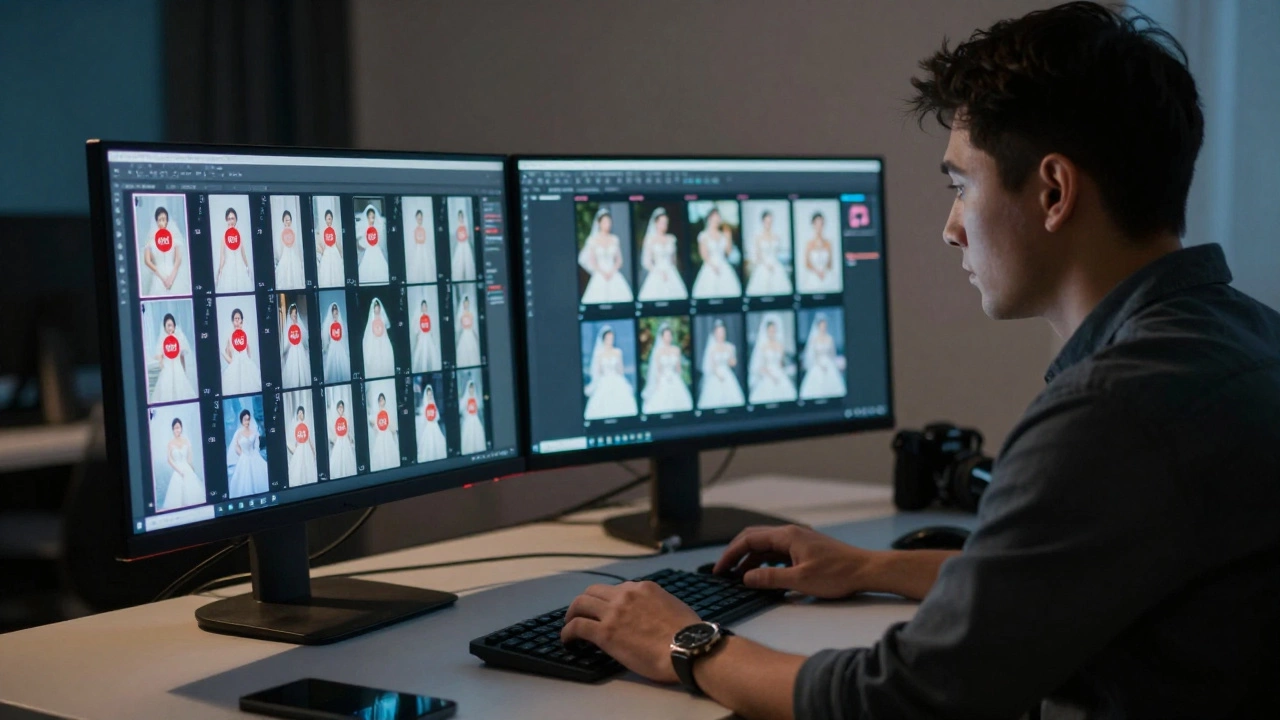
Before any color correction or skin smoothing happens, the photographer must go through the entire shoot. This stage is known as culling. It’s the most tedious part of the job, but it’s essential.
During culling, the photographer reviews every image and tags them into three categories:
- Rejects: Blurry shots, closed eyes, accidental lens caps left on, or frames where the composition is off. These are deleted immediately. They serve no purpose.
- Mightbes: Decent shots that aren’t quite perfect. Maybe the lighting is flat, or someone is looking slightly away. These stay in reserve only if there are no better options for a specific moment.
- Selects: The keepers. Sharp focus, great expression, proper exposure. These move forward to the editing stage.
For a typical wedding, roughly 40% to 60% of images make it past the culling stage. If a photographer shoots 4,000 photos, they might select 1,500 to 2,000 for editing. The rest vanish into the digital void. This isn’t negligence. It’s protection. It ensures you never receive a photo where your smile looks forced or your dress has a visible stain that could have been avoided by waiting for a better angle.
The Editing Process: What Actually Happens
Once the selects are chosen, the real work begins. Editing isn’t just about adding filters. It’s about correcting technical flaws and enhancing the mood. Most photographers use software like Adobe Lightroom industry-standard photo editing software used for organizing, developing, and exporting digital images or Capture One professional tethered shooting and image processing software favored by many studio photographers.
Here’s what typically happens to each selected photo:
- Exposure Correction: Weddings happen in tricky light. Dark churches, bright outdoor receptions, dimly lit venues. The camera sensor captures the data, but the initial image might look too dark or too bright. The photographer adjusts the shadows and highlights so details are visible.
- White Balance Adjustment: Indoor lighting often casts a yellow or blue tint. Outdoor shots can look too cool under shade. Correcting white balance ensures skin tones look natural and colors match reality.
- Cropping and Straightening: Sometimes the horizon is tilted. Sometimes a distracting trash can appears in the corner. Cropping removes distractions and improves composition.
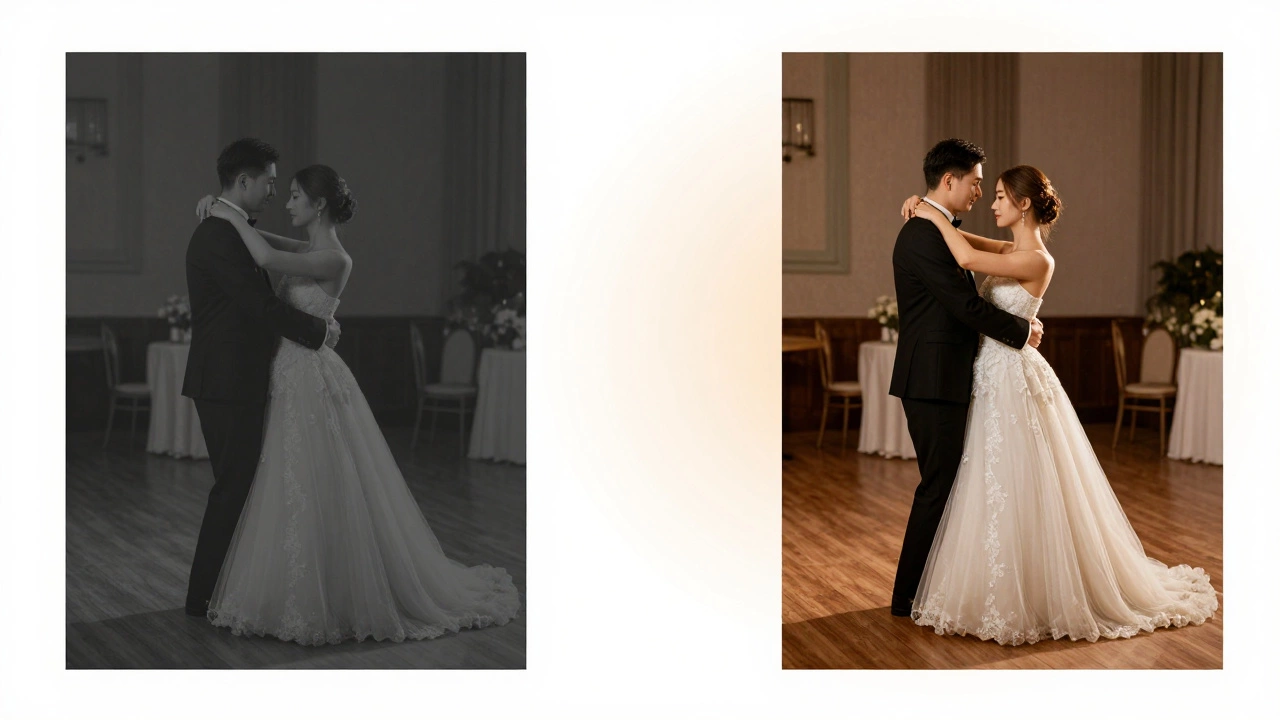
- Color Grading: This is the stylistic choice. Some photographers prefer moody, desaturated tones. Others love bright, airy pastels. This step applies the photographer’s signature style to every image consistently.
This process takes time. Editing 1,500 photos manually can take 20 to 40 hours. That’s why delivery timelines usually range from six to twelve weeks. Rushing this step leads to inconsistent colors and missed details.
RAW Files vs. Edited JPEGs: What You Get
A common question is whether you get the original files. The answer is almost always no. Here’s why.
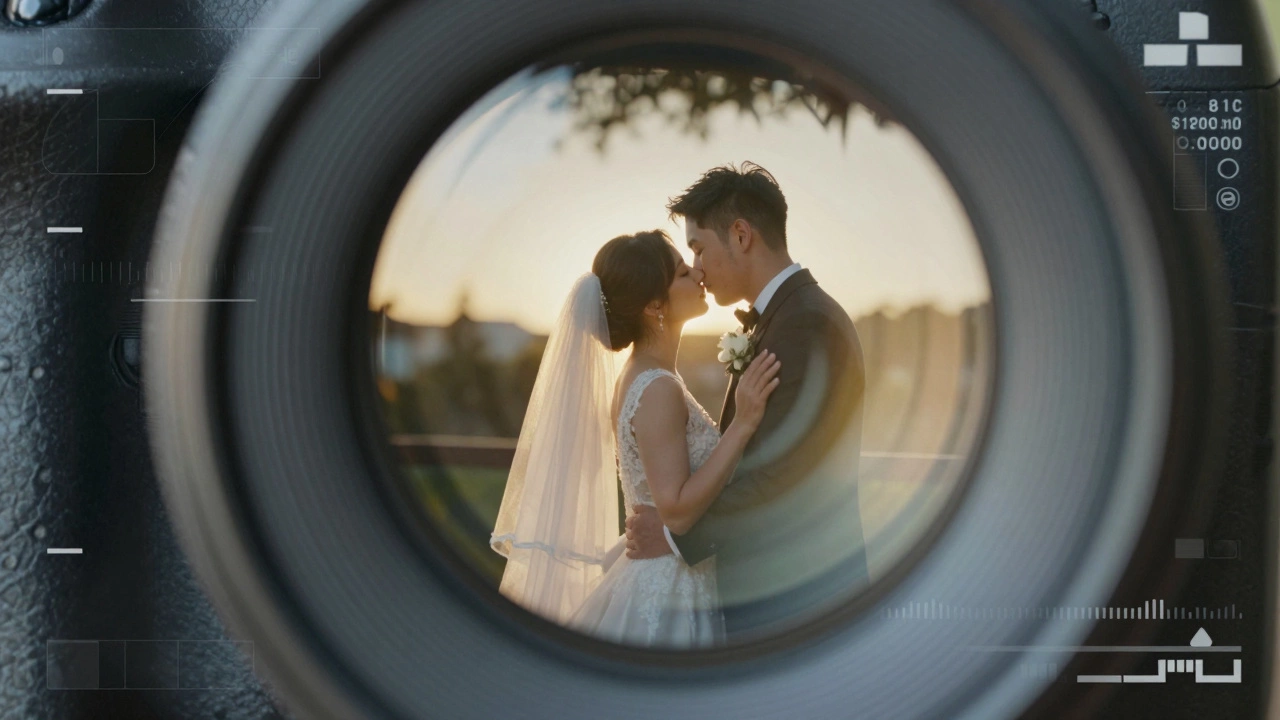
When a camera takes a picture, it creates two types of data. The first is a JPEG file a compressed image format that processes data in-camera including sharpness, contrast, and color profiles. This is ready to view immediately. The second is a RAW file an unprocessed data file containing all pixel information captured by the sensor without compression or in-camera adjustments. Think of RAW as digital film. It looks flat, gray, and dull when you first open it. It contains all the information needed to create a perfect image, but it requires heavy lifting to look good.
Photographers sell the final product, not the ingredients. Giving you RAW files is like giving you a bag of flour, eggs, and sugar instead of a baked cake. You’d need the expertise and tools to process them correctly. Without that, the images would look muddy and unappealing. Most contracts explicitly state that RAW files remain the property of the photographer.
However, some photographers offer "unedited selects" as an add-on. These are high-resolution JPEGs straight from the camera, lightly processed but not fully graded. They’re useful if you want quick access to memories before the full gallery is ready, but they won’t match the polish of the final edits.
Why Consistency Matters More Than Volume
If you received 4,000 photos, half edited and half untouched, the experience would be jarring. One photo of your bouquet would be vibrant and warm. The next, taken seconds later, would be cold and dull. This inconsistency breaks the narrative flow of your wedding story.
Professional editing ensures every image feels like part of the same collection. The colors harmonize. The brightness levels match. The mood remains consistent from the ceremony to the reception. This cohesion transforms random snapshots into a cohesive visual album.
Consider this scenario: You’re printing a large wall portrait of your first dance. If the photographer delivered a mix of edited and unedited files, you might accidentally choose a poorly exposed version because it looked okay on your phone screen. Professional editing prevents these mistakes by ensuring every delivered image is print-ready.
How Many Photos Should You Expect?
There’s no universal rule, but industry standards provide a baseline. For an 8-hour wedding coverage, expect between 400 and 800 edited images. For 12 hours, expect 800 to 1,200. These numbers vary based on the photographer’s style.
Documentary-style photographers might deliver fewer images because they focus on candid moments rather than posed shots. Traditional photographers might deliver more because they capture multiple angles of every pose. Discuss expectations during your consultation. Ask specifically: "How many edited images do you typically deliver for a wedding of our size?"
If a photographer promises "all photos," run the other way. That’s a red flag. It suggests they either don’t understand the workload or they plan to dump unedited files on you to save time. Neither outcome benefits you.
What If You Want Every Single Shot?
Some couples insist on having everything. Maybe you’re worried about losing a fleeting glance or a funny guest reaction. While understandable, requesting every shot creates logistical nightmares.
First, storage becomes an issue. Thousands of high-resolution files require significant hard drive space. Second, finding a specific moment becomes harder. Scrolling through 3,000 images to find one perfect shot is frustrating compared to browsing 500 curated gems.
If you truly want access to more images, negotiate a "second pass" clause in your contract. This allows the photographer to review the rejects after the initial edit and pull out any hidden gems they missed. It’s a compromise that respects their workflow while giving you peace of mind.
| Deliverable Type | Description | Pros | Cons |
|---|---|---|---|
| Edited Selects | Fully retouched images chosen by the photographer | High quality, consistent style, print-ready | Fewer total images, longer wait time |
| Unedited Selects | Camera-processed JPEGs, lightly adjusted | Faster delivery, larger volume | Inconsistent colors, not print-optimized |
| RAW Files | Original unprocessed sensor data | Maximum flexibility for future edits | Requires expert skills, looks flat/dull initially |
Tips for Managing Your Expectations
To avoid disappointment, align your expectations with your photographer early on. Here are practical steps:
- Review the Contract: Look for clauses detailing the number of images, delivery timeline, and file formats. Ambiguity here leads to conflict later.
- Ask for Samples: Request to see full galleries from recent weddings. Don’t just look at the highlight reel. See the variety and consistency across different lighting conditions.
- Discuss Style Preferences: Do you prefer natural skin tones or heavily retouched perfection? Knowing this helps the photographer tailor their editing approach.
- Plan for Prints: Decide which images you’ll print early. Professional editing ensures these prints look stunning on paper, not just on screens.
Remember, your photographer is an artist, not a machine. Their value lies in their eye for detail and their ability to tell your story through selective framing and careful editing. Trust their judgment. The photos they deliver are the ones they believe best represent your day.
Do wedding photographers delete bad photos?
Yes. During the culling process, photographers delete images that are blurry, have closed eyes, or suffer from poor exposure. These images cannot be salvaged through editing and would detract from the overall quality of your gallery.
Can I request RAW files from my photographer?
Most photographers retain ownership of RAW files as per standard contracts. RAW files are unprocessed and require specialized skills to edit. However, some may offer them as an expensive add-on service if explicitly requested beforehand.
How long does wedding photo editing take?
Editing typically takes 6 to 12 weeks after the wedding. This timeframe accounts for culling, color correction, retouching, and quality control. Rushing this process often results in inconsistent edits and missed details.
Why don't photographers give me every photo they took?
Providing every photo includes duplicates, blurs, and awkward moments. Curating the selection ensures you receive only the best images, creating a cohesive and high-quality visual story of your wedding day.
What is the difference between culling and editing?
Culling is the selection process where photographers choose the best images from the total batch. Editing is the subsequent step where those selected images are color-corrected, cropped, and styled to meet professional standards.