Can Your Husband Take Back Your Wedding Ring? Legal Rights Explained
 Jun, 22 2026
Wedding Ring Ownership Calculator
What is your current relationship status?
When was the ring purchased?
How was the ring paid for?
Which legal system applies in your state?
Is there a prenuptial agreement addressing jewelry?
This tool provides general educational information only and does not constitute legal advice. Consult a qualified family law attorney in your jurisdiction for specific guidance.
You’re packing up your life, sorting through shared memories, and then you hit the jewelry box. There it sits: your wedding ring. It’s heavy, sentimental, and expensive. But here is the hard question that keeps many brides awake at night: Does my husband have the legal right to demand I give it back?
The short answer is: usually no. In most cases, once you are married, that ring belongs to you. However, the law doesn’t always care about romance; it cares about contracts, timing, and how money was spent. Whether you keep that diamond depends heavily on where you live, when you bought it, and whether you actually walked down the aisle.
Why the Ring Is Usually Yours
To understand why you likely get to keep the ring, we have to look at how the law views gifts versus shared assets. When a man proposes, he isn’t just handing over a piece of jewelry; he is making a conditional gift. The condition is marriage. Once you say "I do" and the ceremony happens, that condition is met. The gift becomes absolute.
In legal terms, this transforms the wedding ring from a conditional promise into an unconditional personal possession. Think of it like buying a car for someone’s birthday. If they show up to the party, the car is theirs. They can’t ask for it back because they didn’t like the color later. Similarly, once the marriage license is signed and the vows are exchanged, the ring is considered your separate property.
This rule applies in the vast majority of U.S. states. Courts generally view the engagement ring as a gift given in contemplation of marriage. Since the marriage occurred, the gift is complete. Even if the couple splits up two years later, the ring stays with the recipient.
The Difference Between Community Property and Equitable Distribution
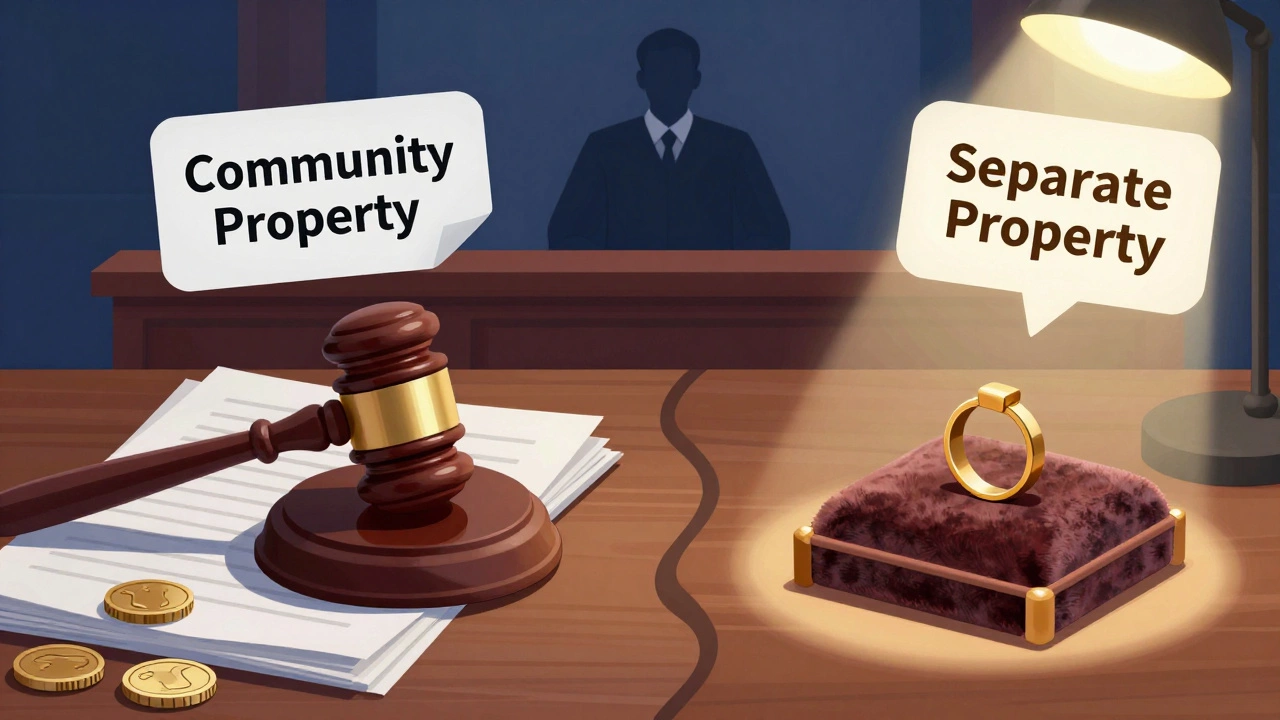
Here is where things get tricky. You need to know which legal system governs your divorce. The United States is split into two main camps: Community Property States and Equitable Distribution States. This distinction changes everything regarding who owns what.
| System Type | How It Works | States Involved | Impact on Wedding Rings |
|---|---|---|---|
| Community Property | Assets acquired during marriage are owned 50/50 by both spouses. | AZ, CA, ID, LA, NV, NM, TX, WA, WI | Rings bought during marriage may be split. Pre-marriage rings are usually separate. |
| Equitable Distribution | Courts divide assets fairly (not necessarily equally) based on various factors. | Most other U.S. states | Rings are typically viewed as non-marital gifts and kept by the recipient. |
If you live in a community property state like California or Texas, anything bought with marital funds during the marriage is technically owned by both parties. So, if your husband bought you an anniversary ring five years into the marriage using joint savings, that ring might be considered a marital asset subject to division. He could argue for its return or, more commonly, demand compensation for half its value.
However, the original wedding band is different. Because it was purchased before the marriage (usually) and given as a specific gift tied to the act of marrying, courts almost always exclude it from the "community pot." It remains your separate property.
What Happens If You Break Up Before the Wedding?
Let’s rewind. What if you never got married? This is the most common scenario where a fiancé successfully sues for the return of the ring. Remember that "conditional gift" concept? If the marriage doesn’t happen, the condition fails. Legally, the gift must be returned.
But wait-who broke up with whom? In some states, fault matters. If you called off the wedding without a good reason, you definitely have to give the ring back. But what if he cheated? Or if he changed his mind? Some states follow "no-fault" rules for engagement rings, meaning the ring goes back regardless of who dumped whom. Other states consider fault. If he was the one who ended it, you might get to keep the ring as damages for emotional distress.
This is a messy area of law. If you are currently engaged and facing a breakup, check your local statutes. Don’t assume you can keep the ring just because you’re hurt. The default assumption in court is often that the ring belongs to the giver unless the marriage occurs.
When Can He Actually Claim Ownership?
There are rare exceptions where a husband might have a legitimate claim to the ring, even after marriage. These usually involve financial entanglements rather than romantic ones.
- It Was Bought With Joint Funds During Marriage: As mentioned, if the ring was purchased long after the wedding using a joint account, it might be classified as a marital asset. If the marriage ends, the court might order the ring sold and the proceeds split, or one spouse buys out the other.
- It Was a Family Heirloom With Strings Attached: Sometimes, a ring is loaned, not gifted. If there is written proof or clear testimony that the ring was merely borrowed for the ceremony and expected to be returned to the family vault, the husband’s family might reclaim it. This is rare but possible.
- Pre-Nuptial Agreements: Did you sign a prenup? If your pre-nuptial agreement explicitly states that all jewelry remains the sole property of the giver until certain conditions are met, that contract overrides general gift laws. Always read the fine print.
Without these specific circumstances, his claim is weak. Emotional arguments like "I paid for it" or "We aren’t happy anymore" do not hold water in a courtroom when it comes to wedding bands.

Practical Steps to Protect Your Ring
If you are going through a contentious divorce and fear your partner will try to seize the ring, take proactive steps now. Prevention is easier than litigation.
- Get It Appraised: Know exactly what the ring is worth. An official appraisal from a certified gemologist provides concrete data. If he claims it’s worth $10,000 and you have proof it’s $3,000, you save money in potential buyouts.
- Secure Physical Possession: Do not leave the ring in a shared safe deposit box or a drawer in the marital home. Put it in your personal safety deposit box or a secure location only you access. Physical control makes a big difference in negotiations.
- Document Its History: Gather receipts, photos from before the wedding, and any correspondence showing it was a gift. This creates a paper trail proving it was a pre-marital conditional gift that became absolute upon marriage.
- Consult a Family Law Attorney: Laws vary by county and state. A local attorney can tell you if your jurisdiction has unique quirks regarding jewelry division. Don’t rely on internet advice alone for high-value items.
Emotional vs. Legal Reality
Beyond the law, there is the human element. Often, husbands don’t want the ring back because they want the gold or the diamond; they want leverage. In divorce negotiations, every asset is a bargaining chip. He might threaten to sue for the ring to pressure you into giving up something else, like custody time or a larger share of the house.
Recognize this tactic. If he demands the ring, it’s likely a negotiation strategy, not a genuine legal pursuit. Stay calm. Stick to the facts: it was a gift, the condition was met, and it is yours. Most lawyers will advise their clients to drop such claims because they are expensive to litigate and rarely successful.
Remember, the ring symbolizes the commitment you made. Whether that commitment lasted ten years or ten months, the legal framework is designed to protect the recipient of the gift once the union is formalized. You earned the right to wear it.
Does my husband own half my wedding ring if we divorce?
Generally, no. The wedding ring is considered a conditional gift given in anticipation of marriage. Once the marriage takes place, the gift becomes absolute and is classified as your separate property. Even in community property states, the original wedding band is usually excluded from marital asset division because it was received before or at the start of the marriage as a specific gift.
Can he take back the ring if we break up before the wedding?
Yes, in most cases. Because the ring is a conditional gift contingent on marriage, if the wedding does not occur, the condition fails. Legally, the ring must be returned to the giver. However, some states consider "fault," meaning if he broke the engagement due to infidelity or misconduct, you might be allowed to keep it.
What if the ring was bought during our marriage?
If the ring was purchased during the marriage using joint funds, it may be considered a marital asset. In this case, it could be subject to division during divorce. In community property states, it might be split 50/50. In equitable distribution states, the court will decide what is fair, which might mean selling it and splitting the cash or one spouse keeping it while compensating the other.
Does a prenuptial agreement affect ring ownership?
Yes. A valid prenuptial agreement can override default state laws. If your prenup specifies that jewelry remains the property of the purchaser or outlines specific conditions for retention, that contract will dictate who keeps the ring. Always review your prenup with a lawyer to understand these clauses.
What should I do if my ex-husband threatens to sue for the ring?
First, secure the ring physically so it cannot be taken. Second, gather documentation proving it was a gift (receipts, photos). Third, consult a family law attorney in your state. Most threats to sue for a wedding ring are empty tactics used for leverage in other parts of the divorce. Knowing your legal rights will help you respond confidently.