Best Flower Combinations for Your Wedding: Top Pairings by Season and Style
 May, 4 2026
Wedding Season & Style Floral Matcher
Select your wedding season below to reveal expert-curated flower pairings, style tips, and budget-friendly swaps tailored to that time of year.
Spring
Sep - NovSummer
Dec - FebAutumn
Mar - MayWinter
Jun - AugTop Pairings
Budget Smart Swaps
Save money without losing the look.
Choosing the right wedding flower combinations can make or break your venue's atmosphere. It isn't just about picking pretty blooms; it’s about creating a cohesive story through scent, texture, and color. As someone who has spent years coordinating events in Melbourne, I’ve seen how the wrong pairing can look cluttered, while the perfect match feels effortless and deeply personal.
The best flower combination depends entirely on your season, budget, and the mood you want to set. Whether you’re dreaming of a lush, romantic garden party or a sleek, modern minimalist affair, there are specific pairings that work better than others. This guide breaks down the top floral duos and trios that consistently deliver stunning results for couples.
The Golden Rule: Contrast Creates Interest
Before diving into specific lists, understand the core principle behind great floral design: contrast. If you put two round, soft flowers together-like roses and peonies-they can sometimes blend into a muddy mass. The magic happens when you mix shapes. Pair a full, ruffled bloom with something linear or spiky. Combine a heavy-headed flower with airy, delicate filler.
This rule applies regardless of the season. Think of it like fashion; you wouldn’t wear a baggy shirt with baggy pants unless you were going for a very specific look. In floristry, structure is key. A tall stem of Snapdragon adds height and drama next to a low-sitting Ranunculus. This verticality draws the eye upward and makes even small arrangements feel grand.
Spring Pairings: Fresh, Light, and Airy
Spring weddings in Australia typically run from September to November. The weather is unpredictable, but the flowers are vibrant and tender. You want combinations that reflect this renewal without feeling too childish.
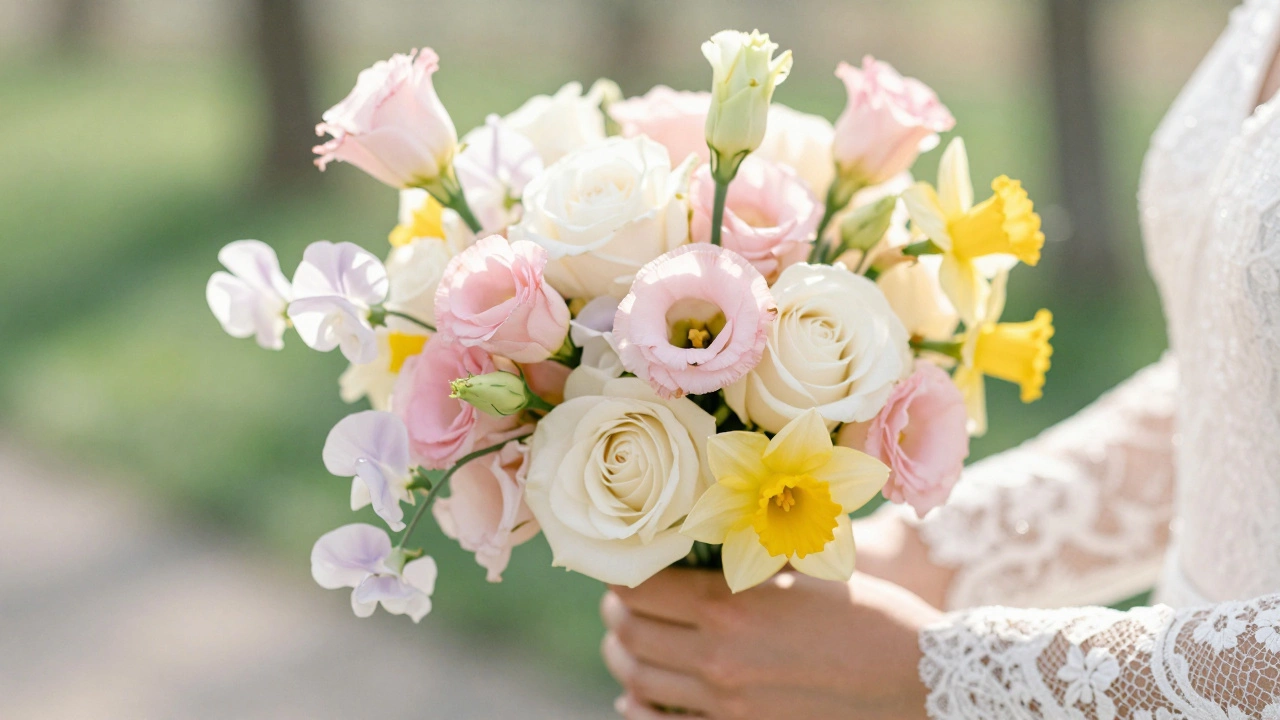
- Roses and Lisianthus: This is the classic beginner-friendly duo. Lisianthus looks remarkably like a rose but has a thinner, more delicate petal. Mixing them creates depth because the Lisianthus opens up wider and flatter, while the Rose holds its spiral shape. Stick to pastel pinks, creams, and whites for a timeless look.
- Tulips and Sweet Peas: Tulips bring a bold, cup-shaped structure, while Sweet Peas offer trailing vines and intense fragrance. This combination works beautifully for casual outdoor ceremonies. Just remember that Tulips continue to grow after cutting, so keep them hydrated and expect them to lean slightly over time-a charming imperfection.
- Daffodils and Freesia: For a pop of yellow, Daffodils are unbeatable. They pair surprisingly well with the slender, trumpet-like shape of Freesia. This combo screams optimism and joy, perfect for a bright, sunny backyard wedding.
Summer Blooms: Bold Colors and Heat-Resistant Textures
Summer (December to February) brings heat, which means some delicate flowers wilt quickly. You need robust blooms that can handle the sun and still look fresh during your evening reception. Summer allows for bolder colors: deep reds, oranges, and vibrant purples.
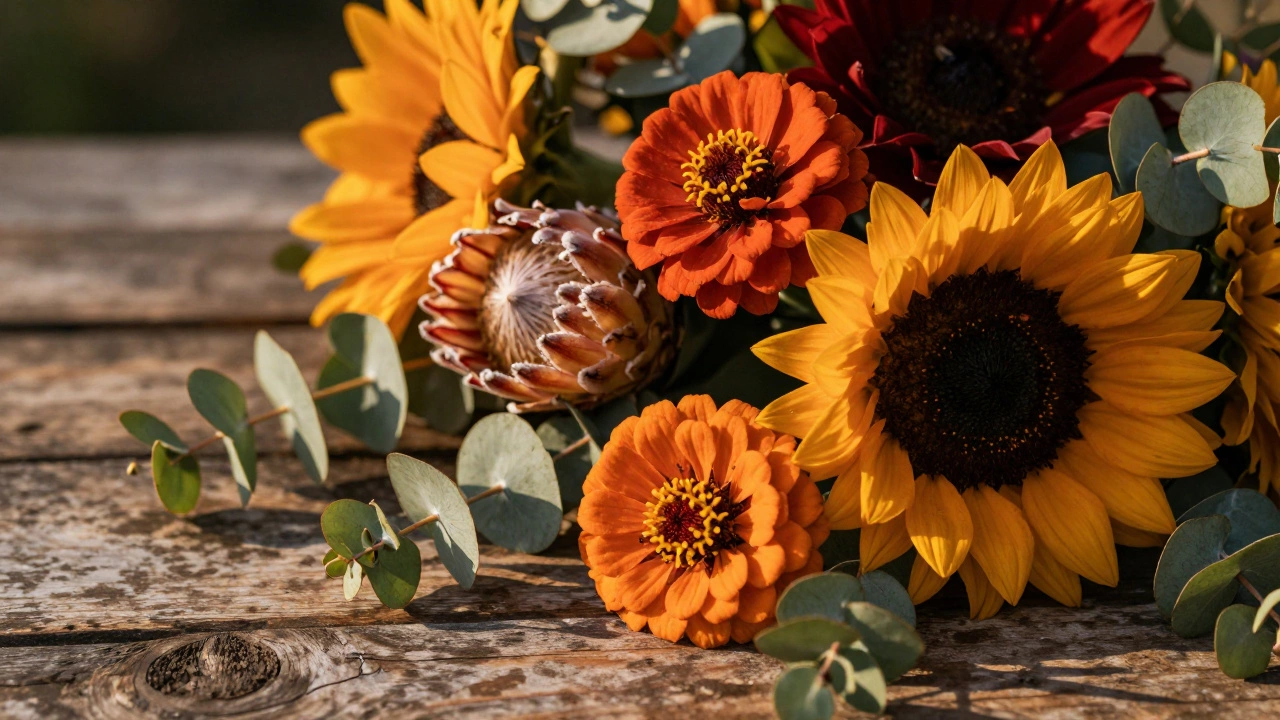
- Garden Roses and Protea: Since we are looking at an Australian context, Protea is a must-mention. These exotic, structural flowers thrive in summer heat. Pairing a soft, creamy Garden Rose with the dramatic, prehistoric look of a King Protea creates a stunning contrast between traditional romance and wild beauty.
- Sunflowers and Zinnias: If you love rustic charm, this is your go-to. Sunflowers provide the focal point with their large faces, while Zinnias add bursts of orange, pink, and red with their flat, layered petals. This combination is cost-effective and incredibly cheerful.
- Orchids and Anthurium: For a tropical or beachside vibe, Orchids offer elegance and longevity. Adding waxy, heart-shaped Anthurium leaves provides a dark green backdrop that makes the white or purple Orchid petals pop. Both flowers hold up exceptionally well in humid conditions.
Autumn Arrangements: Rich Tones and Rustic Charm
Autumn (March to May) is arguably the most popular wedding season due to the comfortable temperatures. The palette shifts to burnt oranges, deep burgundies, golds, and browns. The goal here is warmth and texture.
- Chrysanthemums and Eucalyptus: Mums are often misunderstood as cheap, but premium varieties like Spider Mums or Pompon Mums are luxurious. Their intricate, web-like petals pair perfectly with the silvery-blue foliage of Eucalyptus. This combination is durable, affordable, and looks sophisticated in mason jars or glass bottles.
- Calla Lilies and Berries: Calla Lilies have a sleek, modern curve. To soften their starkness, add clusters of Hypericum berries or dried seed pods. The round berries contrast with the long, tubular lily, adding a tactile element that guests will notice up close.
- Peonies and Oats: Late spring/early autumn Peonies are fluffy clouds of pink or white. Adding dried oats or wheat stalks introduces a golden, linear texture that complements the roundness of the Peony. This gives a romantic, countryside feel.
Winter Weddings: Dramatic Foliage and Deep Hues
Winter (June to August) might seem tough for flowers, but it offers unique opportunities. Fresh flowers are scarce, so foliage becomes the star. Look for combinations that use branches, cones, and evergreens alongside hardy blooms.
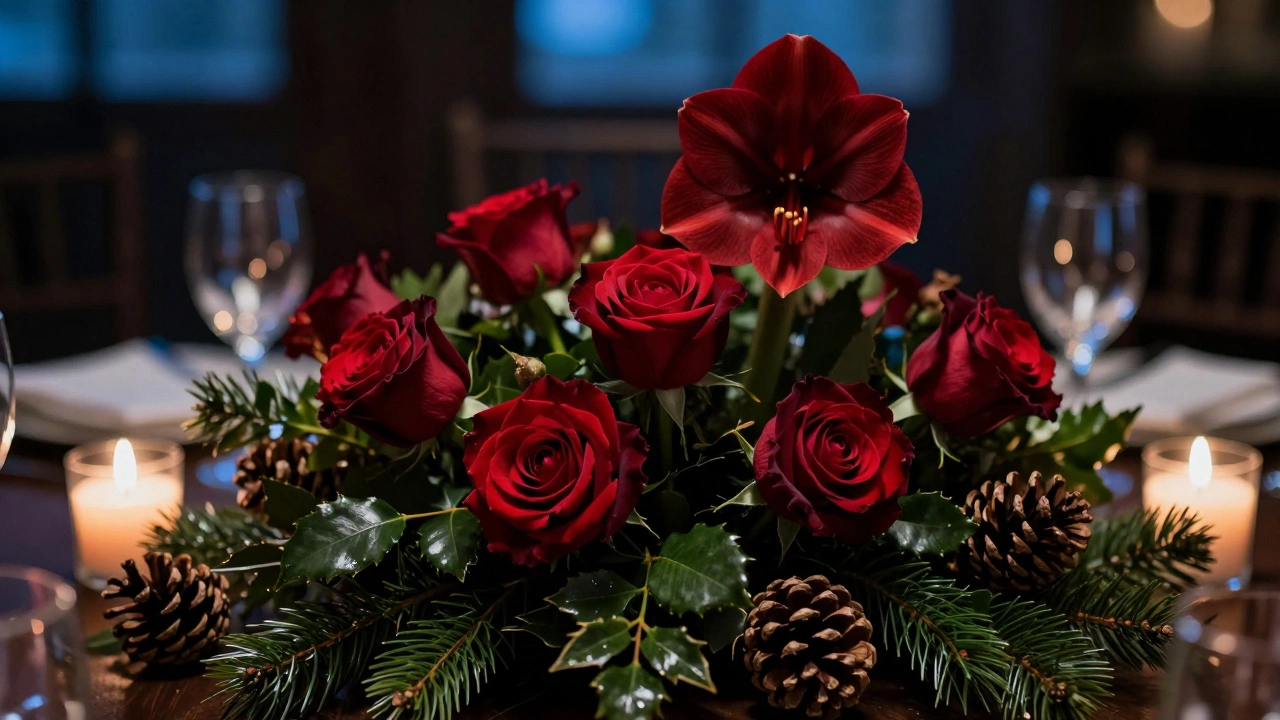
- Amaryllis and Pine Cones: Amaryllis bulbs produce thick stems with large, striking flowers in red, white, or striped patterns. They stand strong against cold weather. Nestling them among pine cones and eucalyptus creates a cozy, cabin-like aesthetic.
- Cyclamen and Ferns: Cyclamens have delicate, upswept petals that look almost like butterflies. They are cool-season lovers. Pairing them with lush Boston Ferns creates a soft, monochromatic green-and-white look that feels elegant and understated.
- Red Roses and Boxwood: There is nothing more classic than deep red roses. To avoid looking cliché, anchor them with dense, rounded Boxwood greens. The tight, small leaves of the Boxwood provide a solid canvas that makes the red petals appear richer and more velvety.
Budget-Friendly Smart Swaps
You don’t need to spend a fortune to get a beautiful look. Sometimes, swapping one expensive flower for a cheaper alternative that looks similar can save hundreds of dollars without sacrificing aesthetics.
| Expensive Bloom | Budget Alternative | Why It Works |
|---|---|---|
| Peonies | Lisianthus | Similar ruffled appearance; lasts longer in vase |
| Orchids | Cymbidium Orchids | More durable; widely available; similar spike shape |
| Hydrangeas | Cabbage Roses | Both provide volume and round shapes; Cabbage Roses last longer |
| Ranunculus | Double Zinnias | Layered petals mimic Ranunculus; much cheaper per stem |
Color Theory Tips for Floral Designers
If you’re working with a florist, understanding basic color theory helps you communicate your vision clearly. You generally have three safe bets:
- Monochromatic: Different shades of the same color. Example: White roses, ivory lisianthus, and cream ranunculus. This is foolproof and always elegant.
- Analogous: Colors next to each other on the wheel. Example: Pink, peach, and coral. This feels natural and harmonious, often found in sunsets.
- Complementary: Opposite colors on the wheel. Example: Purple and yellow. This is high-risk, high-reward. Use it sparingly. A little yellow statice in a purple lavender arrangement pops beautifully, but too much can clash.
Common Mistakes to Avoid
I’ve seen many well-intentioned plans go wrong due to simple oversights. Here is what to watch out for:
- Ignoring Scent: Some flowers smell amazing in the field but not in the vase (like Tulips). Others, like Lilacs, can be overpowering in a closed room. Ask your florist about scent intensity if you have sensitive guests.
- Too Many Varieties: Limiting your palette to 3-5 types of flowers prevents visual chaos. More isn’t always better. A focused selection looks more intentional and expensive.
- Forgetting Foliage: Greenery is the skeleton of your arrangement. Don’t skimp on it. Good quality Eucalyptus, Ruscus, or Salal makes the colored flowers stand out.
Final Thoughts on Choosing Your Palette
The best flower combination is one that reflects your personality and fits your venue. If you’re marrying in a historic church, go for structured, traditional pairings like Roses and Lilies. If you’re having a barn dance, embrace the wilder mixes of Sunflowers and Wheat. Trust your instincts, talk openly with your florist about budget constraints, and remember that imperfections add character. Your flowers should look like they belong there, not like they were bought from a catalog.
What are the most popular wedding flower combinations in 2026?
In 2026, couples are leaning towards organic, 'garden-style' arrangements. Popular combos include mixed Roses with lots of greenery, Peonies paired with delicate filler flowers like Statice, and bold Protea mixed with soft Garden Roses for an Australian twist. Monochromatic schemes using different shades of blush and cream remain dominant.
Can I mix different types of roses in my bouquet?
Yes, absolutely. Mixing spray roses (multiple blooms per stem) with standard single-stem roses adds texture and variety. Just ensure the colors complement each other. For example, mixing deep red David Austin roses with lighter pink spray roses creates depth without clashing.
Which flowers are best for hot summer weddings?
Heat-resistant flowers are crucial for summer. Sunflowers, Zinnias, Celosia, and Protea handle heat well. Avoid delicate flowers like Peonies or Hydrangeas unless they are kept in water constantly and shaded from direct sun. Orchids and Anthuriums are also excellent choices for humidity.
How do I choose flowers that match my wedding dress?
Look at the details of your dress. If it has lace, choose flowers with intricate petals like Ranunculus or Garden Roses to mirror that complexity. If your dress is satin and simple, bold, statement flowers like Calla Lilies or large Peonies work best. Match the undertone of the fabric (cool white vs. warm ivory) to the flower centers.
Are artificial flowers a good option for weddings?
High-quality silk flowers have improved dramatically and can be a great budget-friendly or allergy-free option. However, they lack scent and may not photograph as naturally under flash lighting. If you choose faux, opt for realistic textures and mix them with real greenery for a balanced look.